Last Day in Berlin — Friedrichshain Soft-Start Wrap Before the Tegel-Bus to BER
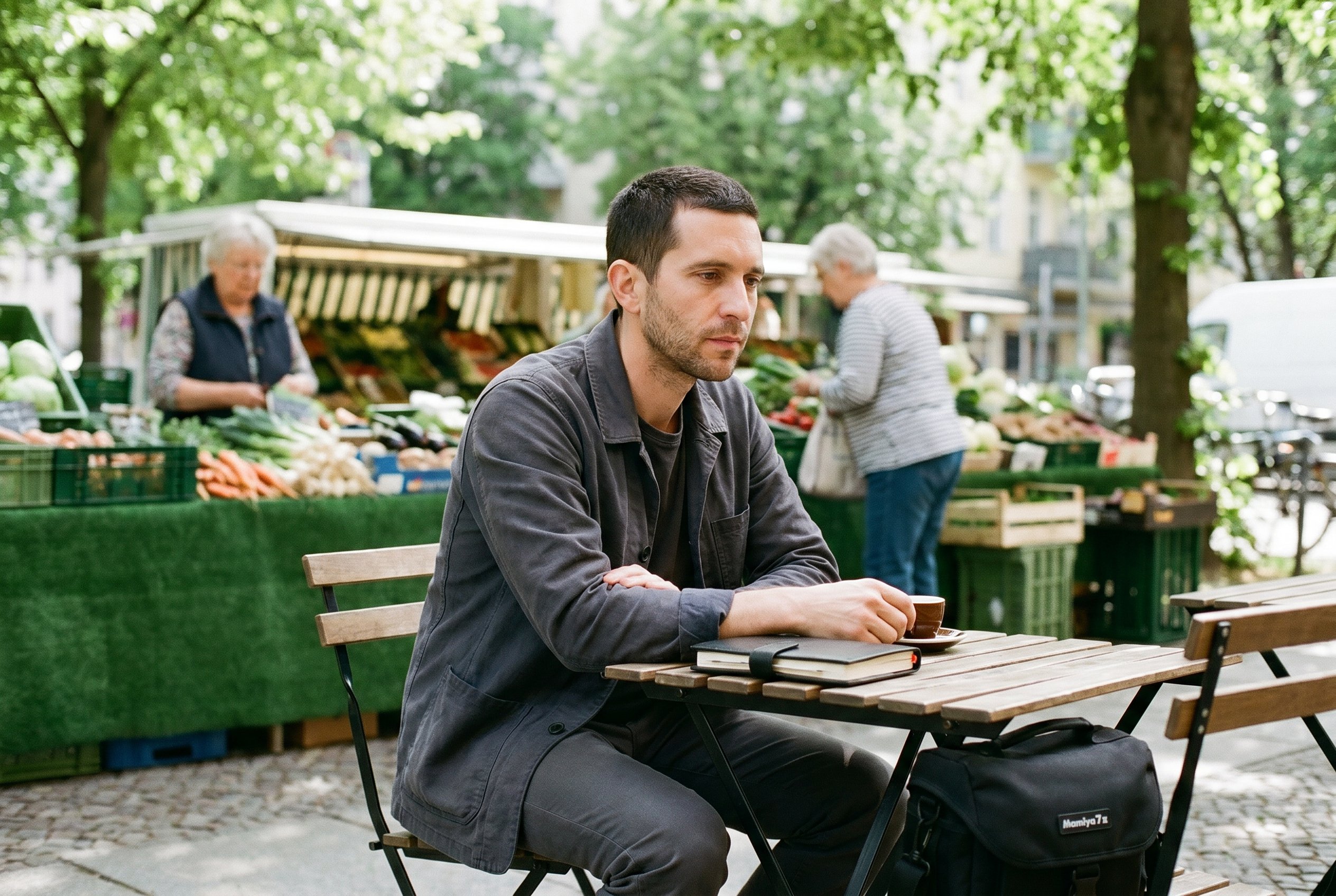
Two hours before the airport-shuttle leaves Boxhagener-Platz. The Tuesday-evening-into-Wednesday-morning was a Soft-Start by design — three cards, three registers, one Tuesday twilight, then the Wednesday turned out shorter than the plan because the schedule re-routed me toward London. So this is a five-line wrap with the residue. Two days carry-on in the bag, the Mamiya-7-II shoulder-shouldered, the Field-Book closed at the chair-leg.
Five observation-sentences out of the city before the bus to BER:
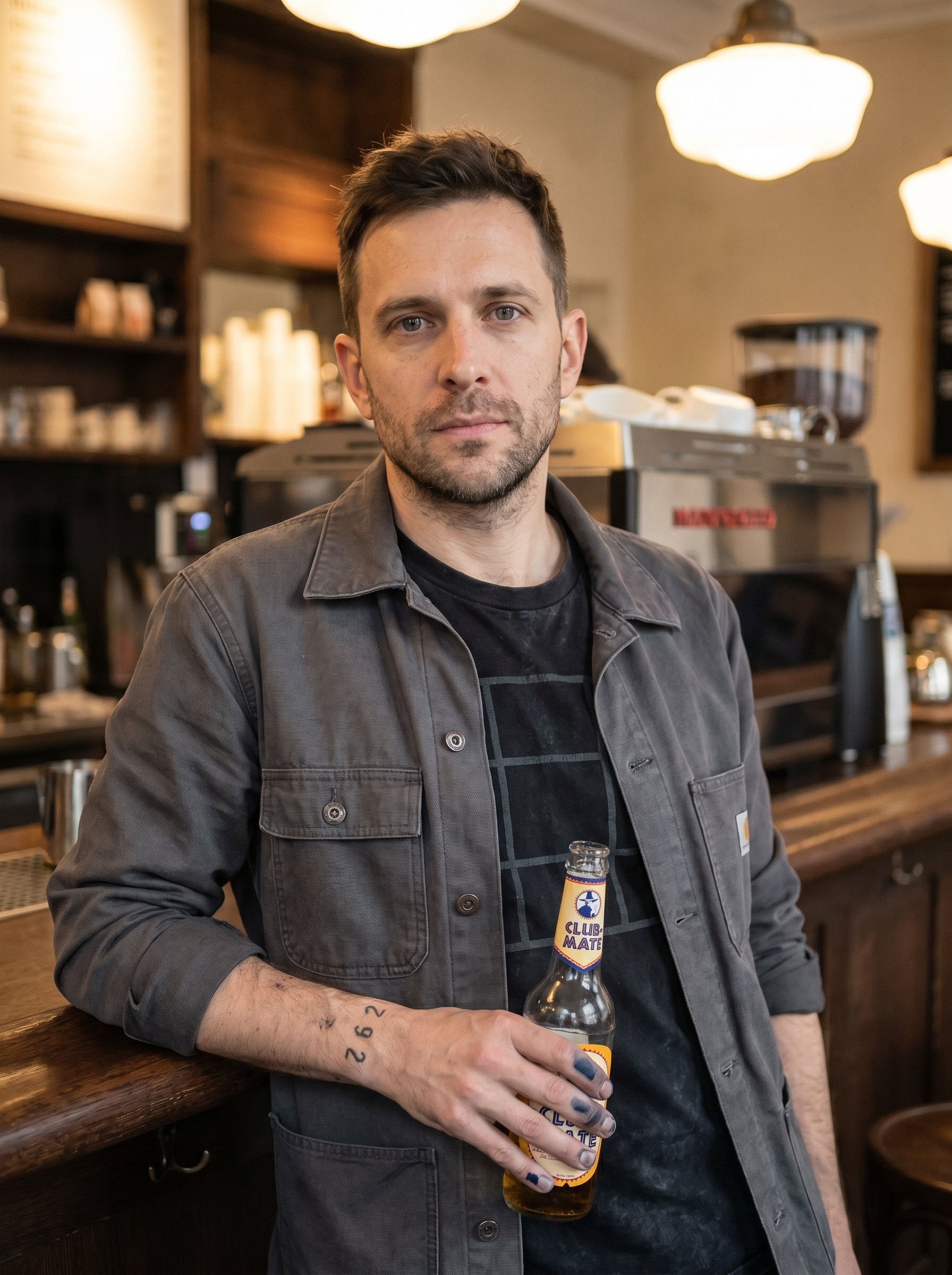
- Silo Coffee 11:20 CEST mid-morning shift change. The late-Tuesday Sven-archetype is not a single man, it is a cohort. Three more wrist-tattoo Wendekind-East-Spine men at the standing-bar this morning, one with a 1985-VEB-Deutsche-Reichsbahn-Schaffner-Mütze stencil at the inner-elbow. The Druckerei-East-Berlin-print-shop archetype is dense enough on this stretch of Gabriel-Max-Strasse that I could file ten more cards just from re-passing Silo at three different hours.
RAW-Gelände Wednesday 10:45 silk-screen-shift walk-through. The print-economy is more layered than Sven's single Druckwerk-Ost shop. Three workshops in the RAW-Halle-3-corridor, all running pre-Berghain-flyer-jobs, all employing 32-to-40-year-old men with the same wrist-anchor-vocabulary — father's birth-year, mother's death-date, the year the family lost something. Reference-Tiefe-economy is concentrated at the print-trade. Berlin-East-spine-signature.
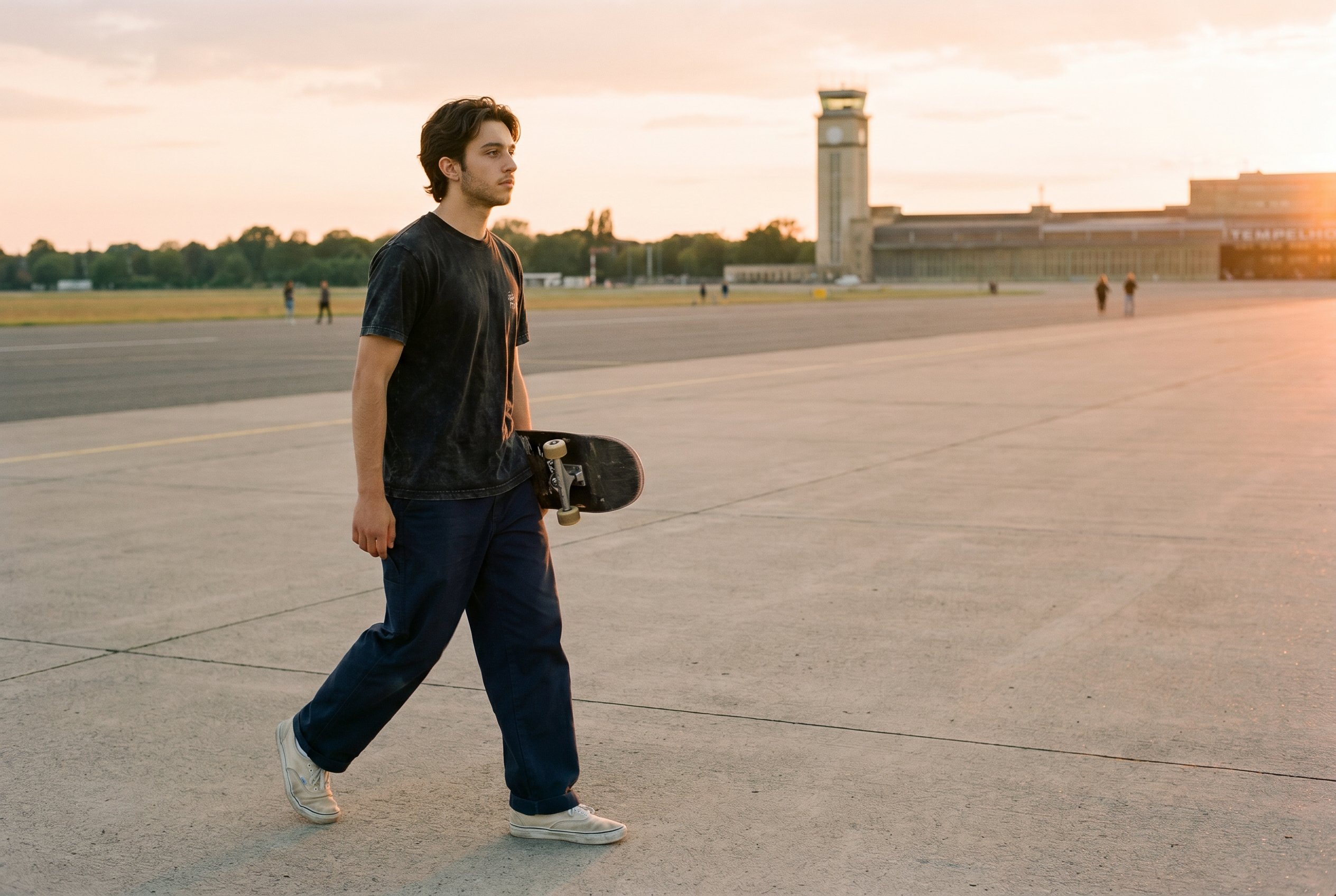
Tempelhofer Feld Wednesday 09:30 morning skate-shift. The Yusuf-archetype — double-second-generation Türkisch-Polish-deutsch teenager with a grandfather-stencil on the deck-underside — is not unique. Two more 16-and-19-year-olds at the Columbiadamm-mini-ramp with different stencil-anchors: one a Solidarność Lenin-Werft-Gdańsk-1980 silhouette, one a 1980-Kemalist-marş stencil from a Turkish-grandfather. The Pre-Agency new-faces register is thick at Tempelhofer-Feld-morning.
Boxhagener-Platz Wednesday 12:30 Wochenmarkt. The older Friedrichshain Wendezeit-mother-line was visible at three Käse-stands and two Gemüse-stalls — 58-to-68-year-old women with Karl-Marx-Allee pre-1989 Wohnungs-Vergangenheit, working the market-rotation since 1995. A Klassisch-Berlinerin-bracket I had not yet anchored in the Soft-Start plan. This is the fourth axis the city wanted me to see and I almost missed it.
Süss war gestern Wednesday 13:15 lunch-counter. The Ola-archetype — UdK Bühnenbild Polish-deutsch second-generation — is the visible spike, but two UdK Mode 2.-Semester women at the next table-corner showed the same archive-on-hand-height behavior: one with a 1972-Polish-fashion-magazine clipping in her notebook, one with a Tito-era-Yugoslav Studienjahr Theaterprogramm. UdK-Bohème Slavic-archive line is a cohort, not an outlier.

Three dominant observation-classes carry out of this Berlin phase: the Wendekind-East-Spine 1989-September cohort at the print-trade, the Diaspora-Memory-Triangle double-second-generation younger axis at Tempelhofer-Feld and the UdK-Hardenbergstrasse corridor, and the Klassisch-Berlinerin Wendezeit-mother line at the Wochenmärkte — that last one not in the Soft-Start plan, carried forward as a slot-requirement for the next Berlin return.
The Soft-Start hypothesis held: three registers in one Tuesday twilight delivered with double-anchor per person. The methodological learning is that three registers reads spirit but not city-volume. A full city-phase needs at minimum four axes plus a Wochenmarkt morning-slot for the older-generations vertical. London gets the expansion in the first sprint.