First day in Stockholm and what I keep noticing is the things people carry. Not the things they wear — anyone can dress. The things they keep in a pocket, in a wallet, on a thin silver chain inside the dress.
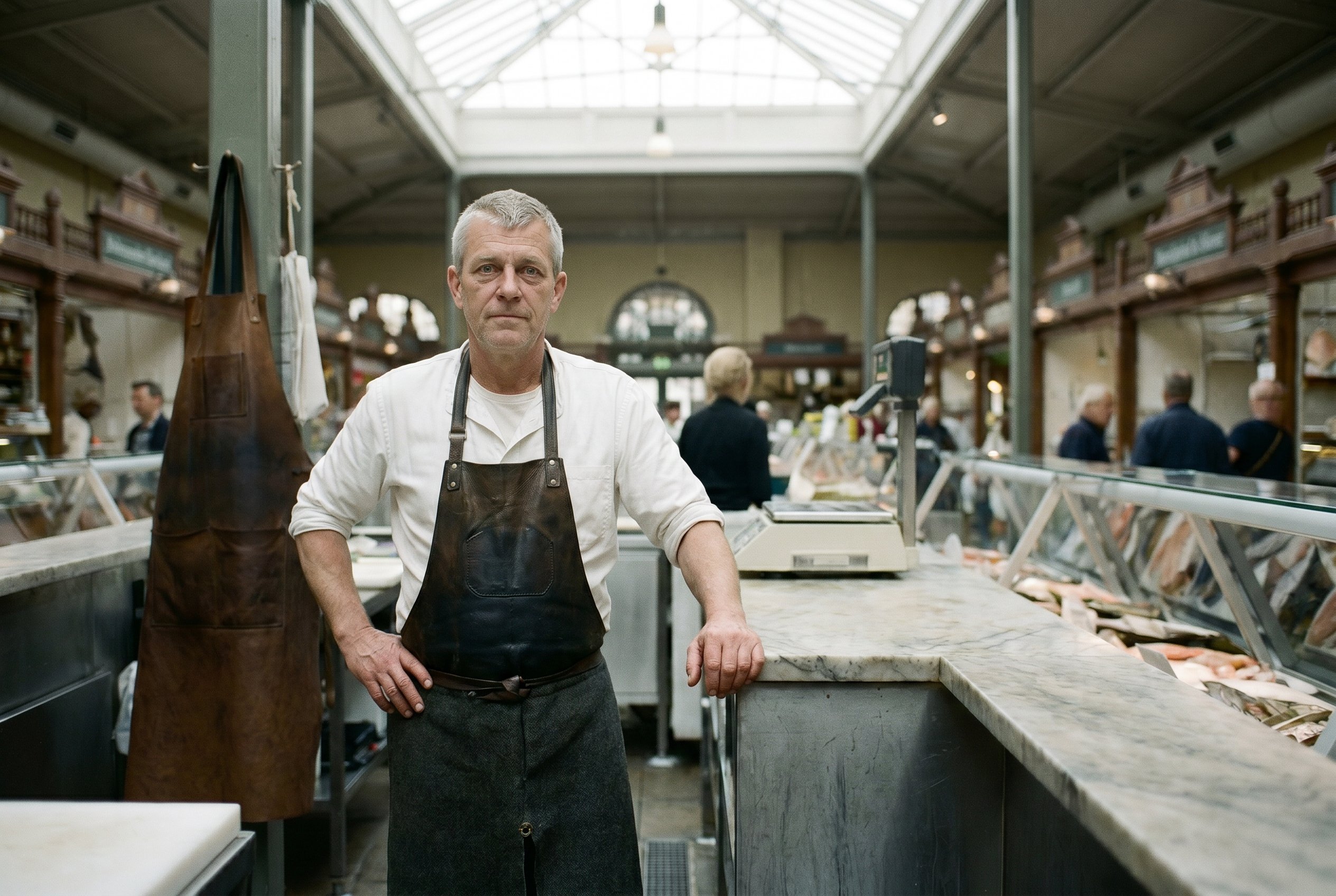
I started at the canal at Hornstull just after nine, watching a vintage trader fold denim at his side-door in a forty-five-second rhythm. He has a way of just nodding when you come in, no hello — Söder shorthand, the smaller the greeting the more he means it. Two hours later I was at Östermalms Saluhall in front of a marble fish-counter that has a six-inch worn-shiny circle where the same man has rested his right elbow for twenty-eight years of the slow hour. His grandfather stitched the leather apron he was wearing. 1956. Still in daily use. You can see seven decades on it in one second of looking.
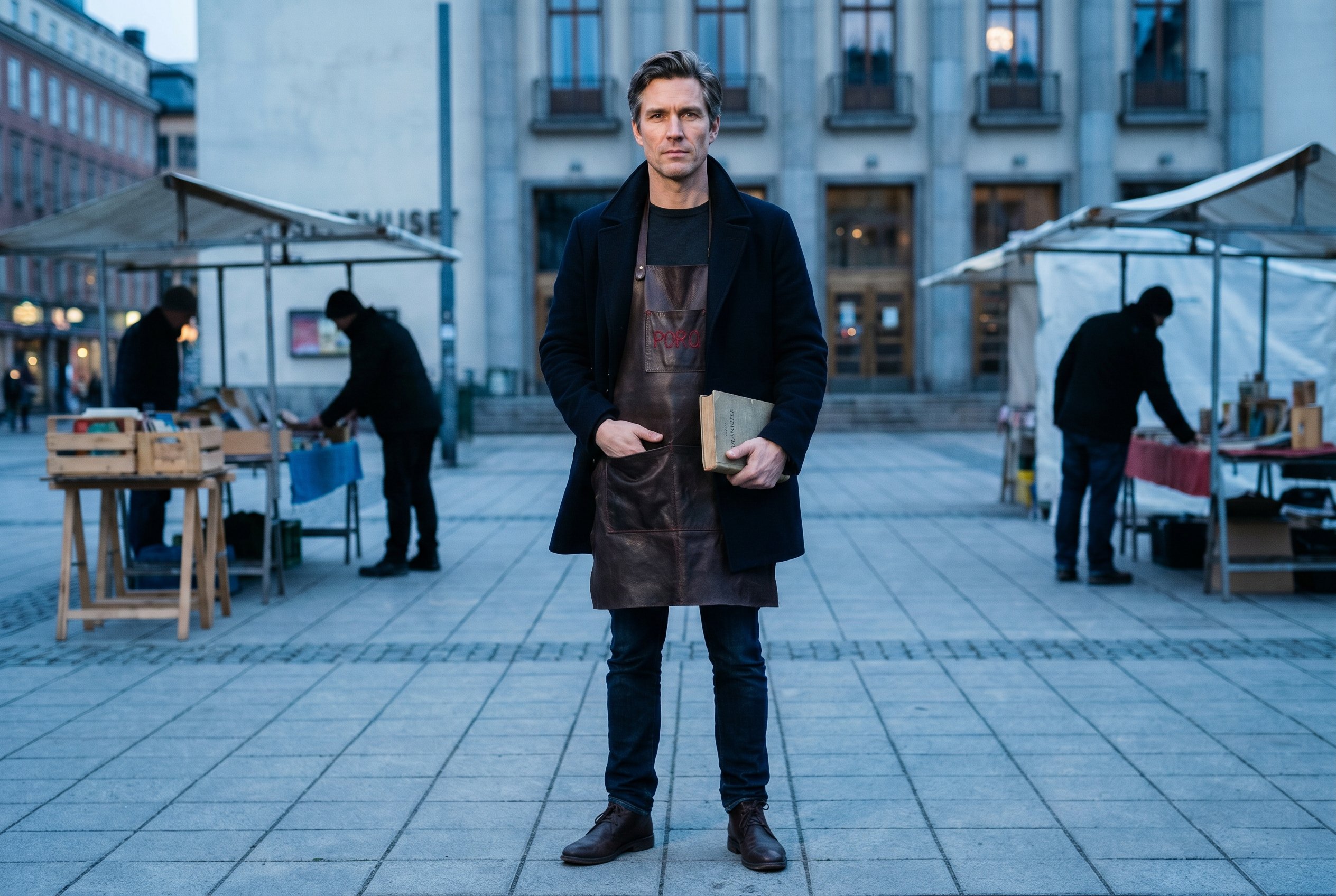
By evening I was at Hötorget watching a fashion editor set up his Saturday antique-book stall. On the chest-pocket-edge of his vendor-apron there is one word stitched in red linen-thread by his late grandfather forty-one years ago. The word is PORO. It means reindeer. He has been carrying that word at chest-height since 1985. He is thirty-eight.
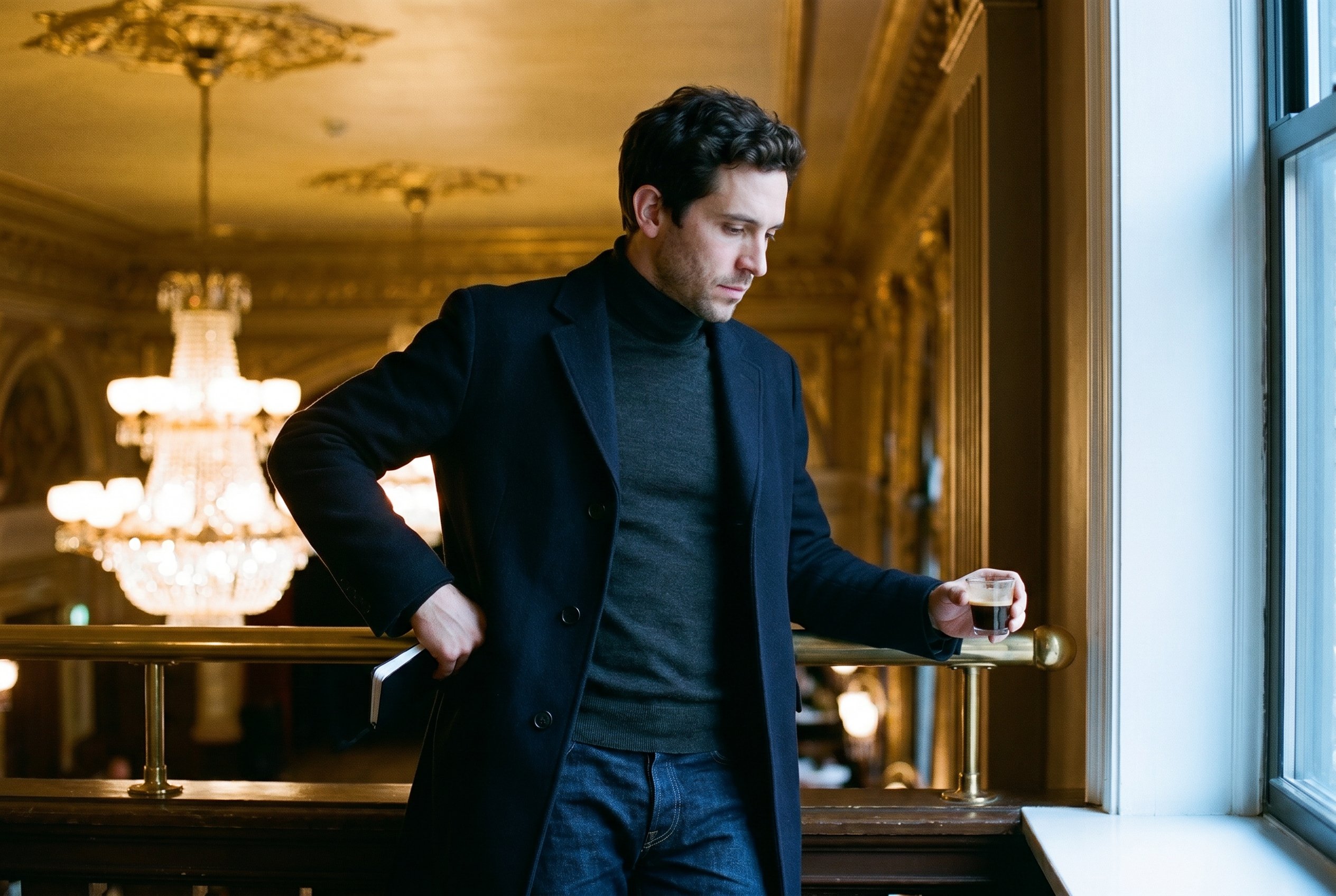
I closed the day at Berns Salonger at the Spring-Gala — wrong overcoat for the room, intentionally so. Easier to read a floor when nobody's reading you back. From the mezzanine the chandelier-light slides down a champagne-coupe like an honest answer. I watched a top-female-board model on the back-banquette with her hand at her own throat, holding a small silver-whistle on a thin chain at the open neckline of her gown. Her grandfather's. 1968 Grenoble Olympics. She wears it to every gala. Nobody at the bar would have seen it. I saw it because at sixteen hours into a fieldwork-day you stop watching faces and start watching what the hands are doing.
That is what I keep noticing. The clothes are the surface. The carried object is the line back. Stockholm at the end of May has more carried lines than most cities I have walked. I think I am going to like it here.