Language at the Wrist
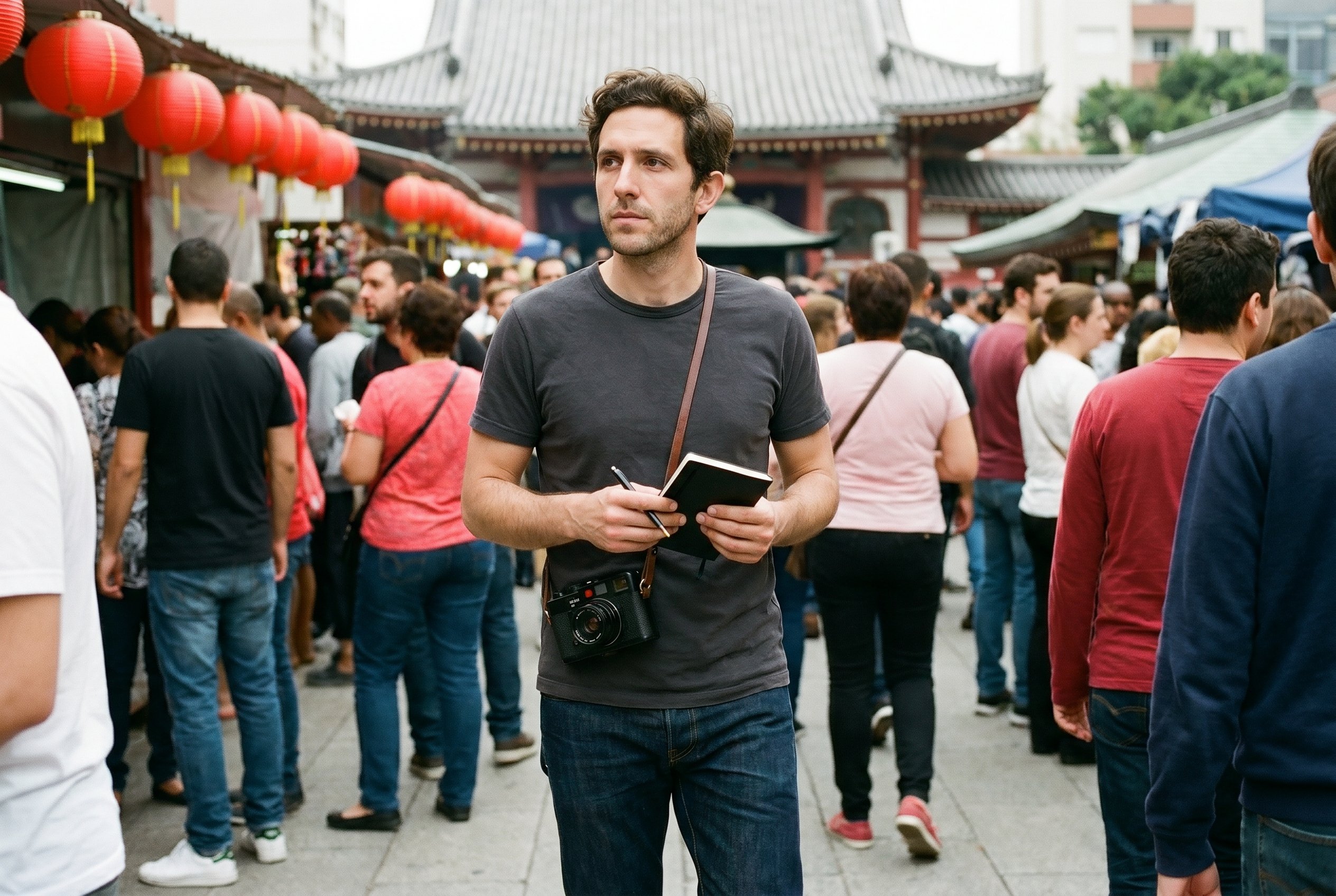
The Praça da Liberdade was already full at ten-twenty-five and the Sunday Feira does not need amplification. The crowd is the music.
I came for the three-generation stall and the stall came to me. The takoyaki press at the second corner — grandmother behind the iron, mother at the till, daughter taking orders. The daughter took my order in Portuguese, the grandmother called something from behind the press in Japanese, the daughter answered without lifting her eyes from the order-tray and went back to Portuguese for the next customer. The whole language-pivot lived in the wrist. Not in a pause. Not in a face. In the wrist that kept moving while the language flipped.
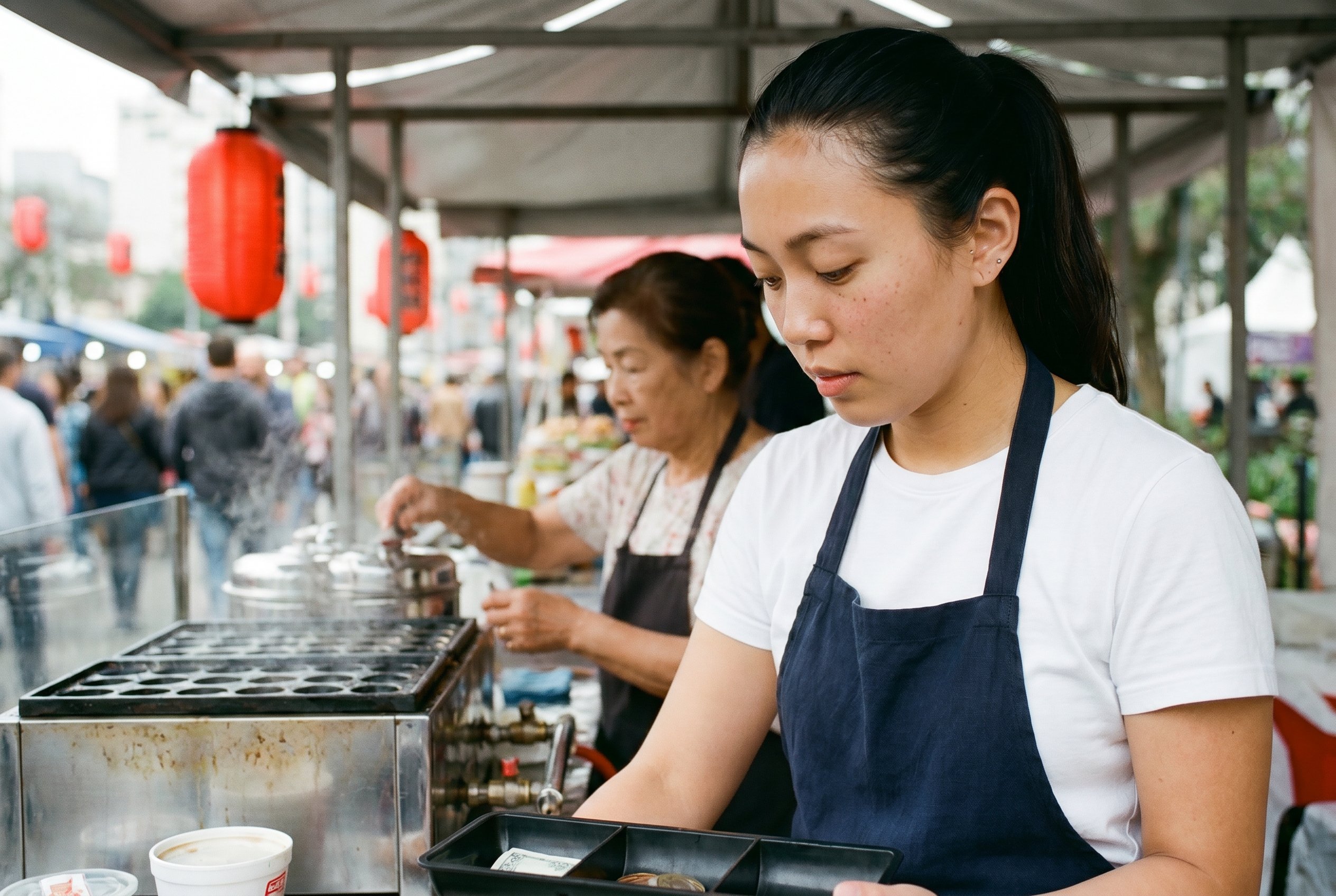
That is the kind of thing I came for. Diaspora as body-economy, not as biography. The Issei wrist, the Nisei till-position, the Sansei mid-career working-shoulder at the mochi-cart, the Yonsei mode-insider collar at the yakisoba stand. Four generations in ninety minutes of Praça-walking. The Sunday Feira is the diaspora's weekly check-in. I was a guest in the check-in.
The afternoon was Vila Madalena. Andréa Santos at Rua Wisard, the vinyl held up to the late-afternoon light. The first frame took twelve minutes. She read the surface of the record between thumb and forefinger like she has read it for eleven years. The shop kept selling between frames. A regular came in midway, bought a Cartola LP, left. We picked up the position. The shoot was inside the shop's actual working-rhythm, not paused around it.
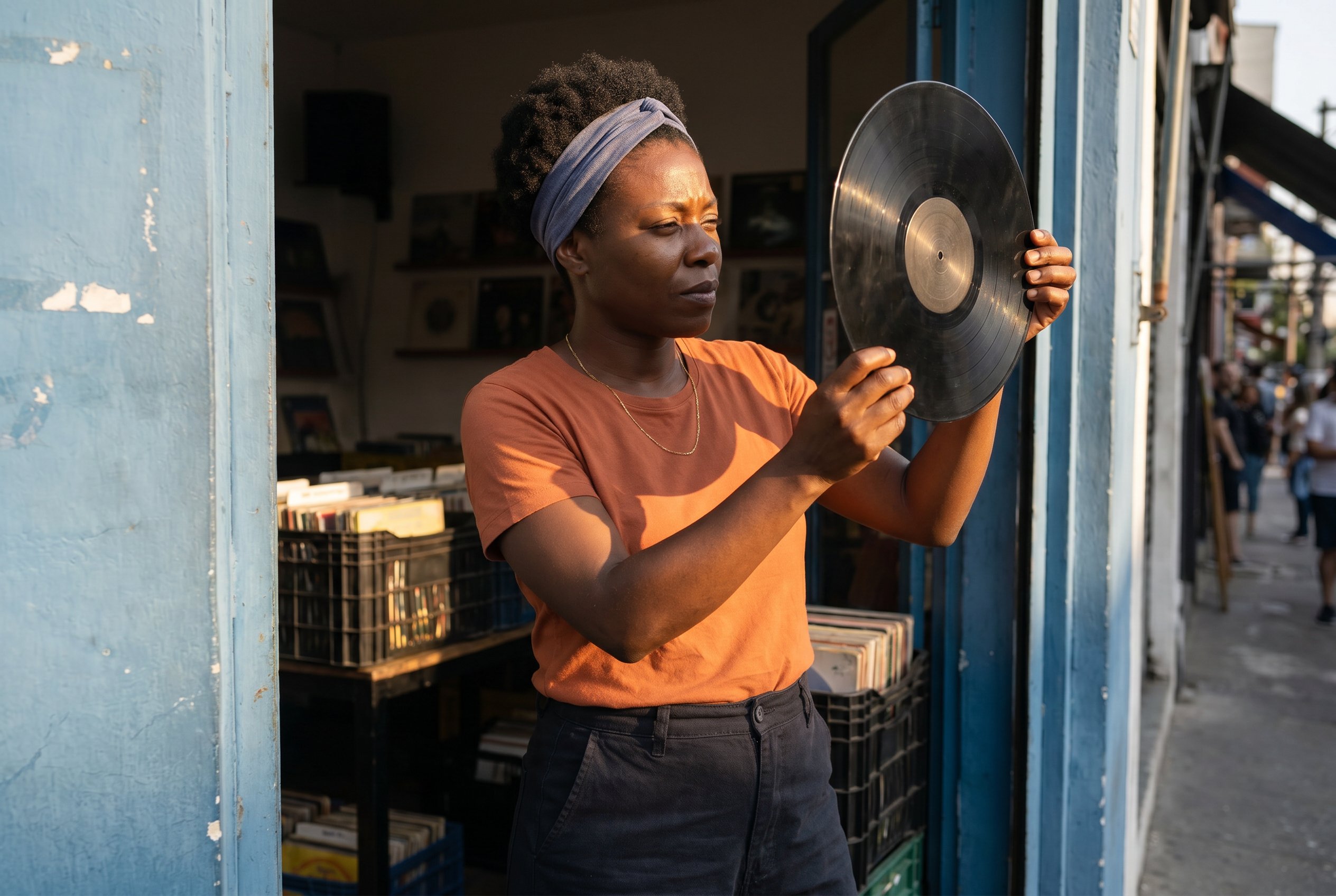
Walking home I thought: a working trader does not pose for the document. The document fits itself into the trade. That is the only register I want to make. The crate as the stage, the wrist as the language. São Paulo on a Sunday in May.