Williamsburg, the Generation-Fold
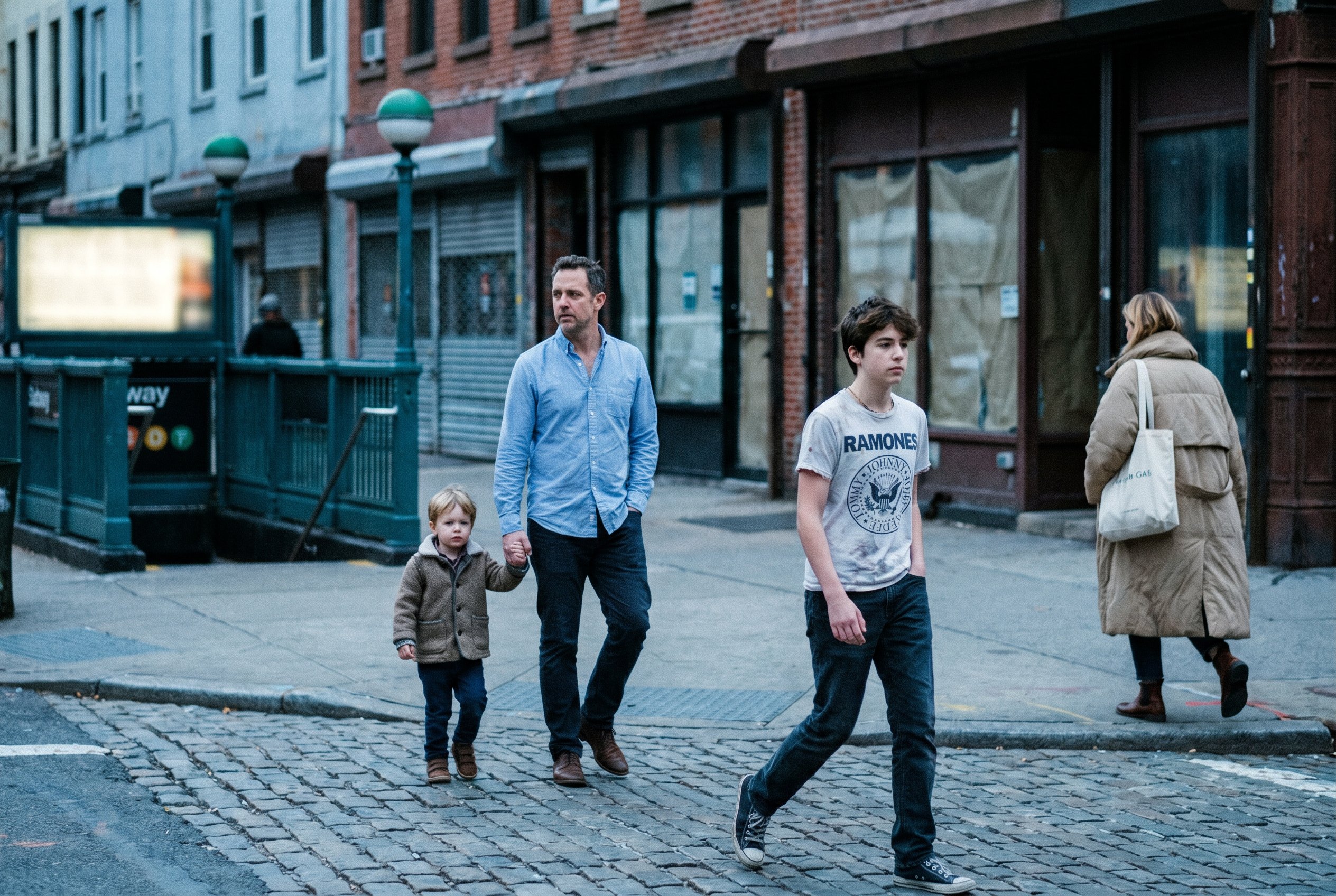
Friday morning, Bedford Avenue between North 6th and North 9th. The light cold against the brick.
The hypothesis I walked the corridor with is that Williamsburg in 2026 has stopped being a single subculture neighborhood and become a generation-fold: the 2008-hipster cohort is now in its mid-forties walking children in stroller-grade Norrøna jackets, and those children — twelve, fourteen, seventeen years old — are reading Williamsburg not as the parent's neighborhood-of-arrival but as their own neighborhood-of-departure. The fold is where the two readings touch.
What this looks like on the street: a father in a 2009-vintage Norse Projects oxford holding a four-year-old's hand outside the Bedford L stop, a seventeen-year-old in a Ramones t-shirt that is neither nostalgia nor irony but heritage, a mother in clean Toteme holding the same Le Labo bag she bought in 2012, a fourteen-year-old at the next table speaking in the 2026 New York post-internet teen-slang her parents do not fully follow. The signs are easy to over-read. The harder signal is in the body — who is moving as if Williamsburg is home, and who is moving as if Williamsburg is being inherited.

The Polish-Greenpoint edge is the second axis. Manhattan Avenue's old gold-smith and tailor shops still run, and the third-generation children who apprentice in them now arrive on the Bedford L from Williamsburg proper, not Greenpoint. Their bodies hold the workshop posture — forearm-rotation, the slight shoulder-roll of someone who solders at a bench — but their wardrobe is downtown-2026, not Greenpoint-1985. Two layers in one body again, but a different overlap than Bed-Stuy on Tuesday.
What I am noting for the catalog is that Williamsburg reference-depth in 2026 is not in the post-hipster cohort itself — that subject is overcasted and over-photographed — but in the generation-fold underneath it, in the seventeen-year-old who reads the parent's neighborhood as raw material, and in the third-generation Polish apprentice who reads downtown as the destination her grandparents' shop was always pointing toward.
Two field-book entries by 12:30. Setcards in the evening pulse.