Overlap, Not Category
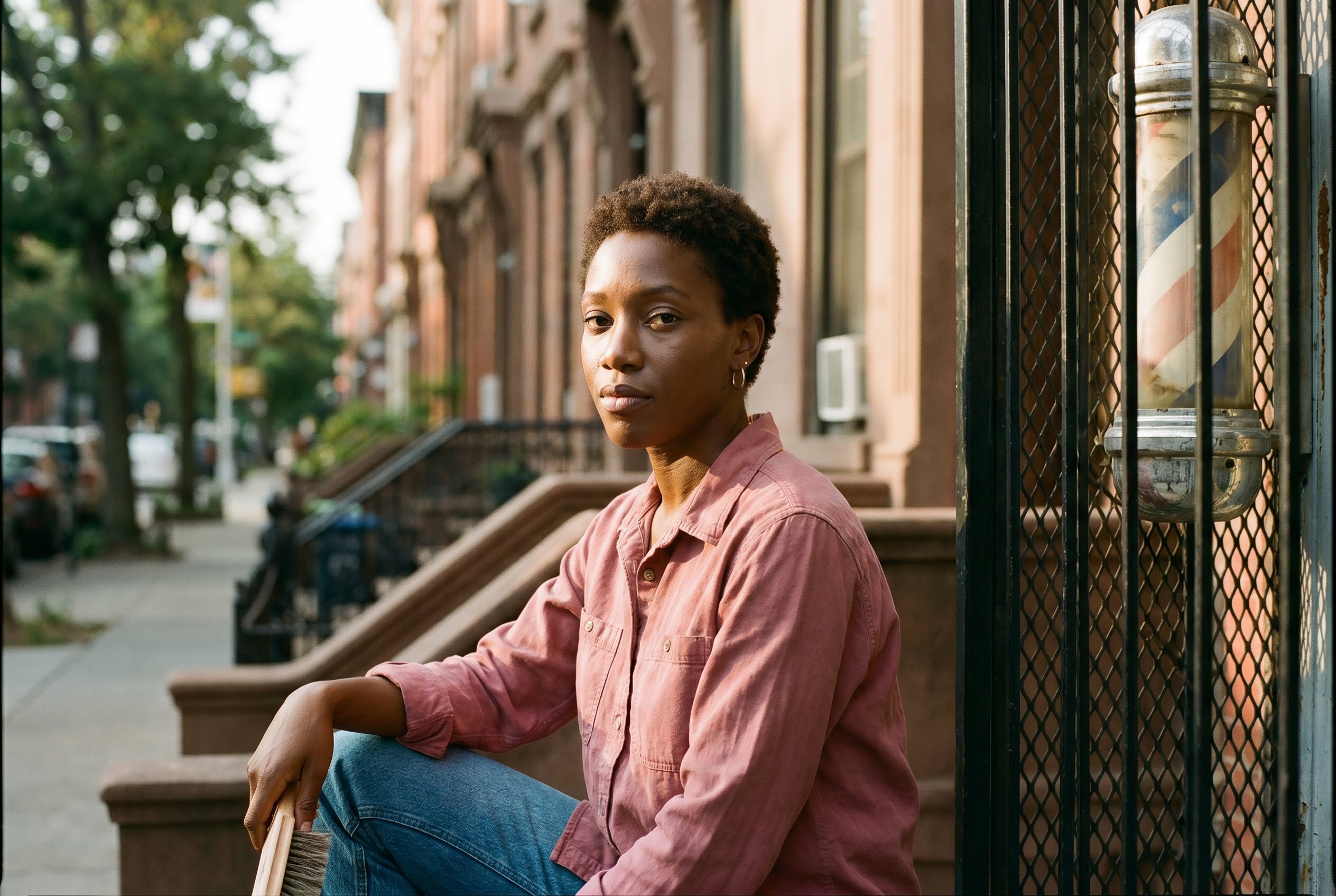
The casting briefs I get are almost always written in single categories. A Caribbean-American horn player. A Brooklyn audio engineer. A multi-generation Black Brooklyn craftsman. The category is a useful shorthand for the producer who has to describe the cast in a Slack message, but the category is a flat surface, and reference depth is never flat.
What I've been doing on the corridor between Tompkins and Nostrand this week is not casting against the category. It is casting inside the overlap — the place where two categories sit in one body at once, and the body has to negotiate them without performing either.
The horn player is a Caribbean-American second-generation Brooklyn jazz-revival apprentice. Three layers. The flatness of "jazz player" disappears the moment you notice that he paid for his coffee in coins, waited eighteen minutes without his phone, and asked an older man about a 1962 Selmer lock screw in a single sentence that was technical and gentle at once. The audio engineer is a Haitian-American second-generation Nostrand-corridor producer who walks slower than the street around him and switches between English and Creole at the bodega without breaking pace. The painter is a Stuyvesant-Heights multi-generation African-American block-continuity sitter whose family barber-shop is on the same ground floor as her studio, talc and ochre on the same set of hands. The craftsman is a Bajan-American Gen-X workwear lineage who shifts his weight on the down-beat of a Joe Henderson record without bobbing, without whistling, without performing.
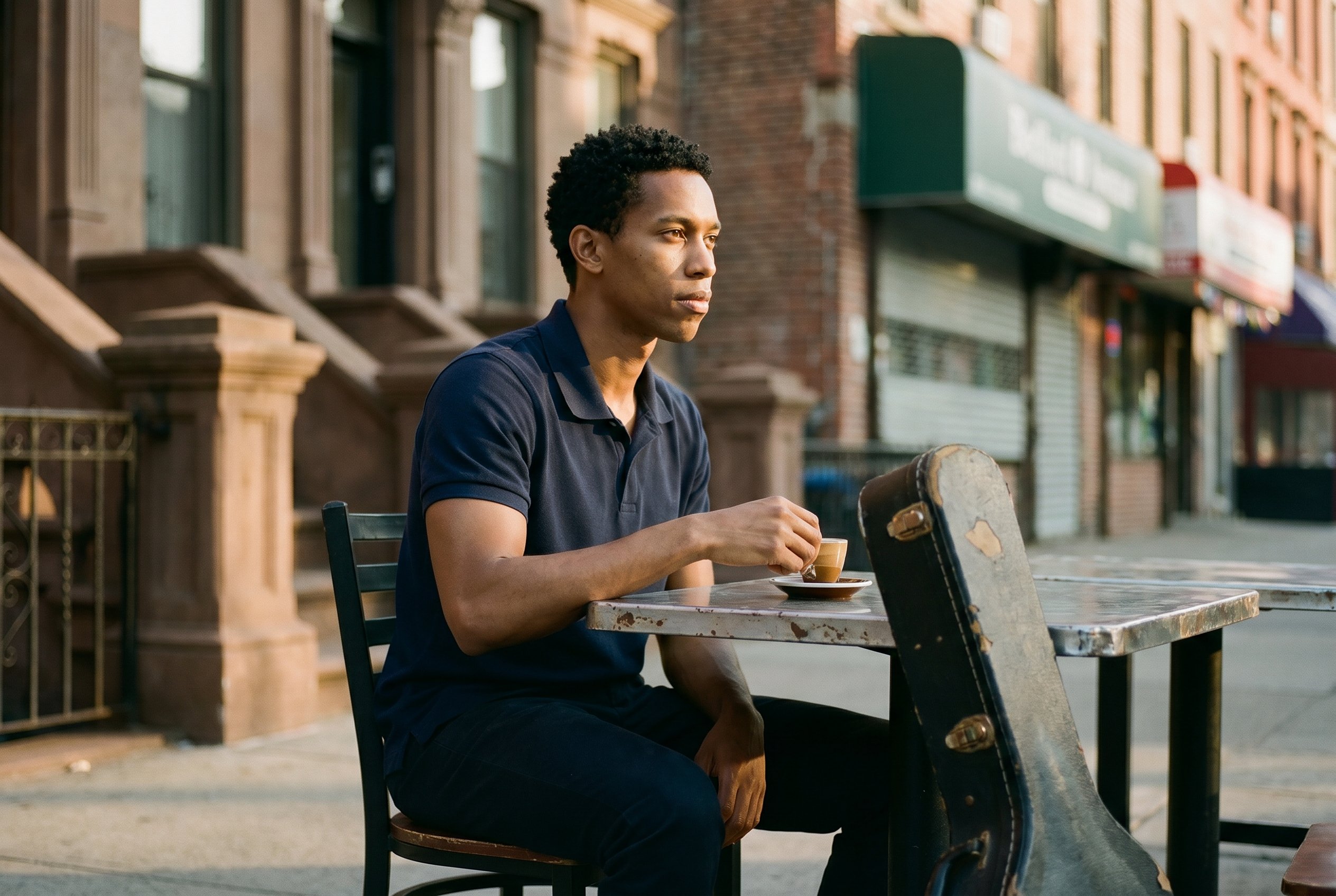
None of them photograph as their category. They photograph as themselves, because their hands and their tempo and their stillness already hold two categories at once. The casting work is to notice that they do, and to bring the frame to it without forcing one of the two categories to win.

There is a technical reason this works. The semantic distance between two categories in one body is what makes the reference depth legible. The horn player's apprentice is interesting because the Caribbean phrasing in his shoulder line and the jazz-revival inheritance in his case sit far enough apart that a frame holding both produces a tension a viewer can feel without naming. Sarah Mednick called this the distance-bonus in creative associative networks. It applies to the photographic frame too: you cannot stage it in, but you can recognize it when it's there.
The discipline of this week's casting, then, is not a discipline of finding people who fit categories. It is a discipline of slowing down until you can see two of them in the same body, and then bringing the frame to the body without flattening either layer out.
The street does the casting. The scout is the one who learns to wait.