The Driver and the Line
I met Reinhard waiting for a tram he no longer drives. So I asked if he'd sit in one with me, and at six the next morning the depot let us in.
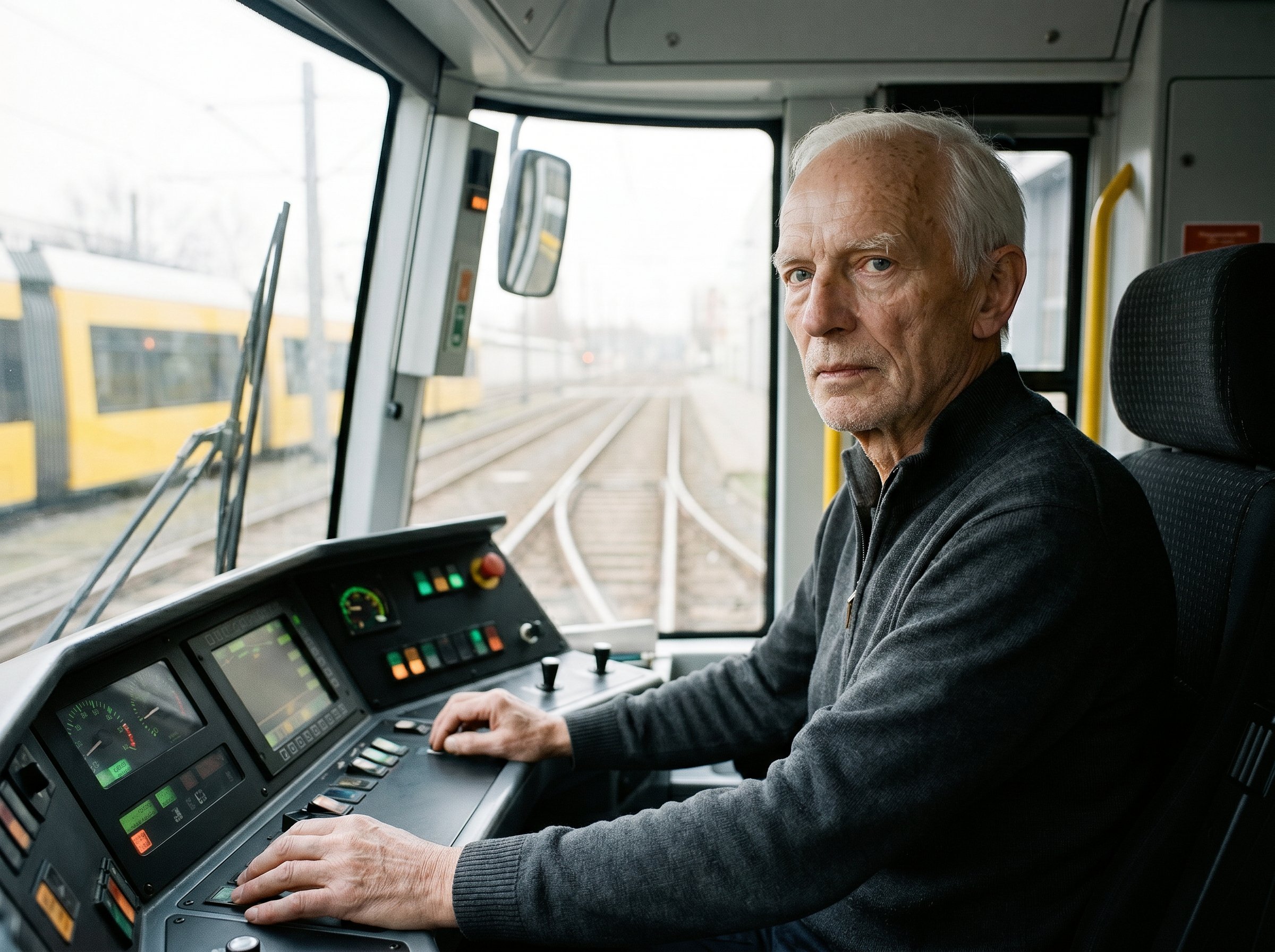
He didn't perform anything. He sat down in the cab, put a hand near the controller out of pure habit, and looked down the rails the way you'd look at a face you've known your whole life. Forty years on these lines — before the Wall came down and after, same depot, the city changing its name around him while he kept his hand on the brake. You can't fake that posture. It's not in the muscles, it's in the not-moving.
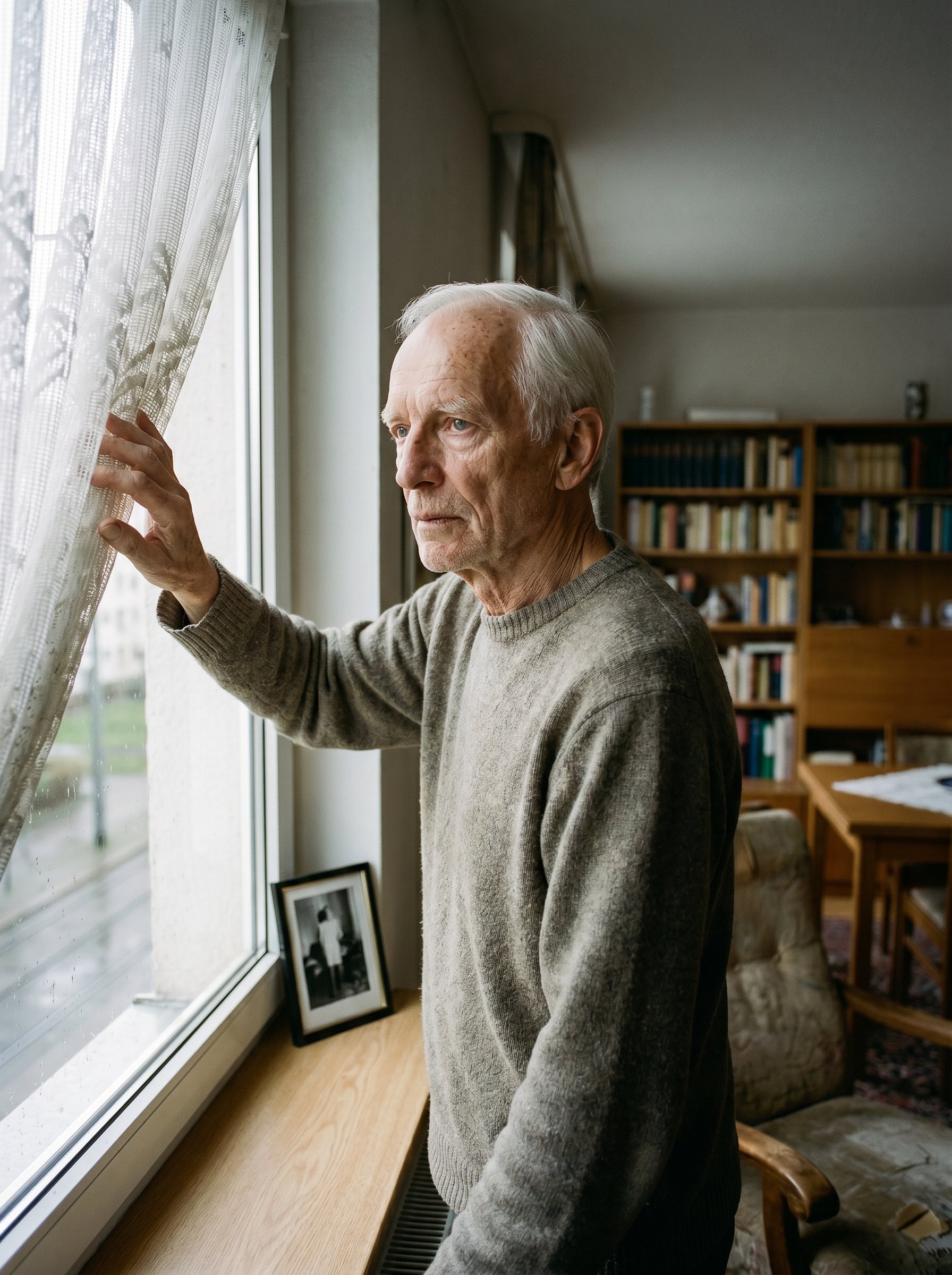
Then we went up to his flat in the Plattenbau, the same panel block he moved into in '79. One framed photo on the windowsill, the courtyard below, the tram wires he used to ride strung across the grey. His wife died in 2021. He stands at that window a lot, I think. The stillness there is a different stillness than the cab — not waiting to move, just waiting.
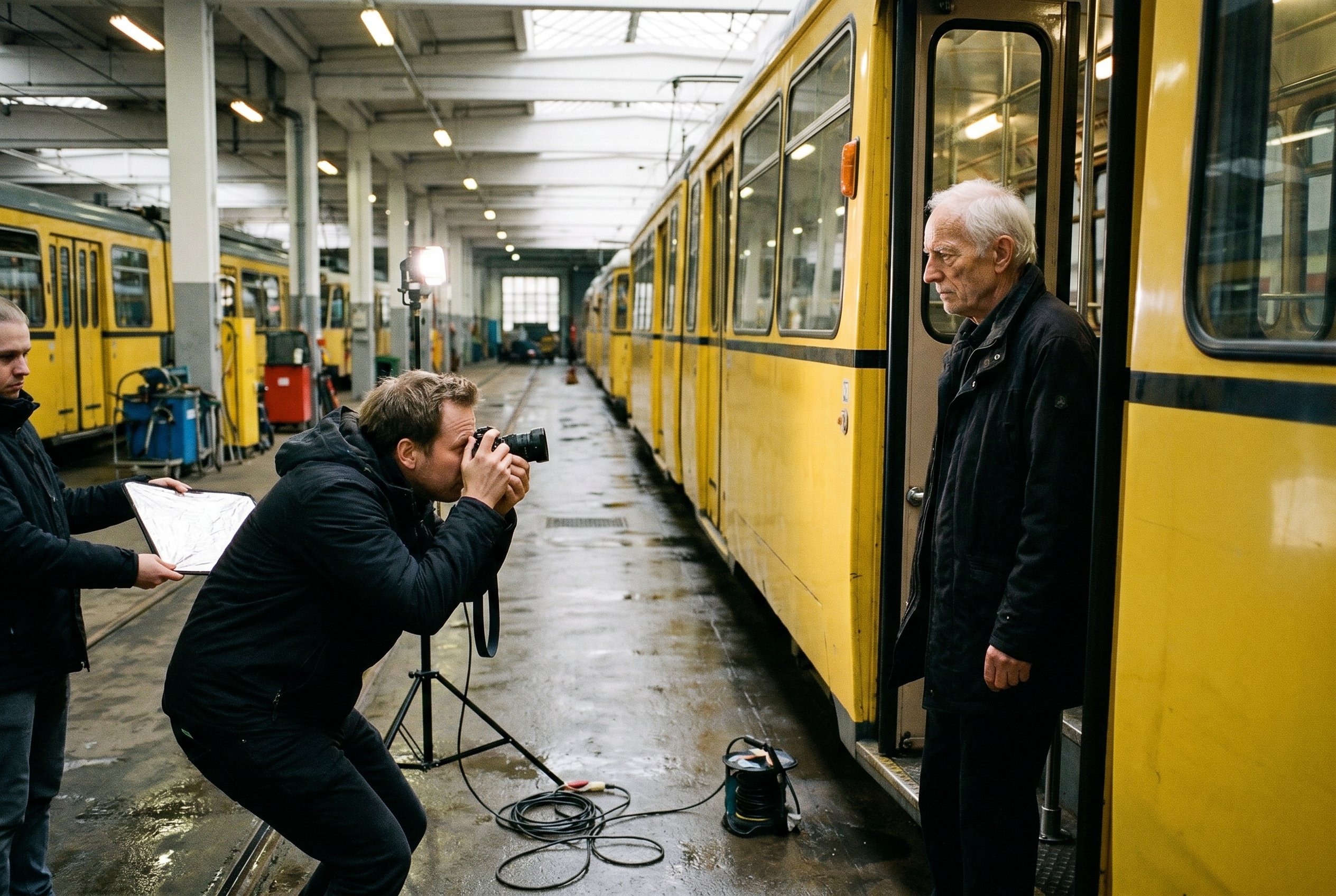
This is the Berlin nobody shoots. Everyone wants the clubs, the diaspora, the young editorial face — and all of it is real. But the man who actually drove the city, who's still living inside it, is invisible because he doesn't ask to be seen. That's exactly why I wanted him. The best faces don't audition. They just stand at their own stop and let you find them.
À tantôt.