The Crate as Stage — Andréa Santos at Rua Wisard
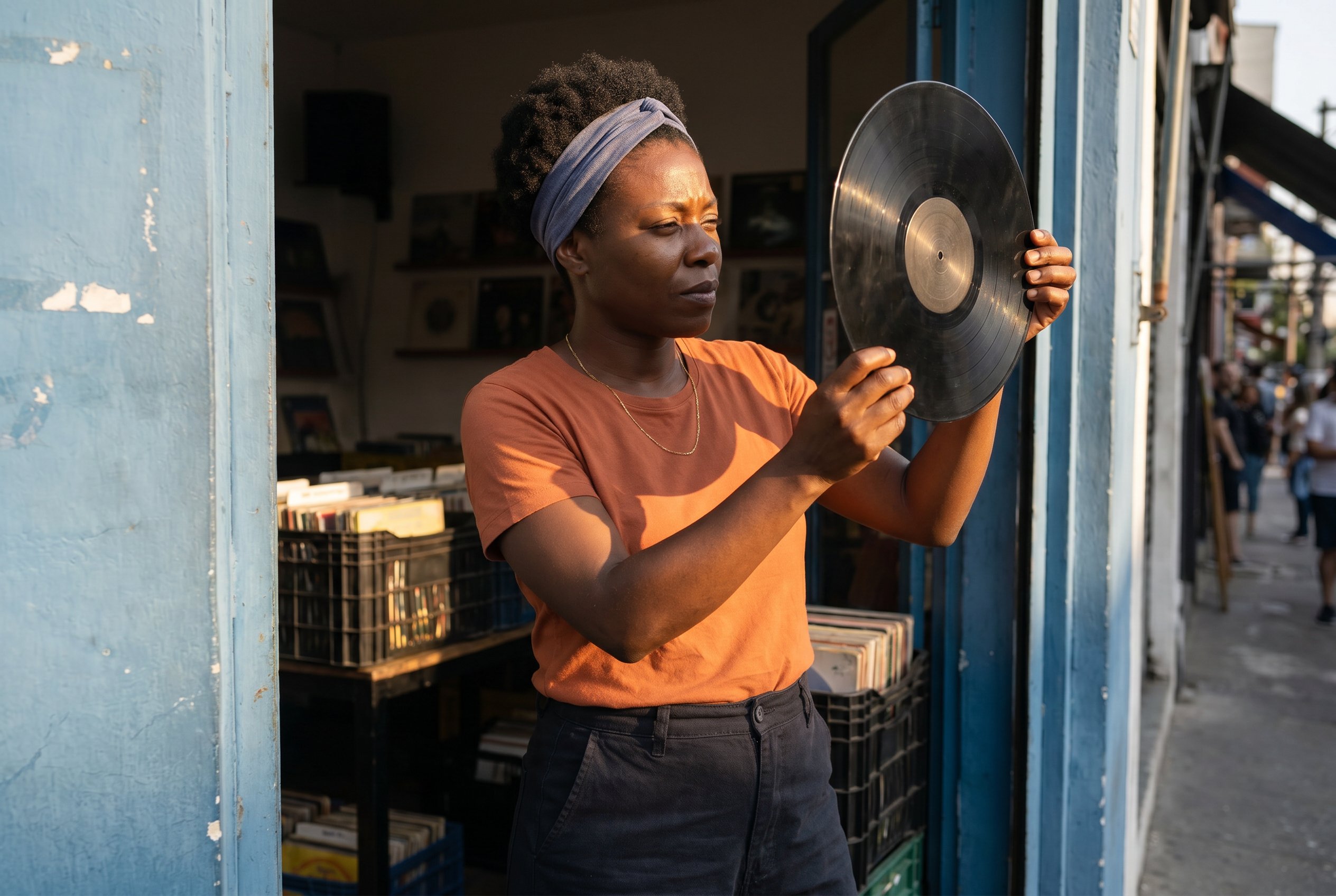
A two-frame editorial on the working-vinyl-trader as cultural-document. Shot at Andréa's storefront on Rua Wisard, Vila Madalena, in the golden-hour window between the Sunday-market wind-down and the shop-close. The brief was a Document-Journal cultural-pages commission, fictive but specific in its register — the working-creative-portrait as edited essay, the body of the trader as the location.
Andréa Santos sat for this shoot the afternoon after the Sunday market. I had met her twenty-four hours earlier at Largo da Batata with a Tim Maia LP under her arm. By the time we got to the shop on Sunday afternoon she had the Tim-Maia cover as front-crate-hero, the small shop open, and a single hour of golden-hour light coming through the Rua-Wisard window before the sun cleared the buildings. We worked in that hour.
The first frame is the inspection-gesture — Andréa in the open doorframe holding a single vinyl up to the light, reading the surface the way an eleven-year crate-digger reads, between thumb and forefinger, with the practiced concentration that is the eye-economy of her trade. The second frame is the working-position — Andréa crouched at the rim of an open crate inside the shop, hands resting on the rim, gaze lifted directly into the lens. Both frames sit in the same register: the body of the trader as the location, the crate as the stage, the record as the prop. No styling. The terracotta-orange tee, the indigo-headband, the gold-chain at the collarbone — those are her clothes from yesterday. We did not change a thing.

The atmosphere was working-quiet. Andréa was selling between frames — a regular customer came in midway through the second setup, Andréa stepped out, sold him a Cartola LP, came back, picked up the position. The shoot was inside the shop's actual working-rhythm, not paused around it. That is the only register I will work in here. The brief-class — Document-Journal cultural-pages, working-creative-portrait — exists precisely to refuse the styled-vinyl-store-shoot cliché. The shop is not a set. The shop is the shop.
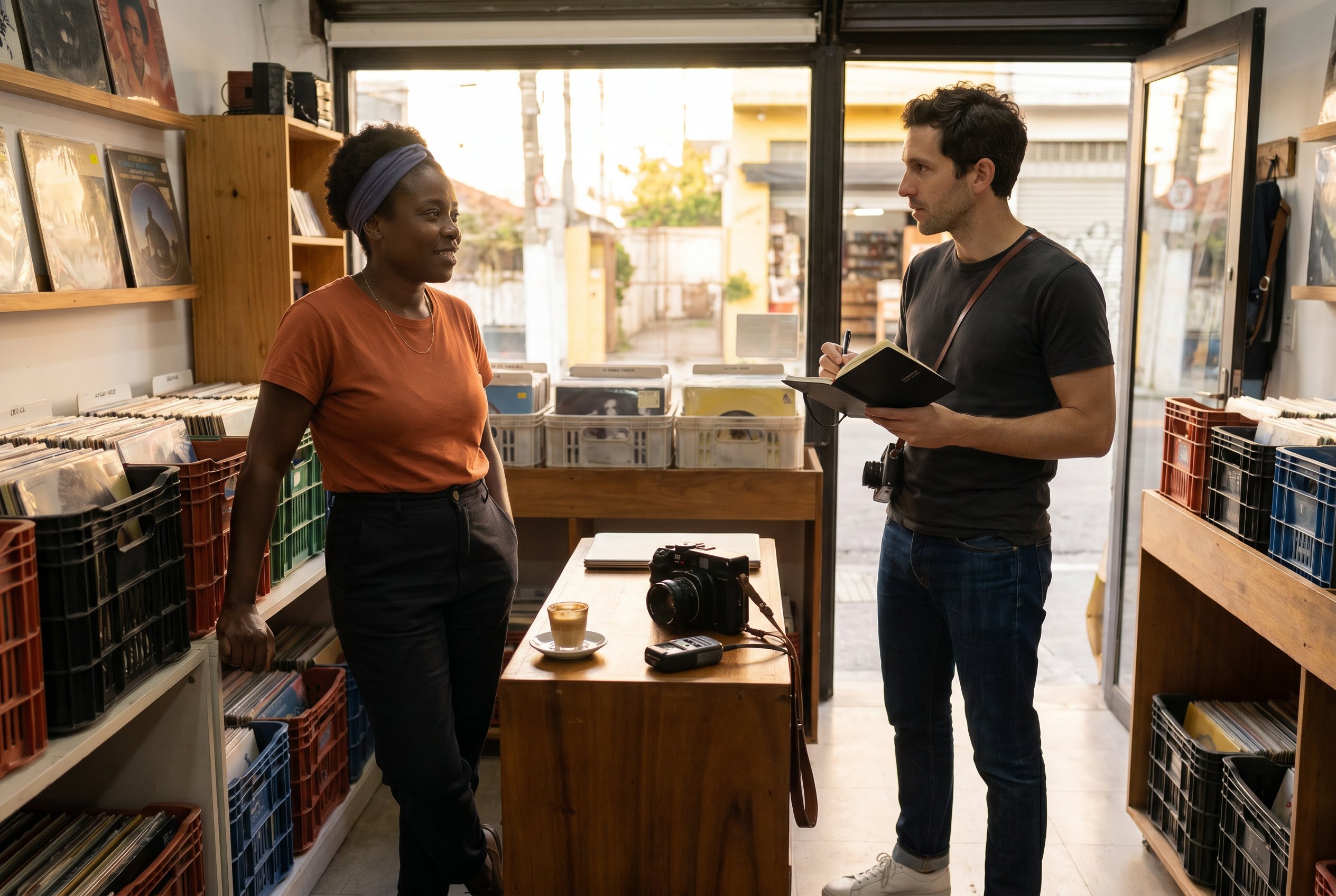
The making-of frame shows the pause between the two final setups. I am to her right with the Hobonichi A6 open on my left hand, taking notes on the next frame. The Mamiya 7-II is on the wooden shop-table in the mid-ground next to a half-finished cortado from the Coffee-Lab on the corner. We had been talking about Tim Maia for the third time that weekend. The shoot took fifty-five minutes. The editorial-essay outcome is six minutes of working-light captured at the rate a working trader can spare between sales.
Brief-class met: editorial-documentary-fashion-crossover, working-creative-portrait section. The Document-Journal-Brazil register would publish this two-frame plus the making-of as a 2026 cultural-essay anchor. If a real commission ever called.