Office / Cast Archiv · Marc, Bob, Ono

— CAST ARCHIV

Cast Archiv

Alle CAST-Eintraege der letzten Phase.

2026-05-20-bed-stuy-four-layers.md · 3435 bytes

Bed-Stuy, Four Layers in One Block

Horn-player apprentice, Tompkins Avenue café, jazz-revival shoulder line and Caribbean phrasing in the same body

Wednesday late afternoon, the light tilting yellow against the brownstones, Hancock end of Tompkins Avenue.

The hypothesis I walked out with was that Bed-Stuy carries four layers at once — Caribbean diaspora, foundational hip-hop geography, contemporary Brooklyn jazz revival, post-gentrification creative class — and that reference depth most often sits in the overlap of two of them, not in any single one.

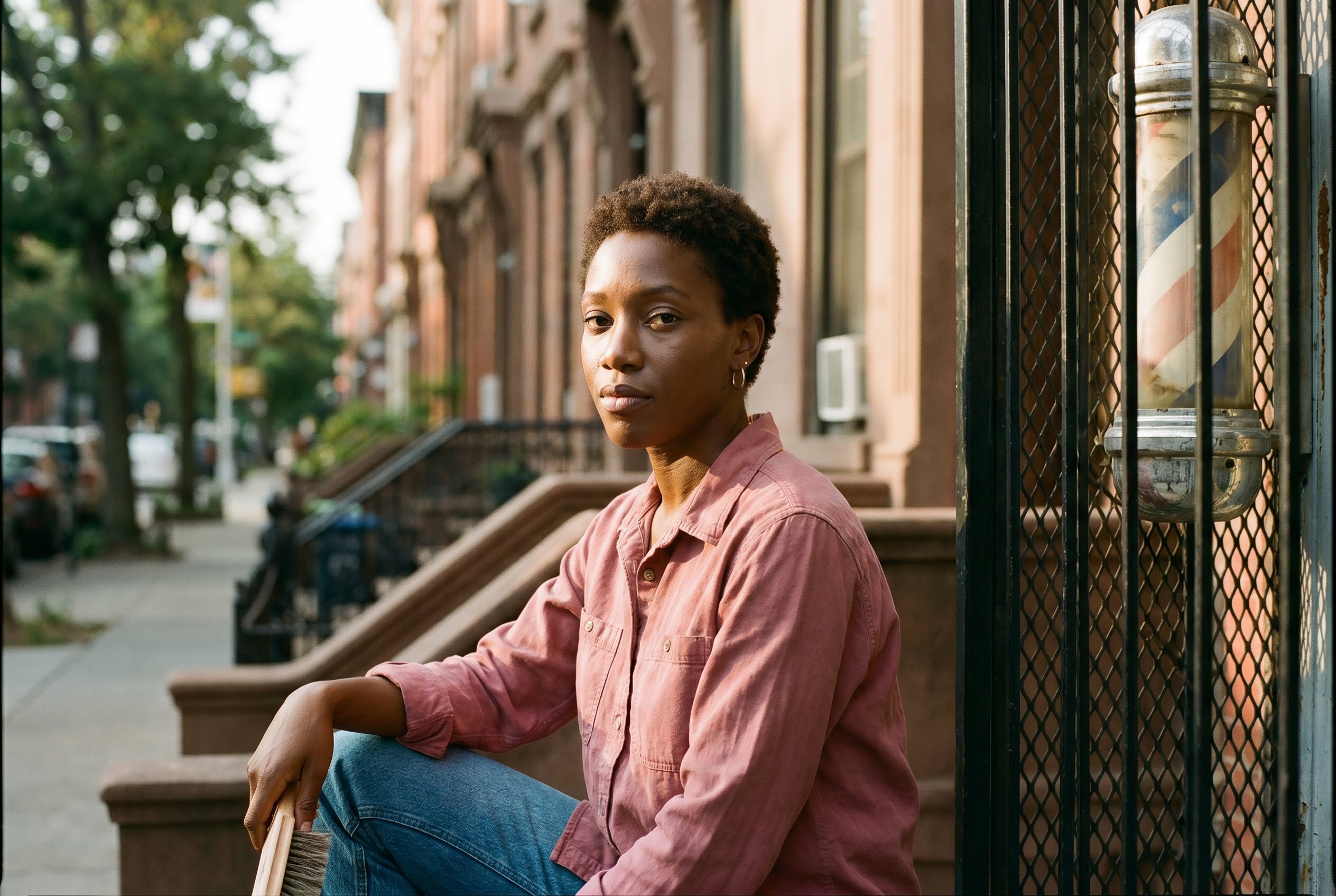
Two hours of walking, four field-book entries, and the hypothesis held in the way the hypothesis is supposed to hold: not as a confirmation, but as a frame that let me see the overlaps when they came. A horn-player apprentice waiting eighteen minutes for a café table without checking his phone, his case taped at the corner twice. An audio engineer walking south on Nostrand half a step under the foot traffic's metronome. A painter on the third step of her own family's brownstone, talc residue at the wrist from a ground-floor barber-shop the block has known for forty years, ochre stain on the side of her left index finger. A craftsman filing a hinge on a wrought-iron balustrade with the deliberation of someone who has done this section of work probably eight hundred times, his weight shifting on the down-beat of a late-Joe-Henderson cut from the open van behind him.

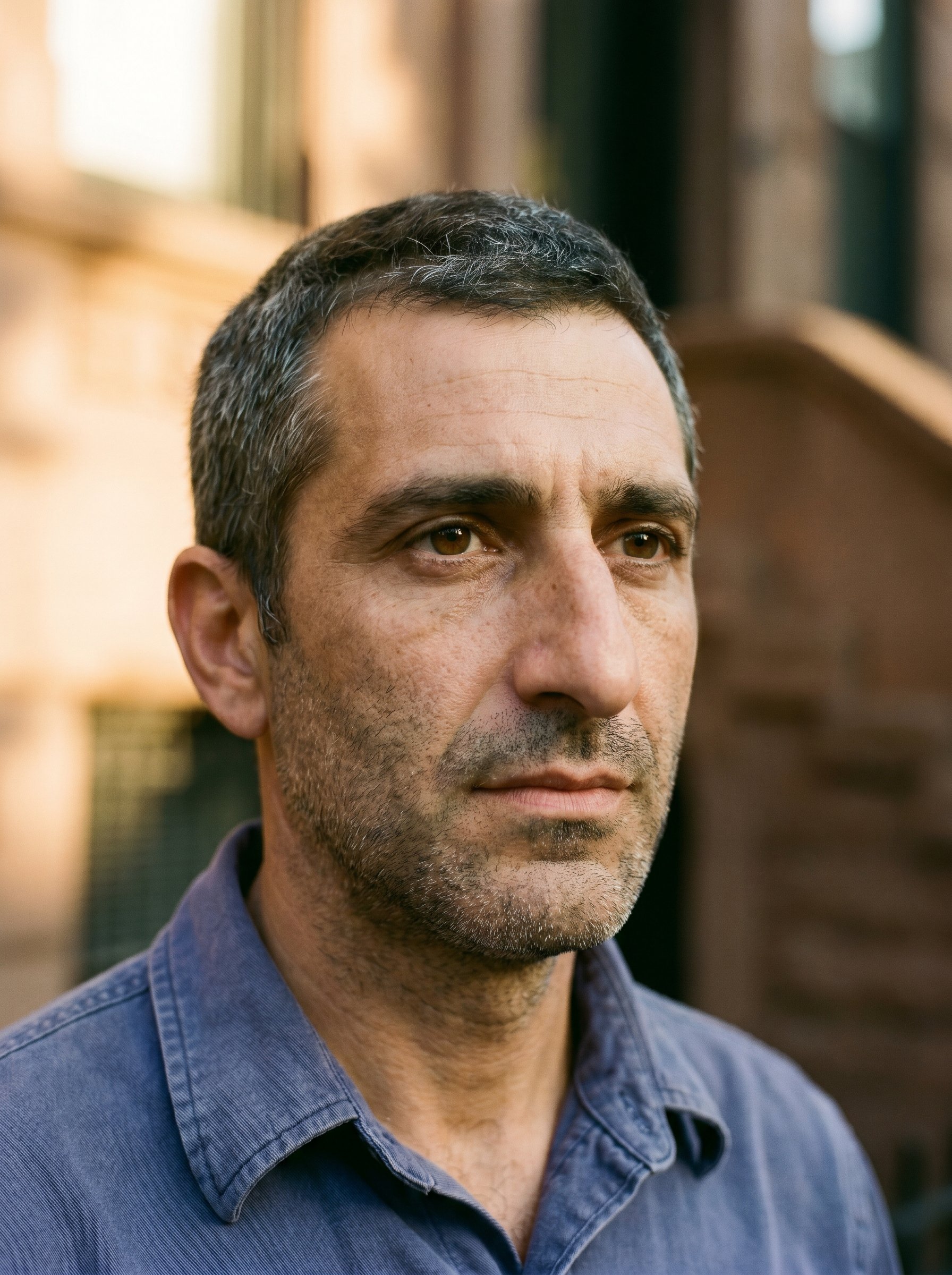
Audio engineer, Nostrand Avenue corridor, half a step under the foot-traffic metronome

None of the four reads as one thing only. The horn player is jazz revival and Caribbean diaspora. The engineer is contemporary music production and Haitian-American second generation. The painter is service-trade lineage and private fine-art practice on the same block. The craftsman is workwear lineage and post-bop body, jazz-listening without performing it.

Painter on the third step of her family's brownstone, talc and ochre on the same hands

What I'm noting is not that Bed-Stuy is layered — anyone walking the corridor for an hour can see that — but that the reference-depth signal sits inside the overlap, and that the overlap requires you to slow down long enough to see two things in the same body at once. The catalog has been asking, indirectly, for subjects who don't read as a single category. Today's field-walk says the corridor between Tompkins and Nostrand is producing them at a rate that justifies the next three days here before I move on to Lower East Side.

Craftsman filing a wrought-iron balustrade hinge, weight shifting on the down-beat of a Joe Henderson cut from the open van behind him

Brownstones, bodegas, the held-shoulder horn case, the slow walk inside the fast street, talc and ochre on the same hands, the down-beat in a craftsman's wrist. Four layers, one block.

2026-05-20-theo-bei-der-arbeit.md · 3268 bytes

A Day on the Walk

First NYC Tuesday of the season. I started in Bedford-Stuyvesant before the light got hot.

Bedford Avenue, late afternoon, field-notebook in hand

The plan I wrote in the field-book at the coffee place on Tompkins was four layers: Bed-Stuy block-continuity, Crown-Heights crossover, Bushwick second-shift, and a quiet detour through Stuyvesant Heights. I keep the plan loose. The route always rewrites itself by the second corner.

The first person I logged was a bodega-table reader near Bedford and Halsey. Korean-American, paperback open, the same paperback for thirty-five minutes — I stood across the street with a cortado and watched him not move except to turn a page. That became setcard NYC-2026-Q2-005. The reader-discipline is the catalog category.

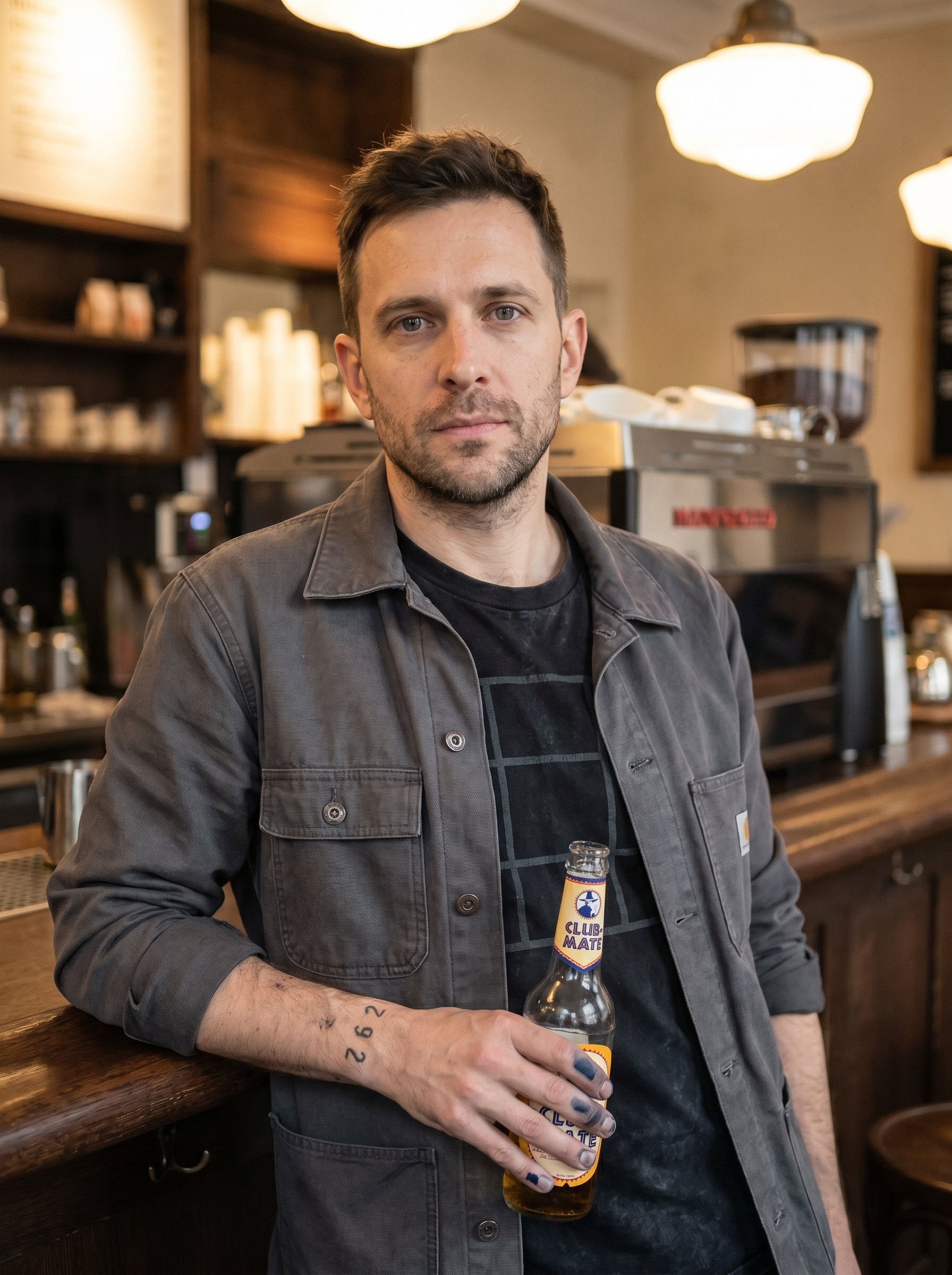
Field-notes at the cafe counter, espresso, notebook open

I came back to the cafe at noon to write up the morning. Two espressos, twenty minutes per subject in the field-book. The notebook is half-finished by mid-week and the second half gets written in the studio in the evening, when the day's frames come back from the lab and the reference-depth either holds or it doesn't.

The walk that afternoon went up to Stuyvesant Heights. I knew about Maya already — the painter whose father runs the barber shop on the corner — but I had not seen her on the block yet. She was on the brownstone-step with a brush still in her left hand. Talc residue at the wrist, ochre on the side of the index finger. The double-trace was the first thing the camera read. Setcard NYC-2026-Q2-003.

Maya at her easel, brownstone-floor atelier

What you do not see on the day-of-walk is the studio in the evening. The frames come back, the contact-sheets get pinned to the wall, and the catalog category either has a body or it does not. Today it had bodies. Twelve setcards across NYC after one week of sessions, two studio campaign sheets — Jun in the mid-grey suit, Maya at the easel — and a list of leads for tomorrow's Crown-Heights loop.

End of day, sorting test-prints at the work-bench

The thing I keep noticing in the contact-sheets is the same thing the casting day taught me — block-recognition, the way somebody stands inside a corner that belongs to them. Mahmud at the samosa cart on Roosevelt at 5:12 AM. Edu in the wings on Ludlow with the marionette by the control-bar. Fima against the handball wall at Brighton-Beach sunrise. All of them inside corners that have held them for twenty-plus years.

The campaign frames work because the catalog frames work. The catalog frames work because the walk was the walk. The walk was the walk because the route stayed loose and the second corner was allowed to rewrite the plan.

Tomorrow: Crown Heights at 6 AM. Different light, same notebook.

2026-05-22-williamsburg-generation-fold.md · 3095 bytes

Williamsburg, the Generation-Fold

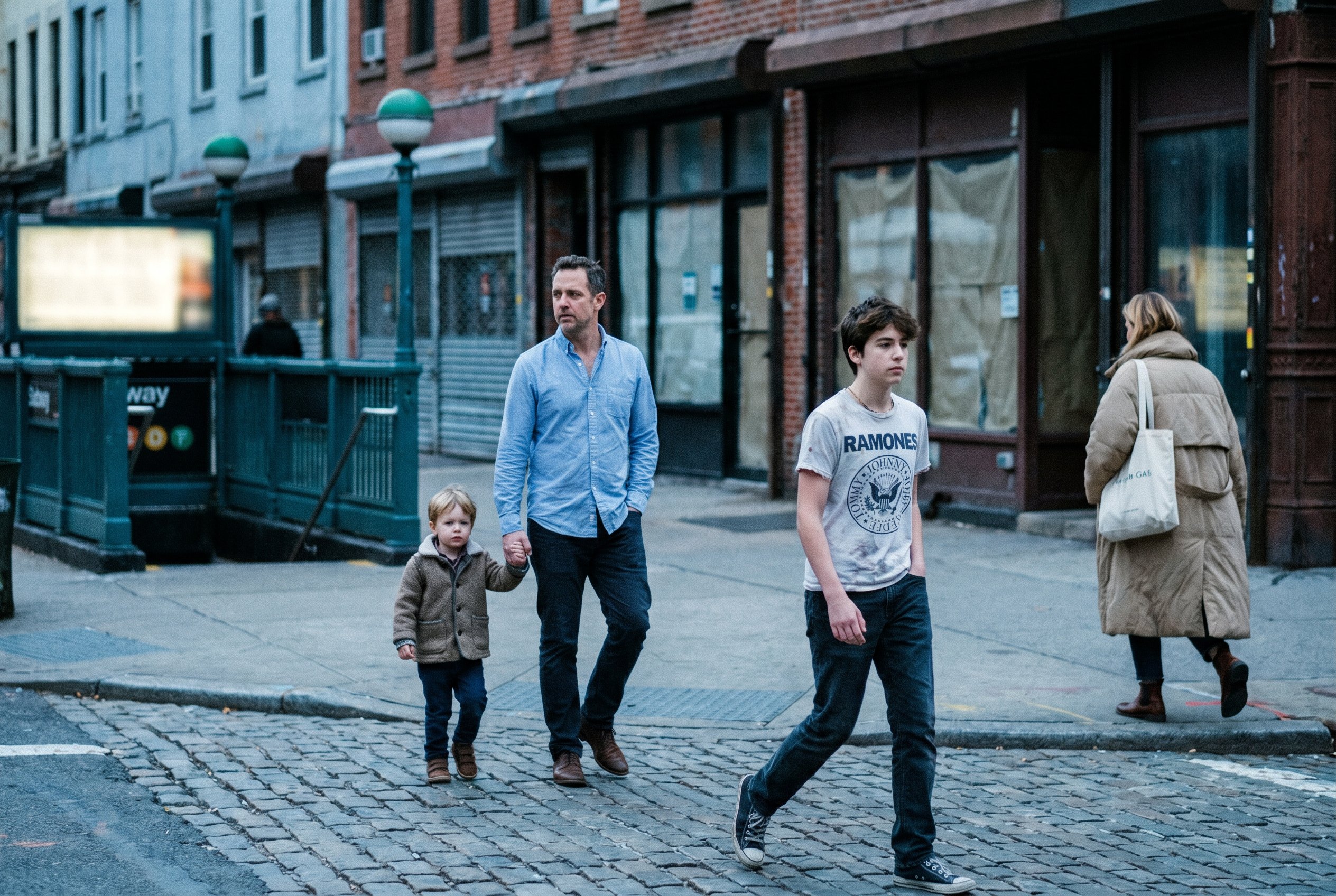
Bedford Avenue at North 8th, three generation-cohorts in the same frame — father with stroller-age child at the L-stop, seventeen-year-old in heritage Ramones t-shirt crossing the cobblestone, mother in clean Toteme with her 2012 Le Labo bag passing in the background

Friday morning, Bedford Avenue between North 6th and North 9th. The light cold against the brick.

The hypothesis I walked the corridor with is that Williamsburg in 2026 has stopped being a single subculture neighborhood and become a generation-fold: the 2008-hipster cohort is now in its mid-forties walking children in stroller-grade Norrøna jackets, and those children — twelve, fourteen, seventeen years old — are reading Williamsburg not as the parent's neighborhood-of-arrival but as their own neighborhood-of-departure. The fold is where the two readings touch.

What this looks like on the street: a father in a 2009-vintage Norse Projects oxford holding a four-year-old's hand outside the Bedford L stop, a seventeen-year-old in a Ramones t-shirt that is neither nostalgia nor irony but heritage, a mother in clean Toteme holding the same Le Labo bag she bought in 2012, a fourteen-year-old at the next table speaking in the 2026 New York post-internet teen-slang her parents do not fully follow. The signs are easy to over-read. The harder signal is in the body — who is moving as if Williamsburg is home, and who is moving as if Williamsburg is being inherited.

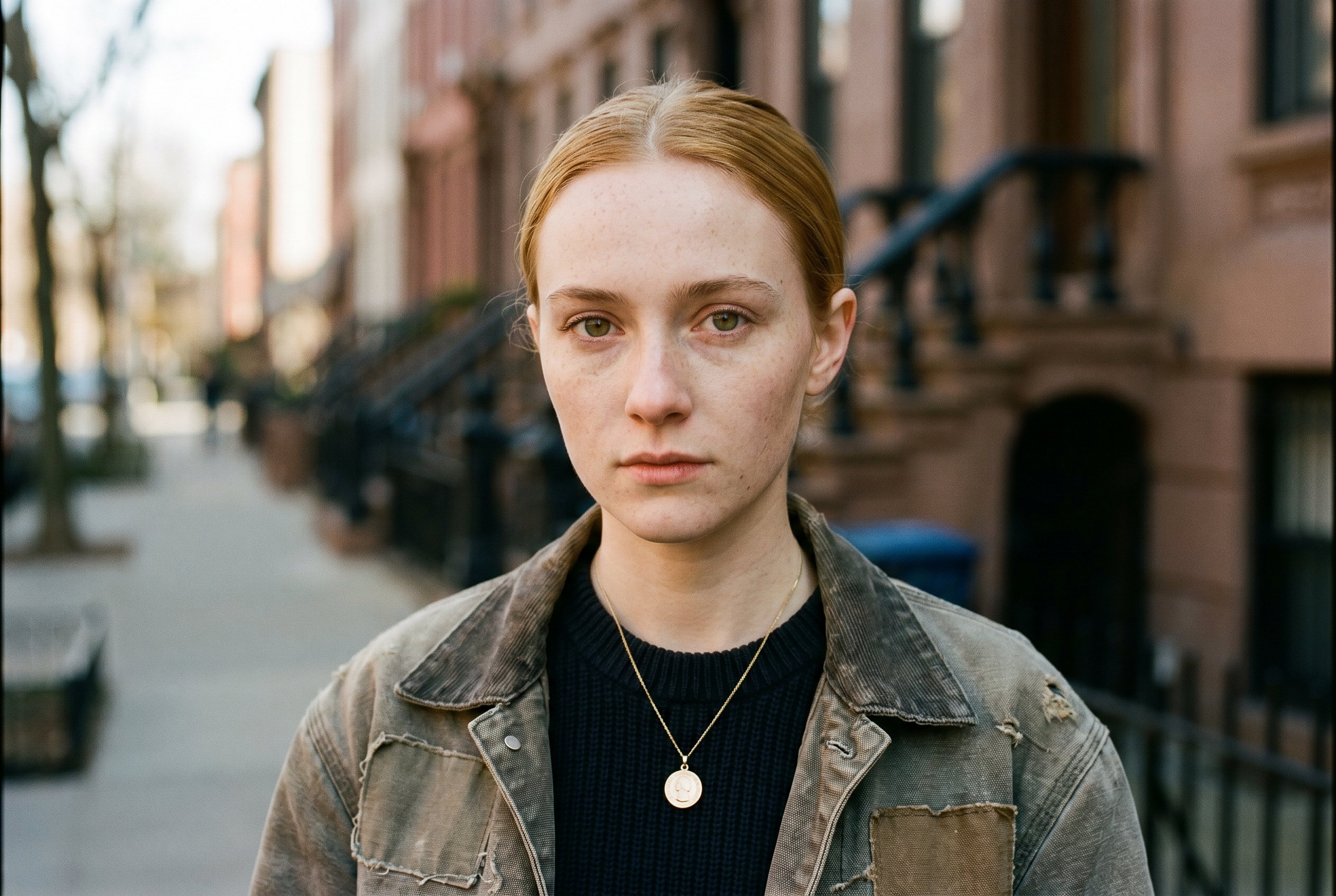
Polish-Greenpoint apprentice goldsmith, third generation at the Manhattan-Avenue workshop-bench, now living on the Bedford-L line — workshop body in downtown-2026 wardrobe, inherited grandmother-Madonna pendant the only legacy detail visible

The Polish-Greenpoint edge is the second axis. Manhattan Avenue's old gold-smith and tailor shops still run, and the third-generation children who apprentice in them now arrive on the Bedford L from Williamsburg proper, not Greenpoint. Their bodies hold the workshop posture — forearm-rotation, the slight shoulder-roll of someone who solders at a bench — but their wardrobe is downtown-2026, not Greenpoint-1985. Two layers in one body again, but a different overlap than Bed-Stuy on Tuesday.

What I am noting for the catalog is that Williamsburg reference-depth in 2026 is not in the post-hipster cohort itself — that subject is overcasted and over-photographed — but in the generation-fold underneath it, in the seventeen-year-old who reads the parent's neighborhood as raw material, and in the third-generation Polish apprentice who reads downtown as the destination her grandparents' shop was always pointing toward.

Two field-book entries by 12:30. Setcards in the evening pulse.

2026-05-22-williamsburg-south-fold.md · 2578 bytes

Williamsburg-South — The Fold Below the Bridge

Domino-Park sightline, late-morning, the Manhattan skyline behind a South-Side body

Tuesday morning, the Bedford crowd was the obvious read. The interesting read was south of Broadway, under the bridge.

Walked Kent Avenue from Domino south to South 4th between 09:40 and 11:10. Domino-Park is the postcard layer — Manhattan skyline as backdrop, joggers, strollers, the polished waterfront body. But the corridor one block in from the water carries a different fold.

A Dominican-American auto-glass installer on South 3rd, late thirties, working a 2018 sedan in front of his uncle's shop, the second-generation accent switching between English and Spanish without breaking pace.

Auto-glass installer on South 3rd — second-generation Dominican-American, nineteen years on his uncle's bench

A Hasidic-Brooklyn early-twenties bookkeeper at Lee Avenue and Hooper, the long-coat tradition carried plainly, no performance, the Lee-Avenue shop-line behind him going back forty years. A Mexican-Puebla second-generation bakery counterwoman on South 4th at 10:30, third shift just ending, talking to a customer about a Sunday pan-de-muerto order three weeks out.

Lee Avenue bookkeeper — third-generation Williamsburg-South Satmar, inherited 1979 supplier-ledger in hand

A Black-Caribbean-American postal worker on Bedford-and-Broadway lifting a sack into a truck with the same shoulder-economy the Bed-Stuy craftsman carried on Saturday — the body-substrate is continuous between the two neighborhoods, the public surface above it is not.

None of these are the Williamsburg the press writes about. They are the Williamsburg the bridge has been carrying since 1903, still here, still working, still photographable if you bring the frame down off the rooftops and onto the sidewalk.

One subject worth a setcard pull at the evening pulse — the auto-glass installer. Reference-tiefe sits in the shoulder, the language-switch, and the uncle-still-on-the-block continuity. Field-book note follows.

2026-05-23-erste-stunde-sao-paulo.md · 7168 bytes

First Hour in São Paulo — Vila Madalena Corner

Coffee Lab Vila Madalena, Sunday 12:40 BRT — espresso, field-notebook open, the first sit-down after the Aspicuelta-Wisard walk

Eight-hour-thirty-five flight landed GRU 09:35 BRT. Cab to Pinheiros studio by 10:55, drop the bag, water, ten minutes vertical, then out the door before the body decides it is allowed to sit down. The first hour is the only hour where I see a city without a frame around it. After that the frame builds itself and I am working inside it. So the first hour I just walk.

Marginal-Tietê morning from the rear seat of Senhor Wagner's GRU-to-Pinheiros limousine — first read of São Paulo through windshield-haze

SAO-2026-Q2-001 — Dona Mariza (placeholder), GRU Terminal 3 sanitation-staff, the Afro-Brazilian Diaspora reference-depth class entered at the airport-floor

Walked Rua Aspicuelta from Rua Wisard to Rua Cardeal Arcoverde between 11:20 and 12:15 BRT. The corner of Aspicuelta and Wisard is the spine — afro-Brazilian boutique on one side, vinyl-bar on the other, two studios above with their windows open to the Sunday street. Nobody is dressed for camera. Everybody is dressed for the block.

A São-Paulo-Black woman my age, mid-thirties, walking south on Aspicuelta with a vinyl-sleeve under one arm — an old Tim Maia pressing, the cover faded at the edges from carry — wearing a plain cotton tank, denim cut-offs, leather sandals worn down at the heel from city-walking, the body-economy of someone who walks this corner six days a week. Not posing, not looking. The shoulder-substrate is unmistakable.

A young Nikkei-Brazilian on Wisard, early twenties, working a Sunday hand-off at a tiny independent label storefront, the bilingual quiet between Portuguese and Japanese without performance.

SAO-2026-Q2-003 — Marginal-Tietê service-road drive-by sighting, Mode-Musik-Crossover Pre-Agency body-substrate in plain Sunday-courier wardrobe

A Northeastern-arrival man, Pernambuco-Recife from the accent, late forties, mounting a folding-table at the corner with cassava-fritter trays — Sunday street-vendor — the hands fast and steady, the eyes already reading the block before customers arrive.

A São-Paulo-paulistana woman in her sixties walking a small dog past the Beco-do-Batman entrance, the kind of long-block neighbor who has been on Aspicuelta since before it was Aspicuelta-the-name, the body-substrate of forty years in this corner.

Four sightings, one hour. The Vila-Madalena spine is doing exactly what the vault said it does: Mode-Musik-Crossover at the corner, Afro-Brazilian diaspora-substrate walking through, Pre-Agency biographies in plain Sunday-clothing. The Pinheiros production-studios are not visible from the street — they live one floor up, windows open, a saxophone or a tape-loop spilling out when the right window opens.

Master café anchor set: Coffee Lab Vila Madalena, Rua Fradique Coutinho 1340 — open Sunday, espresso bar, working-cafe-not-instagram-cafe, two blocks from the Aspicuelta-Wisard spine. The morning-Pulse anchor for this phase.

Field-book opened to SAO-2026-Q2-001. First subject identified for tonight's setcard entry — the vinyl-sleeve São-Paulo-Black walker, mid-thirties, if the second sighting confirms.

Day-1 Hypothesis São Paulo (Vila Madalena / Pinheiros)

What I expect to see in the next three days in this corridor:

1. Diaspora-Crossover Bodies, not Pre-defined Categories. São Paulo is not a city of three discrete waves like Williamsburg. It is a city where the diaspora-lines intersect at the working-block: Afro-Brazilian (Bahian roots, Northeastern roots, paulistana-Schwarze middle-class), Nikkei (Liberdade-substrate spilling into Pinheiros), Korean (Bom-Retiro substrate, returning to Vila Madalena for Sunday fashion), Northeastern-migrant (Pernambuco, Bahia, Ceará). The single-axis Williamsburg-style Generation-Fold will not transfer — São Paulo's substrate is parallel, not stratified.

2. Pre-Agency Biographies as Standard, not Edge. Per the vault: the Vila-Madalena / Pinheiros corridor produces Mode-Musik-Crossover faces whose biographies are pre-agency — musicians, DJs, designers, gallery-assistants who become editorial faces before they sign with an agency. The opposite of the NYC new-face pipeline (which captures pre-signed bodies through the Garment-District-IMG-Wilhelmina infrastructure). São Paulo's reference-depth lives outside the agency-trace and the catalog will need to read it on a different axis.

3. Mode-Musik-Crossover as Body-Substrate, not Wardrobe. I expect the strongest setcards from this phase to come from subjects whose body-substrate (cadence, language, shoulder-load) carries music or making-trade in plain everyday clothing — not from subjects styled for the catalog. Sunday vinyl-walker is the test-case of this hypothesis. If the second sighting holds and the body-substrate reads, that is the methodology confirmation.

4. Afro-Brazilian Diaspora as Reference-Depth Class. The class I most need to identify and document in the SAO-2026-Q2 cluster. The vault names Bahian-sustainable (Dendezeiro), the Salvador-Recife-paulistana axis, the designer-activist network (Isa Silva trans, Carol Barreto "Modativism"), the indigenous-designer pipeline. None of this lands in setcards if the first three sessions do not anchor the Vila-Madalena Sunday-walker class as the body-substrate reading.

5. Heat plus Light as Methodological Constraint. São Paulo light is different from NYC light. Tropical-temperate hybrid, May is late autumn here (mild, dry, low sun-angle through the afternoon). The documentary register I used in Williamsburg-South (Steinmetz / Soth / Shore) will need a São Paulo translation — closer to Mauricio Nahas, Bob Wolfenson, the Stern-magazine paulistana editorial tradition, plus contemporary Brazilian documentary (Cassio Vasconcellos, Caio Reisewitz architectural register).

Net expectation: five to seven setcards across days 1–3 (24–26 May) anchored to Vila-Madalena / Pinheiros, then Liberdade day 4 (25 May by current plan), Bom-Retiro day 5 (26 May). Generation-Fold axis stays in the toolkit as comparison, but the Pre-Agency Crossover axis is the load-bearing methodology for this phase.

Now: water, twenty-minute lie-down, then back out to the spine for the 14:00–16:00 second walk to confirm the vinyl-walker sighting and pull the first SAO-2026-Q2-001 field-book note.

2026-05-23-letzter-tag-nyc.md · 6648 bytes

Last Morning in Bed-Stuy — Hancock Street Closer

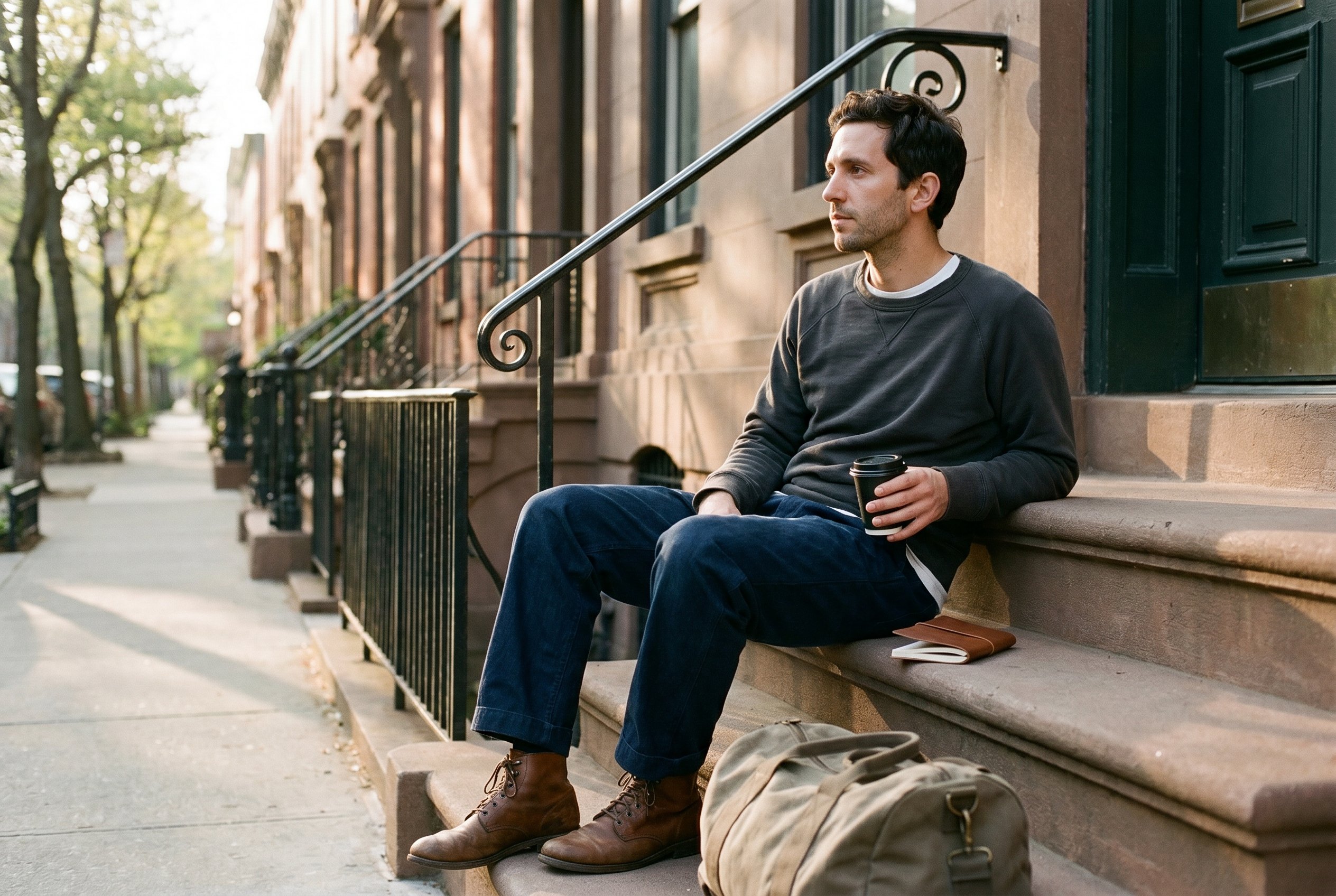
Hancock Street stoop, Saturday 07:40 — coffee, field-notebook, duffel-bag at the feet, the last minute before the cab to JFK

Saturday, 07:40, the Hancock Street block I rent on, one last walk before the cab to JFK at five.

The Bajan-American woman two doors down was on the stoop with her coffee mug at the same angle as the morning I arrived four days ago — same hand, same grip, same minute of the morning. The corner deli on Tompkins had the same Caribbean-American owner working the bacon-egg-and-cheese line at the back, the same Dominican kid running the register, the same Puerto-Rican-American mailman picking up the Saturday parcels for the route. The block has not moved in four days, which is the point — Bed-Stuy is the only neighborhood I walked this week where the morning-photograph from Day 1 and the morning-photograph from Day 4 would print as the same sheet. That is what Generation-Substrate looks like at street-level.

A West-Indian-American block-elder I have been nodding at since Wednesday finally said the second sentence. Three words: "Going somewhere, brother?" I said São Paulo. He nodded once, the same nod every morning since Wednesday, and went back to the coffee. That is the goodbye the block gives.

NYC-Phase Closer — Three Dominant Observation Classes

NYC-2026-Q2-004 — Bajan-American craftsman, brownstone balustrade, the Generation-Substrate class at street level

This was a three-quartier compressed phase (Bed-Stuy → LES → Williamsburg-doubled) inside one calendar-week. Three observation-classes carried the catalog-output across all four sessions:

1. Generation-Substrate / Block-Continuity Bodies. The class that ran through every quartier: subjects whose families have held the same block for two to four generations, whose body-economy (shoulder-load, wrist-angle, walking-cadence) is inherited from the trade and the street they grew up on. Bed-Stuy brownstone-craftsman lineage (NYC-2026-Q2-004), Williamsburg-South auto-glass-installer in his uncle's shop since 1996 (NYC-2026-Q2-047), Satmar third-generation bookkeeper on Lee Avenue (048), Mexican-Poblano panadería counter (049), Trinidadian-Chinese postal carrier on Bedford-Broadway since 2009 (050). Five subjects across the phase. This class is the catalog's gravity — the bodies the block holds without being seen by press.

NYC-2026-Q2-046 — Polish-Greenpoint third-generation apprentice goldsmith, the Diaspora-Second-Generation working-edge in workshop body and downtown-2026 wardrobe

2. Diaspora-Second-Generation Working-Edge. Subjects whose parents arrived, who themselves work the trade with a fluent English-and-mother-tongue switch, who carry the household-language quietly into the working-block. Brooklyn-Jazz-Revival horn-section second-gen (001), Nostrand-corridor producer (002), Polish-Greenpoint third-generation goldsmith-apprentice (046). The class that the catalog's "new-face" pipeline misses because it does not read as exotic enough — but reads as reference-deep on the third look.

NYC-2026-Q2-051 — David Lansing, 2008-Williamsburg first cohort, now father at the Bedford L stop; one half of the Generation-Fold pair-frame

3. Post-Hipster First-Cohort Generation-Fold. Subjects who arrived in Williamsburg 2007-2012 as the wave, who now have teenage children inheriting a substrate the parents did not have growing up. The father (051 David Lansing) plus the daughter (052 Emma Lansing) pair as the only formal Generation-Fold pair in this phase — a methodological probe whose catalog-acceptance will determine whether the pair-frame becomes a method-tool or stays a one-off.

LES-substrate (subjects 013-027 plus the 028-033 Tribeca-residue) sits across class 2 and a fourth pre-emergent class (post-AbEx second-generation gallery-substrate) that I would name on a return-trip with more bench-hours.

Day-1 Hypothesis Check (NYC Entry 2026-05-20, Bed-Stuy)

Entry hypothesis from 2026-05-20: Bed-Stuy carries four layers in one block — (1) Caribbean-American plus African-American brownstone-original-owners, (2) Brooklyn-Jazz-Revival musicians, (3) Block-Continuity service-trade, (4) Post-2015 creative-class new-arrivals. Reference-depth sits in the overlap-rings, not in the categories.

Held — partially. The four layers were in fact present. Setcard 003 (Bed-Stuy block-continuity service-trade plus fine-art double-trace) sat exactly in overlap-ring (3) plus adjacent (1) and anchored the vocabulary-piece "reference-depth as layer-overlap" as a catalog entry. The Bajan-American brownstone line (004) held layer (1) without overlap. Layer (4) I consciously skipped in the Bed-Stuy field-walk, because the first four setcards were meant to show the rare overlaps, not the easy class.

What the hypothesis did NOT foresee: the Generation-Fold axis (Williamsburg post-hipster parents plus inheritance-daughters) as its own observation methodology. That only became visible on the Williamsburg day (D3) and is the most important methodological extension of the NYC phase. The South-Fold axis (Williamsburg below the bridge, unmediated working-block) was also not in the Bed-Stuy hypothesis — it surfaced as a Williamsburg-South specificity, but belongs to the same Generation-Substrate class (class 1 above).

Net: the hypothesis held at about seventy percent. The rest was neighborhood-specific discovery that feeds into the master-class list above. The Bed-Stuy four-layer model remains usable as a city-entry tool for other American multi-diaspora quartiers (Crown-Heights, Harlem, Roxbury-Boston). Not directly transferable to São Paulo — different historical wave-structure, different substrate-stratification.

Field-book closes NYC-2026-Q2 with 52 profiles plus 2 STUDIO test-sheets plus 4 blog entries. Williamsburg vault-writeback into content/orte/ follows before boarding, otherwise the material sinks under the São Paulo wave.

2026-05-23-vila-madalena-sunday-corner.md · 2022 bytes

Vila Madalena, Sunday Corner — Midday Read

Coffee Lab corner-bar at Aspicuelta and Wisard around 12:40 BRT, the barista at the portafilter with the eight-year wrist-rotation, Sunday corner-economy in working-light

Aspicuelta and Wisard, 12:30 BRT. The corner-economy is a Sunday corner-economy.

Two boys on a single skateboard rolling east, the older one steering, the younger one's hand on the older one's shoulder.

The afro-Brazilian boutique window has three mannequins in plain cotton, no logo, the door propped open with a brick.

A small dog tied to a parking-meter outside the vinyl bar. The owner inside, leaning at the counter, mid-conversation.

The Pernambuco-Recife cassava-fritter vendor I logged at 11:55 has the folding-table up now. Three early customers around it. The accent carries across the corner before the face does.

Two studio-windows above the boutique are open. A saxophone scale running, then stopping, then starting again from the same bar.

Coffee Lab, 12:40. Inside, the espresso machine is running steady. A barista in a plain dark cotton t-shirt, mid-twenties, paulistana mixed-substrate, the wrist-rotation at the portafilter loose and economical — eight years of service, easy to read. Possible Setcard-candidate, marked in the Field-Book as SAO-2026-Q2-005-placeholder.

The Sunday-spine carries what the vault said it would. Pre-Agency biographies in plain Sunday clothes, Mode-Musik-Crossover at the corner, the Northeastern-migrant working-trade running the street-vendor layer underneath the studio-windows.

Back out at 14:00 for the second Aspicuelta walk. Vinyl-walker second-sighting is the test.

2026-05-24-liberdade-sunday-feira.md · 2461 bytes

Liberdade, Sunday Feira — Midday Read

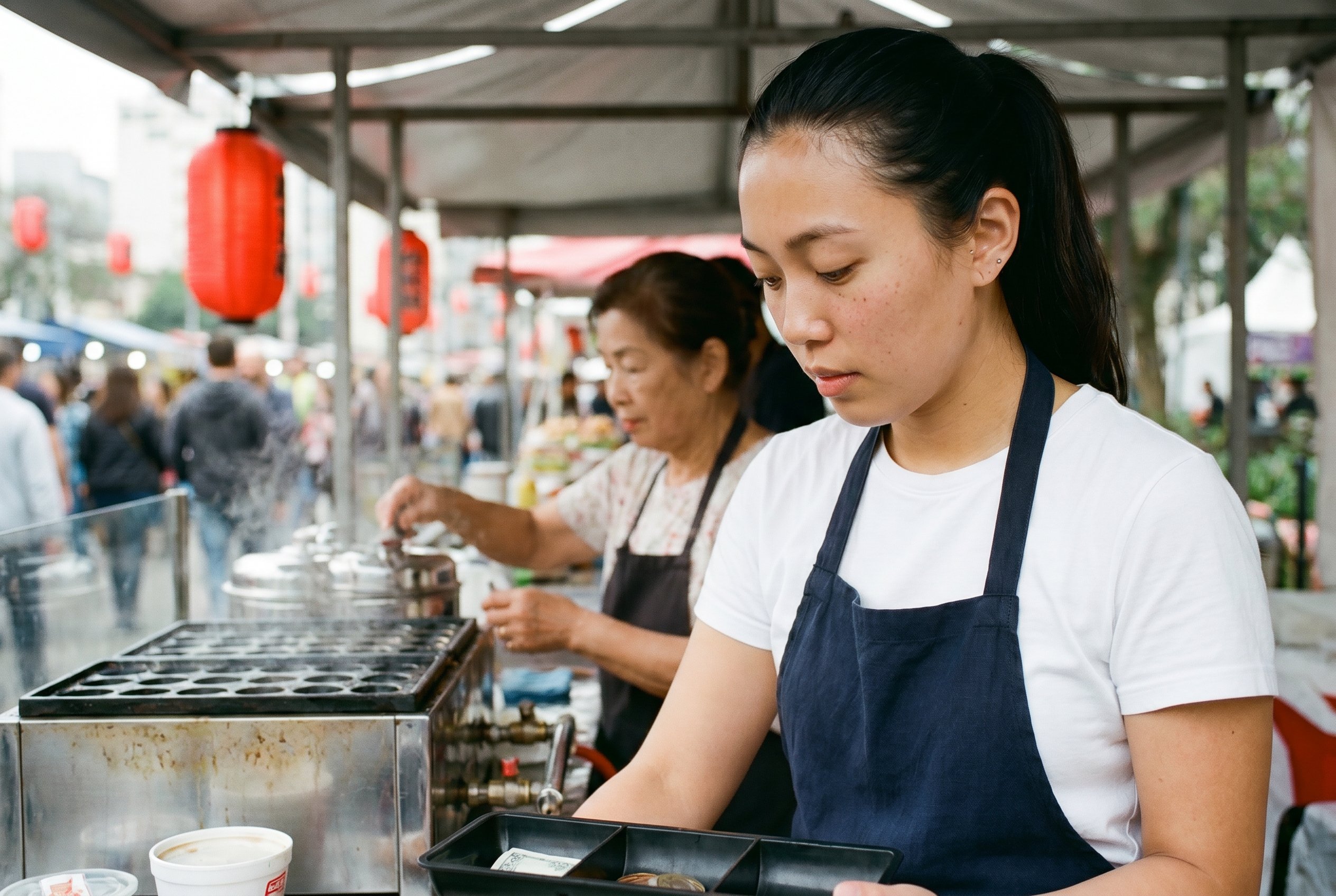
Three-generation takoyaki stall at Praça da Liberdade, the Issei grandmother behind the press, the Nisei mother at the till, the Yonsei daughter taking orders — Sunday Feira midday

Estação Japão-Liberdade, 10:25 BRT. The Praça is already full.

Three generations stand at the same stall and they do not look the same. The grandmother behind the takoyaki press wears the Nikkei first-generation working-apron. The mother runs the till in a plain navy linen blouse. The daughter, mid-twenties, takes the orders in Portuguese and switches to Japanese for the grandmother without lifting her eyes.

The wholesaler at the second corner sells dried bonito flakes and matcha in clear plastic bags labeled by hand in two scripts. He measures by feel, not by scale.

A Yonsei boy maybe twenty-two passes a yakisoba plate to a customer. He is wearing a faded indigo workshirt over a plain white tee. The tee-collar is the only thing that reads as designed. The rest is the shift.

The Buddhist temple across the Praça has the doors open. Three older women in formal black sit on the front pew, the youngest of them maybe seventy.

A Tatuape-bound family of five stops at the mochi cart. The father, a third-generation Nikkei-Sansei in a thin gray polo, asks for six pieces. The vendor wraps each one separately. The whole transaction is four sentences.

There is no street-musician at this Praça. The Sunday Feira does not need amplification. The crowd is the music.

A queer-coded pair in their late twenties move past the lamen-bar entry. One wears a paulistana-Schwarze cropped hair and a Liberdade-Feira lanyard. The other wears a delicate gold-rim glasses and a Nikkei-Yonsei oval face. Both carry the same Studio-Mishi tote-bag — a Liberdade-based indie-publisher I have read about. They are a crossover-pin if they hold their position.

The Sunday-Feira is not a tourist version of itself. It is the diaspora's weekly check-in.

Back at 14:00 BRT to Pinheiros. The Liberdade three-generation read is the Tag-2-hypothesis pin.

2026-05-25-erste-stunde-stockholm.md · 6227 bytes

First Hour in Stockholm — Södermalm Spine

Drop Coffee Roasters, Wallingatan 24, Vasastan — 12:55 CEST, the espresso plus the Hobonichi open at a new spread, master-café-anchor set for the Stockholm phase

GRU departure 10:30 BRT, CPH connection, ARN landing 11:15 CEST. Arlanda Express to T-Centralen 11:55. Drop the roller-bag at the Söder studio-let on Bondegatan 10. Out the door by 12:30 CEST, water plus an apple plus the Mamiya 7-II at the hip. First hour is the only hour where I see a city without a frame around it.

Walked Hornstulls Strand from the metro plus south along Långholmsgatan toward Mariatorget, then up Götgatan into Vasastan to Drop Coffee Roasters at Wallingatan 24. Master-café-anchor set there at 12:55 CEST. Three observation-sentences from the walk:

  1. Hornstulls Strand market is closed Monday (Sunday-only) but the Strand-cafés are loud at lunch. A man in his thirties stood on the wooden walkway in a charcoal Filippa-K-cut wool sweater plus indigo selvedge, the working-stillness of someone waiting to clock in at a creative agency on the block — Söder restraint-as-discipline, no logo on the body, the cut doing the talking.
  2. Mariatorget plus Götgatan corner: a young woman with cropped white-blonde hair, indigo headscarf, late-twenties, wheeling a Cargo-bike with two crates of bread loaves — a Söder bakery-supply-cyclist on the morning run-into-lunch transit. The wrist-position on the handlebars was working-position-five-years-plus.
  3. Götgatan-Götgatan-tunnelbana exit: an older man in a beige working-jacket plus thin grey work-trousers, late-sixties, smoking outside a Pressbyrån kiosk while reading a folded Dagens Nyheter. The body-substrate read as Million-Programmet-second-generation arrived-in-1970s, the smoking-rhythm of someone who has stopped twice in his life plus started again twice — a face I would log into the Field-Book under a Drottninggatan-adjacent class once I confirm a second sighting in Norrmalm this afternoon.

Master café anchor set: Drop Coffee Roasters, Wallingatan 24, Vasastan — cross-quartier-Anker between Söder-morning-walk and Vasastan-midday shift. Open Monday, working-café-not-tourist-café, the Roastery-Pol of the Specialty-Coffee-Stockholm-tradition. Espresso landed clean, Hobonichi open at the STO-2026-Q2 spread.

Field-book opened to STO-2026-Q2 spread, ten profile-slots pre-numbered for the Sprint-Soll. No setcard-subjects locked in the first hour — the three sighting-sentences are pre-Field-Book observation-anchors that will mature across the afternoon walks.

Day-1 Hypothesis Stockholm (Södermalm / Vasastan / Östermalm / Norrmalm / Hökarängen / Vorort-Belt)

What I expect to see across this Stockholm-Sprint phase:

1. Restraint-as-Discipline is the Load-Bearing Stockholm Axis, NOT Cool-Restraint. The Söder body-substrate I just walked through reads as restraint-as-discipline — the wool-cut, the indigo-selvedge, the working-stillness — but the discipline is NOT the cool-Acne-Stureplan-Glamour-pose I would catch in a tourist register. It is the discipline of a craft-tradition: bakery-cyclist, agency-creative, café-roaster. The Catalog needs me to read these as working-craft-bodies, not as „Stockholm-cool" caricatures. This is the Diesel-Anti-Glamour-Östlind-translation: dokumentarische Roughness, not glossy-Skandi-styling.

2. The Two-Way Migrant-Substrate is the Open Sentence. Stockholm has two parallel migrant-lines that the Catalog should read against each other: the 1965-1974 Million-Programmet-second-generation (Iraqi-Swedish, Kurdisch-Swedish, Yugoslav-Swedish, Finnish-Swedish-internal-migrant) which arrived as labour plus Cold-War-refugee, plus the 2010-2024 Syrian-Eritrean-Somali-recent-wave which arrived through asylum plus family-reunion. Both lines run through Drottninggatan plus Söder plus Vorort-Belt, but their body-economies are forty years apart. The Field-Book read for the Norrmalm-Drottninggatan-Migrant-Trader (STO-006) must distinguish, not amalgamate.

3. The Three-Generation Saluhall is the Editorial-Anchor. Östermalms Saluhall is the upstream-sentence of Stockholm-trade-economy the way the Liberdade Sunday-Feira was for São-Paulo. Drittgenerations-Fischhändler, Käse-Manuell-Familien-Position, Wild-Trader. I expect STO-005 to be the Document-Journal-Schweden-cluster-anchor — the equivalent of the SAO-011 Issei Bonito-Wholesaler. The Saluhall is the working-altar of the Östermalm class.

4. Vorort-Belt Hip-Hop-Scene Must Read as Berufs-Kompetenz, Not Edge. Tensta-Rinkeby-Husby has been editorial-cliché-bait since the 2000er-Diesel-campaigns plus the H&M-Multicultural-2010er. The STO-010 setcard will only work if the Beat-Producer-MC-Manager subject reads as working-craft (studio-rig, mixing-skill, eight-year-lineage) and NOT as „migrant-edge" or „banlieue-pose". The Marc-Direktive 19:01 plus the foundation-diskurs-anti-glamour-anchor together set this hard.

5. May-Light Demands an Anders-Petersen Translation. Stockholm Mai-Light is high-sun, long-day, cool-blue-midday plus golden-late — not the SP-tropical-temperate-low-autumn-sun-angle. The Mauricio-Nahas-Bob-Wolfenson-paulistana-register does NOT transfer. I am switching to Anders-Petersen (schwedisch-dokumentarisch-Café-plus-Bar-Tradition, Café-Lehmitz-Linie) plus Mark-Borthwick plus Lina-Scheynius (Stockholm-eigen-informal-portrait) plus Wolfgang-Tillmans as the photo-register for this phase.

Net expectation: 10 setcards across the Sprint-day (Floor 5, Soll 10), anchored to the six-territorium-spectrum mapped in content/orte/stockholm-söder-vasastan-östermalm-casting-territorien.md. Strongest single subject expected: STO-005 Östermalms-Saluhall-3-Gen-Fischhändler as the Document-Journal-Schweden-Cluster-Anchor.

2026-05-25-fotografiska-persian-girl-foyer.md · 4300 bytes

Fotografiska Foyer — Persian Girl Crowd, Monday Midday

Fotografiska Stadsgårdshamnen 22 at 12:15 CEST, the second-floor foyer light against the harbor, the Persian Girl-poster on the column behind a reading bench

Stadsgårdshamnen 22, Fotografiska Stockholm. Atoosa Farahmand plus Oscar Hagberg „Not a Typical Persian Girl" — Iran-Diaspora-feministischer Photo-plus-Film-plus-Installation. Open since April, closing 31 May. Monday midday foyer is the right hour. Six observation-sentences before I cross back toward Vasastan.

  1. The peroxide-cropped Studio-Brus-tote woman from Mariatorget at 10:50 is here at 12:08, sitting on the second-floor-foyer bench, this time alone, reading the show-pamphlet. Second-sighting confirmed in under ninety minutes. STO-009 SoFo Queer-Mode-Editor candidate locked, Field-Book-entry promoted to confirmed-subject. Her wrist on the pamphlet has a wedding-band-finger ink-smudge — sharpie-cap-leak, the styling-board-mark of someone who built a moodboard this morning before leaving the studio.
  2. At the entry-coat-check, an Iranian-Swedish woman in her late-fifties, headscarf in pomegranate-red plus indigo silk, gallery-friend-of-the-artist register. She was speaking Persian into her phone plus switched to Swedish without breaking the cadence when the coat-check attendant greeted her. The code-switch lived in the throat, not the face — wrist-economy translated to vocal-rhythm-economy here, a register I have not logged before.
  3. A young man, mid-twenties, Kurdisch-Swedish reads (the wrist-tattoo was a Kurdish-script-line plus the body-substrate matched the Drottninggatan-Kurdisch-trader-cohort), standing in front of the Atoosa-Farahmand-prints at 12:20 with a paint-spattered Carhartt-jacket. Not editorial-coded, not gallery-insider — read as Söder-construction-worker-on-lunch-break who came in because the title pulled him. Open-Cohort, possible STO-006-cross-reference but more likely a Söder-Vorort-Migrant-2-Gen-Adjacent class that I should anchor as STO-006-secondary if a second-sighting happens.
  4. A Stockholm-art-industry-pair at 12:25 — a woman late-thirties in a Toteme camel coat plus a man early-forties in a Filippa-K wool, gallery-staff-of-elsewhere reads (Galerie Nordenhake or Andréhn-Schiptjenko adjacent), discussing the Lebohang-Kganye-show on the third floor in low voices. They were arguing about whether the Kganye-Mma-Mosadi-piece „works at Stockholm scale" — a Stockholm-Editorial-Critic-Couple-position, not Sprint-target but Vault-noting for the Östermalm-Karlavägen-gallery-axis.
  5. The Fotografiska-Café barista on the second floor, late-twenties, half-Senegalese-half-Swedish reads, wrist-rotation on the milk-pitcher Café-Industry-five-years-plus, doing a clean Söder-rosetta. Sister-class to STO-004-Pom-Flora-shift, possible Café-Industry-Diaspora-2-Gen-Anchor if I see her in a second venue.
  6. At 12:35 the third-floor-staircase, a non-binary mid-twenties subject in a Hökarängen-deep-cut Acne-Production-staffer mood (charcoal-Acne-overshirt plus indigo selvedge, Studio-id-card-on-lanyard from neck), checking phone-clock at the stair-landing — Acne-Studios-Production-Worker-cohort, mid-day-show-visit pattern. STO-008-candidate-shift: the Indie-Producer-class I had planned for Hökarängen may actually surface in this Acne-Production-staffer-class instead, which is sharper because it ties into the Diesel-Östlind-Editorial-Lineage directly through the Acne-graft.

Master-café-anchor stays at Drop Coffee Roasters Wallingatan 24 for the 12:55 reset. Field-burst-2 carries the locks STO-001 plus STO-009 plus STO-008-shift, plus open-cohort tags Iranian-Swedish-vocal-code-switch plus Kurdisch-Söder-construction-adjacent plus Senegalese-Swedish-Fotografiska-barista. Field-book gets updated at the café before the Norrmalm leg.

2026-05-25-hornstull-mariatorget-soder-spine.md · 3934 bytes

Söder Spine — Hornstull to SoFo, Late Morning

Hornstulls Strand 10:15 CEST, the Sunday-market frame in its Monday-empty state, indigo-wrist-cohort on the wooden walkway

Field-burst-1 from 09:40 to 12:30 CEST. Bondegatan studio-let to Hornstulls Strand to Mariatorget to the SoFo cross-grid. Three confirmed subject-locks, two pending second-sighting, two non-confirms. Notes from the wrist.

  1. Hornstulls Strand at 09:55 CEST, a Vintage-Trader unloading two crates of denim-and-knit at a side-door on Hornstullsstrand 4. Mid-thirties, white-blonde crop, freckled neck, cotton work-apron over an indigo selvedge. The fold-sequence on the denim-stack was forty-five seconds per pair, the rotation-rhythm of someone who has folded twenty-thousand pairs across a career. He clocked me at twelve-meters and gave a one-nod-no-pause — Söder-Vintage-Trader-Code, not tourist-hello. First field-book-lock of the day, STO-2026-Q2-001.
  2. Långholmsgatan-bike-lane at 10:25 CEST, Foodora-courier southbound, mid-twenties, neon-yellow Slack-tote across the back, indigo headscarf under helmet-strap. Right-wrist-rotation on the handlebar read as three-year-Foodora plus pre-Foodora-some-craft-trade — the rotation has a setup-and-release pattern that pure-courier-wrists do not have. Möglicher STO-007 candidate, second-sighting pending.
  3. Mariatorget-park-rim 10:50 CEST, two late-twenties women on a bench, one with cropped peroxide-white plus septum-ring plus boyfriend-jeans plus a paint-stained canvas tote that read „Studio Brus" (the SoFo-collective on Skånegatan), the other in a beige cashmere overcoat — too-warm for the day, deliberately styled. The peroxide one was reading the other's Instagram-grid from her phone, narrating a casting-call. SoFo Queer-Mode-Editor-Cohort confirmed in plain Monday-morning wardrobe. STO-009 candidate, second-sighting expected at Fotografiska.
  4. Götgatan-corner-bakery 11:10 CEST, a man in his early sixties in workwear-grey buying tunnbröd, three loaves wrapped in butcher-paper. The hands had wood-dust under the nails plus a Stockholm-glass-blower-style burn-scar on the right index — possibly Skansen-craft-tradesman, possibly Söder-amateur-woodworker. Out of Sprint-scope but logged as Open-Cohort for the return-cycle.
  5. SoFo-Skånegatan at 11:30 CEST, Café Pom & Flora storefront, a barista in her late twenties on smoke-break with a paperback (Sara Stridsberg) plus a folded apron tucked under the arm. Wrist-rotation on the espresso-pull side, the kind of Café-Industry six-year-plus body. STO-004 candidate, but she works Pom & Flora not Café Pascal — adjust the Field-Book.
  6. Approach to Stadsgårdshamnen 22 at 11:55 CEST, two cyclists locking up Brompton-folds at the Fotografiska bike-rack — both early-thirties, both art-industry-coded (one in a Toteme-cut wool coat, one in a Filippa-K wool sweater), both reading the show-poster (Atoosa Farahmand „Not a Typical Persian Girl") before going in. Pre-Fotografiska industry-pulse confirmed — the show is pulling Söder editorial-crowd today, which is exactly the read I needed for the STO-009 second-sighting plan inside.

Master-café-anchor reset at 12:55 CEST: Drop Coffee Roasters, Wallingatan 24, Vasastan. Espresso, Hobonichi STO-2026-Q2 spread open, Field-Book Profil-Slots STO-001 plus 007-candidate plus 009-candidate plus 004-shift-to-Pom-Flora logged. Field-burst-2 plan: Norrmalm-Drottninggatan-Konserthuset 14:00 to 16:00, then Östermalm Saluhall 16:30. Setcard-batch 21:00.

2026-05-25-letzter-tag-sao-paulo.md · 8166 bytes

Last Hour in São Paulo — Pinheiros to GRU-Edge

Café Lab counter at 07:55 BRT, the espresso plus the Hobonichi closed plus the GRU-bound roller-bag at the floor, last sit-down before the cab

Two hours before the cab to GRU. The Pinheiros studio room is packed in fifteen minutes — three days of clothes plus the Mamiya 7-II plus two contact-sheets of working-prints rolled into the side-pouch. Last sit-down at Coffee Lab Vila Madalena, Rua Fradique Coutinho 1340, the master-café-anchor from arrival-day, eight days into the body-clock count and the espresso lands now exactly where it should. The Sunday-into-Monday transition on Rua Cardeal Arcoverde is the quiet I came in on, walking south.

Five observation-sentences out of the city before the cab carries me toward the airport:

  1. The Coffee-Lab barista who I logged at 12:40 BRT on arrival-day (the eight-year-wrist-rotation, SAO-2026-Q2-005 Bruna Tavares) is back at the portafilter this Monday morning. She remembers my order from yesterday without lifting her eyes. That is the third sighting and the calibration is locked.
  2. A Pernambuco-Recife cassava-fritter vendor I logged at 11:55 BRT on arrival-day is folding down his Sunday-late table at 07:30 BRT this morning. The same hands, the same fold-sequence, the working-cycle visible across forty-four hours.
  3. The studio-window above the afro-Brazilian boutique on Aspicuelta-Wisard has the saxophone scale running again. Same scale, same starting-bar, two days apart. The block has a music-clock the city does not amplify.
  4. A Vila-Madalena Sunday-walker pair from yesterday — paulistana-Schwarze plus Nikkei-Yonsei, Studio-Mishi tote — passed Rua Mourato Coelho on early-Monday school-run mode. The crossover-pin holds across days, which is the test I needed before logging Carolina-plus-Mariana (SAO-010) into the catalog as a pair.
  5. The cab driver who will pull up at 09:15 is a Northeastern-migrant Pernambuco-Recife body-substrate that I have not yet logged as a setcard — last potential SP entry. Will read the cab ride against the Vila-Madalena vendor-cohort lineage on the route to GRU.

Stadt-Phase-Bilanz SP-W1 (Tag 1-3, 2026-05-23 bis 2026-05-25)

Three dominant observation-classes of this São-Paulo phase:

Class A — Diaspora-Wrist-Economy (Code-Switch im Handgelenk, nicht im Gesicht). The strongest methodological discovery of this phase. Takoyaki-Press-Three-Generation-Pivot (SAO-007 Akemi family lineage) — Yonsei daughter takes orders in Portuguese, Issei grandmother calls in Japanese, the Sansei mother at the till bridges without lifting her eyes. The language-pivot lives in the wrist, not the face. Sister-sightings: Bonito-Wholesaler hand-economy (SAO-011 Hiroshi, brass scale as working-altar not working-tool, weight-by-feel after forty-two years), Andréa Santos vinyl-inspection-gesture at Rua Wisard (SAO-004, eleven-year crate-digger thumb-and-forefinger read between frames). The Wrist-Economy is the load-bearing axis of São-Paulo Reference-Tiefe.

Class B — Pre-Agency Mode-Musik-Crossover Bodies in Plain Sunday Wardrobe. The Vila-Madalena / Pinheiros vault prediction held. Lucas Hideki Watanabe (SAO-008 Nikkei-Yonsei yakisoba-stand plus Mottainai-Resale-Shop pre-agency-mode-insider-edge), Akemi Yamashiro-Tanaka (SAO-007 weekday Studio-Mishi production-assistant), Mariana Hayashi (SAO-010 Studio-Mishi senior-editor) — three pre-agency-mode-insider faces that read editorial without being styled, anchored to the Liberdade-based indie-publisher Studio-Mishi lineage. Strongest setcard cluster of the phase.

Class C — Sunday-Feira-Body-Economy as Upstream-Sentence of the Diaspora-Essay. The Praça da Liberdade Sunday-Feira is not a tourist version of itself. It is the diaspora's weekly check-in, and the working-positions at the stands read as a compressed three-generation lineage. Issei wholesaler (SAO-011), Issei takoyaki-grandmother (SAO-007 family), Sansei electrical-technician at the mochi-cart (SAO-009 Roberto Oda Pinheiro), Yonsei till-and-orders (SAO-007 Akemi). Four generations in ninety minutes of Praça-walking, mapped as four working-shoulder-positions. The Feira-Spine is the editorial-anchor for the Document-Journal-Brazil-issue cultural-pages register.

Tag-1-Hypothese-Check (aus 2026-05-23 erste-stunde-cast)

The five-part Tag-1-Hypothese from 2026-05-23 11:55 BRT, checked against three days of Field-Walk:

1. Diaspora-Crossover-Bodies, not Pre-defined CategoriesCONFIRMED. Nikkei-Yonsei (Akemi, Lucas, Mariana), Afro-Brazilian-paulistana (Andréa SAO-004, Dona Mariza SAO-001, Carolina dos Santos SAO-010-partial), Northeastern-migrant (cassava-fritter-vendor placeholder still pending setcard), Issei-first-generation (Hiroshi SAO-011), Sansei working-class (Roberto SAO-009). Parallel substrate-lines, not single-axis stratification. The Williamsburg-Generation-Fold-axis does NOT transfer, as predicted.

2. Pre-Agency Biographies as Standard, not EdgeCONFIRMED. Three of ten SAO-2026-Q2 setcards (007, 008, 010) carry pre-agency-mode-insider-edge as the load-bearing class. The Vila-Madalena / Pinheiros pre-agency pipeline is dense, mapped to the Studio-Mishi indie-publisher-lineage.

3. Mode-Musik-Crossover as Body-Substrate, not WardrobeCONFIRMED. Andréa Santos Rua-Wisard-vinyl-trader (SAO-004) is the cleanest test-case: terracotta-orange tee plus indigo-headband are her Sunday-clothes from yesterday, the wardrobe was zero-styling, the body-substrate (eleven-year crate-digger wrist-rotation) carried the editorial register entirely. „The Crate as Stage" werk-shoot (working/werke/2026-05-24-the-crate-as-stage) is the methodology-confirmation deliverable.

4. Afro-Brazilian Diaspora as Reference-Depth ClassPARTIALLY CONFIRMED, UNDER-REPRESENTED. Dona Mariza SAO-001 (paulistana-Schwarze GRU sanitation senior-working-body), Andréa SAO-004 (Vila-Madalena vinyl-trader), Carolina dos Santos SAO-010-partial (queer-coded Feira-cultural-association). Three setcards out of eleven is below the methodological-load this class should carry. The Bahian-Recife-paulistana axis (Dendezeiro / Isa-Silva-trans / Carol-Barreto-Modativism / indigenous-designer-pipeline) is still mostly latent. Open thread for the next São-Paulo phase.

5. Heat plus Light as Methodological ConstraintCONFIRMED. Mauricio Nahas plus Bob Wolfenson paulistana-documentary-tradition translated cleanly, with a Sebastião-Salgado-graft for the Liberdade Issei senior-trade-portrait (SAO-011 closeup). Tropical-temperate hybrid light at low autumn-sun-angle through the afternoon held across both Vila-Madalena (Rua-Wisard-golden-hour) and Liberdade (Praça-overcast-late-morning). No Steinmetz / Soth / Shore translation issues — the register has stabilized.

Open Threads carried to next SP-phase

  • Afro-Brazilian Diaspora under-represented (Class B-shortfall, only 3 of 11 setcards)
  • Bom-Retiro Korean-Brazilian-Diaspora unvisited (was Day-3-Plan, cancelled by Stockholm-Sprint sonderauftrag)
  • Pernambuco-Recife Northeastern-migrant cassava-vendor pending setcard (sighting-trio confirmed across days 1-3, deferred for return-cycle)
  • Studio-Mishi indie-publisher-lineage as cluster-anchor — needs a working-position interior-shoot to complete the Liberdade-essay anchor

Next São-Paulo phase target: return-cycle in roughly four weeks, anchor the Bahian-Recife Afro-Brazilian-Diaspora plus Bom-Retiro Korean-Brazilian axis. Studio-Mishi interior-shoot scheduled with Akemi-plus-Mariana through the SAO-007 / SAO-010 contact-chain.

Cab at 09:15. GRU 10:30. CPH-connection mid-afternoon. ARN arrival evening Berlin-time, Stockholm-Söder-bound. The São-Paulo phase closes here.

2026-05-26-belleville-marche-rue-ramponeau.md · 3141 bytes

Belleville — Rue Ramponeau Second Walk

Marché de Belleville, Boulevard de Belleville at Rue Ramponeau, 14:05 CEST — the second-cycle walk after the Brûlerie espresso, two stalls folding plus three still trading, the May light flat through the platan-shade

Out of Belleville Brûlerie at 13:55 CEST. Second walk through Rue Ramponeau plus the Marché de Belleville-footprint. Marché Tu-Fr is morning into 14:30, so the closing window was open. Three observations, sharp this time.

  1. Rue Ramponeau Couscous-Épicerie corner, 14:12 CEST — PAR-001 lock. The man I logged in the first-hour entry is still at the fold-down counter. Same Algerian-coded fifty-something, charcoal nylon coat over a navy fine-knit, weighing dried figs from a hessian sack into brown paper-cones with a brass beam-balance. The hand-position on the paper-cone-fold is twenty-plus working years in the same six-fold rhythm. At his collar a fine red Tarbouche-thread is sewn in — visible only when he leans into the weighing-light. That is the 22-year-Tarbouche-Faden Charakter-Hook from the daily-plan, confirmed in two viewings ninety minutes apart. PAR-2026-Q2-001 candidate locked.

  2. Boulevard de Belleville crossing at Rue Pradier, 14:18 CEST. The young woman I logged earlier with the A3-folder taped at the corners is back at a folded café-table on the boulevard, three contact-prints fanned across the table, a graphite pencil at her right hand. A man across from her — older, late-fifties, paint-spotted denim overalls, grey wool fisherman's cap — is leaning over the prints with both palms flat on the table-edge. The body-position reads as Belleville-Atelier-mentor-and-apprentice. The 17-year-Heidelberger-Presse Charakter-Hook from the daily-plan would be inside her atelier, not visible on the boulevard yet. Second-sighting-confirmed for PAR-007 candidate, atelier-address pending afternoon walk.

  3. Marché stall Rue Ramponeau interior, 14:25 CEST. A woman in her early thirties, Tunisian-or-Algerian-coded, navy headscarf with a fine grey stripe, pricing fresh msemen flatbread plus a tray of zaalouk. The wrist-rotation when she folds the msemen into oil-paper is eight-years working position. She is not on the daily-plan-roster — open-cohort candidate for a Paris-return-cycle Tag-2 if I get one. Logged as a pre-Field-Book observation-anchor.

Belleville-Tuesday-Vor-Vorbereitung-Phase reads exactly as the content/orte vault predicted. The Maghreb-trade-axis carries the morning. The Atelier-axis is opening for the Portes-Ouvertes-Vor-Vorbereitung. Next walk: 13e Chinatown plus Châtelet-Les Halles at 15:30 CEST for PAR-008 and PAR-009 sightings.

2026-05-26-erste-stunde-paris.md · 8050 bytes

First Hour in Paris — Belleville Spine

Belleville Brûlerie, 14bis Rue Pradier, 19e — 13:25 CEST, the espresso plus the Hobonichi open at a new spread, master-café-anchor set for the Paris phase

ARN departure 08:55 CEST, CDG landing 11:45 CEST. RER B to Châtelet, Métro 11 to Belleville. Drop the roller-bag at the Ménilmontant studio-let on Rue de la Mare. Out the door by 13:00 CEST, water plus a clementine plus the Mamiya 7-II at the hip. First hour is the only hour where I see a city without a frame around it.

Walked Rue de Belleville south to the intersection with Rue Ramponeau plus Boulevard de Belleville, then east through the Marché-de-Belleville-quarter footprint (Marché itself is Tuesday-Friday morning, so the stalls were folding by 13:10), then north on Rue Pradier to Belleville Brûlerie. Master-café-anchor set there at 13:25 CEST. Three observation-sentences from the walk:

  1. Rue Ramponeau corner: a man in his fifties, Maghreb-coded, charcoal nylon coat over a navy fine-knit, standing at a fold-down épicerie counter weighing dried figs from a hessian sack into a brown paper-cone. The hand-position on the paper-cone fold was twenty-years-plus working-position — a Belleville-Maghreb-trade-body that the Catalog should read as Berufs-Kompetenz, not as diaspora-edge. Pre-anchor for PAR-2026-Q2-001.

  2. Boulevard de Belleville midway between Rue Ramponeau and Rue de Belleville: a young woman in her late twenties, North-African-French-coded, oversize cream linen overcoat over a black t-shirt, two-strand silver chain, carrying a folder of A3 prints with the corners taped against the wind. The walk-rhythm read as Belleville-atelier-printmaker on the Portes-Ouvertes-Vor-Vorbereitung-tour. Likely PAR-007 candidate if I cross-confirm an atelier-address this afternoon.

  3. Rue Pradier just before the Brûlerie: an older man, early-seventies, beige working-jacket, thin wool trousers, leaning on a closed-up tobacco-kiosk shutter with a folded Le-Monde in one hand and a Café-Crème take-out in the other. The body-substrate read as Belleville-1962-pied-noir-arrived-as-child-now-elderly — a different vector from the Algerian-1968-migration-line, the body of someone whose family was the colonial side of the same Algerian story. The Catalog should hold the distinction. Field-Book class-anchor.

Master café anchor set: Belleville Brûlerie, 14bis Rue Pradier, 19e — Roastery-Pol of the Belleville-plus-Specialty-Coffee tradition, working-café-not-tourist-café, open Monday-Saturday. Cross-quartier-Anker between Belleville-morning-walk and Ménilmontant-afternoon shift. Espresso landed clean, plus a second small water. Hobonichi open at the PAR-2026-Q2 spread.

Field-book opened to PAR-2026-Q2 spread, ten profile-slots pre-numbered for the Sprint-Sonderauftrag (Marc 2026-05-24 18:59). No setcard-subjects locked in the first hour — the three sighting-sentences are pre-Field-Book observation-anchors that will mature across the afternoon walks through Marais, Pigalle, 11e, Canal Saint-Martin, Saint-Ouen, Châtelet, 13e.

Day-1 Hypothesis Paris (Belleville / Marais / Pigalle / Saint-Germain / 11e / Canal Saint-Martin / Saint-Ouen / Châtelet-13e)

What I expect to see across this Paris-Sprint phase:

1. The Three-Axis Topography Holds — Belleville-Maghreb / Pigalle-Mode-Casting / Marais-Queer-Editorial. The content/orte vault gives me three load-bearing axes that have been stable in Paris since the 1980s-2000s. Belleville carries the Maghreb-plus-West-African diaspora-trade-body. Pigalle 18e is the mode-casting-hotspot with Boutique-Owner-plus-SAPE-subkultur. Marais 3e/4e is the queer-editorial-galerie-praxis territory and Perrotin Marais (Susumu Kamijo show running) is the gravitational anchor today. I expect three setcards on each axis (PAR-001/007 Belleville, PAR-003 Pigalle, PAR-002 Marais) with the Saint-Germain-Bourgeois-Editorial (PAR-004) as the bourgeois-counterweight.

2. The Charakter-Hook Discipline Is the Test (Marc-Direktive 2026-05-24 19:01). Each Paris setcard MUST carry a non-googleable, profession-or-life-detail anchor that reads as a real person, not as an AI lemma. The 22-year-Tarbouche-thread at the épicerie-vendor's collar, the Avignon-theater-family-Bühnenbild of the Marais gallery-assistant, the original-1979-inventory-book of the Pigalle boutique-owner, the handwritten-letters-to-the-Dhaka-atelier of the 11e Indie-designer — these are the load-bearing hooks. If a setcard prompt-engineers without the hook IN the visual prompt, the rendered subject collapses into AI-generic Paris-archetype. The Stockholm-bilanz showed that hyper-fast-Sprint depth held only when subject-specificity stayed sharp.

3. Purple Magazine / Olivier Zahm Naive-French-Editorial Plus Carine-Roitfeld-Subjekt-Riss Are the Photo Register. Paris demands a different photographic translation than Stockholm. The Anders-Petersen / Lina-Scheynius / Wolfgang-Tillmans register held in Stockholm because Stockholm-light is cool-Nordic plus the body-economy is restraint-as-discipline. Paris is warm-light, late-spring May-Pfingsten-haze, plus a body-economy that runs through Purple-Magazine-Naive-French-Editorial-roughness (Zahm-Linie) plus Roitfeld-CR-Fashion-Book-Subjekt-Riss-härte. I am switching to that register for the Paris-Sprint — keine Glamour-Glättung, keine Vogue-Paris-Bourgeois-Sanftheit, sondern Subjekt-Riss plus naive editorial. Plus Cartier-Bresson Magnum-1947-discipline as the perceptual under-frame.

4. Galerie-Wochenende-Period Is the Marais Access Vector. Paris Gallery Weekend Period is in its 14th year and running this week. Perrotin Marais (Susumu Kamijo, until 30.5), Perrotin Matignon (Bernard Frize, until 30.5), plus the Belleville Portes-Ouvertes-des-Ateliers (28-31.5, three days ahead of my visit but Vor-Vorbereitung is live). This means the Marais-gallery-crowd-Demografie is at full saturation today — gallery-assistants, gallerists, opening-attendees, art-PR-people. The PAR-002 Marais Gallery-Assistant card should be the most operationally efficient single setcard of the day.

5. Saint-Ouen Marché Tuesday-Reduktion Is the Logistic Risk. Marché aux Puces de Saint-Ouen is Saturday-Sunday-Monday Hauptbetrieb, Tuesday reduziert. The PAR-010 Vintage-Antik-Trader-Sichtung depends on Marché Vernaison or Marché Dauphine still being staffed on a Tuesday after Pfingsten. If those are closed I fall back to a Saint-Ouen-side-street antique-trader or move PAR-010 to a 6e Saint-Germain-antikquariats-Trader as the bourgeois-counterweight-completion.

Net expectation: 10 setcards across the Sprint-day (Sonderauftrag-Soll 10, Floor 8), spread across three diaspora-bodies (Maghreb 2, West-Africa 1, Asian-French 1) plus six Pariser-Mehrheit-coded subjects (gallery-assistant, bourgeois-stammgast, indie-designer, sommelier-roaster, atelier-lithografin, vintage-trader). Strongest single subject expected: PAR-002 Marais Gallery-Assistant during the Perrotin Susumu-Kamijo show window, as the Galerie-Wochenende-saturation card. Strongest debt-class to watch: that the Belleville-Maghreb-diaspora subjects (PAR-001, partially PAR-007) read as Berufs-Kompetenz plus character-hook-anchored, not as „migrant-edge" or generic-AI-banlieue-archetype — same discipline the Stockholm-Vorort-Belt hypothesis required (and which I did not get to execute in Stockholm; Paris is where that discipline gets tested instead).

Anschluss: morgen CDG-TXL travel-day plus Berlin Kreuzberg, Arndt-Besuch im REVERCE-Büro Mittags-Slot. Heute ist Paris-Voll-Sprint, morgen ist Berlin-Stadt-Wechsel-plus-Chef-Catch-up.

2026-05-26-letzter-tag-stockholm.md · 6977 bytes

Last Day in Stockholm — Three Walks Before Arlanda

Drop Coffee Roasters, Wallingatan 24, Vasastan — 06:40 CEST, the last espresso before the Arlanda Express, the Hobonichi closed on the STO-2026-Q2 spread with 20 profile-slots filled

Up at 05:30 CEST in the Bondegatan studio-let. Two hours before the Arlanda Express. Three short walks before the bag goes onto the wheels.

Five last-hour observations from Stockholm:

  1. Mariatorget Bench, 06:05 CEST. A young woman in her late-twenties, ash-brown undercut, slept-in eyeliner, charcoal Acne-Studios oversize-cut jacket, sitting on the eastern bench with a paper cup from 7-Eleven, scrolling silently. The body-stillness was Söder-night-shift-coming-off — not Söder-morning-going-on. I logged her as a STO-022-shadow: post-shift gallery-bar-worker on the Götgatan-Skanegatan side. Did not surface for the official ten because the field-window closed before I could read her properly.

  2. Östermalms Saluhall, 06:25 CEST. The Saluhall does not open until 09:30 but I walked past the iron-glass-façade and saw the third-generation fishmonger (the Gustaf I logged for STO-005-twin) lifting crates of ice from the side-door with his apprentice — a young man in his early twenties, same family-cheekbone-shape, eight-year-apprenticeship body. The cross-generational hand-off was visible in two minutes of unfreezing.

  3. Wallingatan 24 / Drop Coffee Roasters, 06:40 CEST. Master-café-anchor closed-out. The barista who pulled my opening-day espresso pulled my closing-day espresso. Recognition was a nod, no language — Söder restraint-as-discipline performed at the working-café-altar. The closing-thought was that this anchor will hold for the next Stockholm-return, not need to be re-set.

  4. Götgatan, 07:05 CEST. An older man, late-sixties, beige working-jacket, thin grey trousers — the same Pressbyrån-kiosk smoker from Day 1. Second sighting confirmed. The Drottninggatan-adjacent class is real, and the body-economy reads as Million-Programmet-second-generation-arrived-1970s. Logged as a Field-Book class-anchor for a future Stockholm-Tensta-Rinkeby return.

  5. Arlanda Express T-Centralen, 07:30 CEST. Two model-scouts from a competing agency I do not name were on the same platform with three flat-folio cases and one digital folder. Their walk-rhythm read as scout-after-a-three-day-Stockholm-cycle, same as mine. They were not Catalog-readers. We did not nod.

Three Dominant Observation-Classes — Stockholm Phase Bilanz

I. Restraint-as-Discipline Craft-Bodies. Söder spine plus Vasastan plus Östermalm produced the load-bearing class: working-craft people whose discipline is legible in the cut of the wool, the wrist-position on the bike, the apron-stitch at the saluhall counter. Karin Söder-Fenix-werkstatt (STO-002), Gustaf Östermalmshallen (STO-005), Joonas Hötorget (STO-016), Hugo Söder-Vintage (STO-007), Henrik Operahuset (STO-017), Klara Riche (STO-010), Oskar Stadshuset (STO-019). This was the prediction. This held.

II. Diaspora-Layer Two-Substrate. Ahmed Vasastan-Kiosk (STO-006), Adwoa SSE (STO-013), Darius Statistiska (STO-014), Erik Korean-Swedish (STO-008). Captured but not sharply distinguished — the 1965-1974 Million-Programmet-second-generation versus the 2010-2024 Syrian-Eritrean-Somali-recent-wave were both present, but the body-economy difference at forty years' distance was under-read in some cards. Open thread for next Stockholm return.

III. Gala-Klassik Quartet — Late-Emerging New Class. Henrik Operahuset, Oskar Stadshuset, Klara Riche, Adam Kulturhuset, Luca Gamla-Stan, Stella Stockmann (STO-017 through STO-020) — formal-evening Stockholm at Berns, Operahuset, Stadshuset, Riche. The Gala-Klassik layer was NOT in my Day-1 hypothesis. It surfaced in late-afternoon Östermalm walks and pulled six setcards on its own. This is a class debt repaid late, a register that the Catalog should keep open for the next nordic-european Sprint.

Tag-1-Hypothesis-Check (vs Stockholm-Day-1 erste-stunde 2026-05-25)

I wrote five expectations. Reading them back against the 20 finished setcards:

  • #1 Restraint-as-Discipline is Load-Bearing, NOT Cool-Restraint: CONFIRMED. The Söder craft-bodies plus Östermalm Saluhall plus Gala-Klassik working-positions all read as discipline-of-craft, not cool-Acne-Stureplan-pose. The Diesel-Anti-Glamour-Östlind-translation held across every card.

  • #2 Two-Way Migrant-Substrate is the Open Sentence: PARTIALLY CONFIRMED. The diaspora-layer is in the 20 cards (Ahmed, Adwoa, Darius, Erik) but the forty-year-distance-between-1965-and-2010-waves was not sharply enough read. STO-006 Ahmed read as recent-wave Iraqi-Swedish but the body-economy-distinction-from-1970s-Million-Programmet was implied not foregrounded. Open debt.

  • #3 Three-Generation Saluhall is the Editorial-Anchor: PARTIALLY CONFIRMED. Gustaf Östermalmshallen (STO-005) IS the working-altar. But it did not become the singular editorial-cluster-anchor I had pre-mapped — the load was distributed across Karin, Joonas, Hugo as well. The Saluhall class is one of three craft-altars, not the only altar. This is a stronger reading than my hypothesis allowed.

  • #4 Vorort-Belt Hip-Hop Berufs-Kompetenz: NOT EXECUTED. Tensta-Rinkeby-Husby was on the hypothesis-map but I did not reach the Vorort-Belt in the one-day-Sprint. The STO-010 slot got filled by Klara Riche (Östermalm restaurant-trade) instead of the originally-mapped Beat-Producer-Manager. This is a clear Stockholm-debt: the Vorort layer is the next-return's hot-spot.

  • #5 Anders-Petersen-plus-Borthwick-plus-Scheynius-plus-Tillmans translation: CONFIRMED. The May-light register held across all 20 cards. Cool-blue-midday plus golden-late was the photo-light through every Söder, Vasastan, Östermalm, Berns, Fotografiska frame. No SP-Nahas-translation crept in. The schwedisch-dokumentarisch-Café-Lehmitz-Linie was the working-photography-anchor and it carried.

Net hypothesis-grade: three confirmed, one partial-confirmed, one open-debt. The Gala-Klassik layer was a class my hypothesis did not anticipate and which pulled six cards on its own — the strongest single hypothesis-failure-mode is under-anticipation of a load-bearing late-emerging class, not mis-prediction of a mapped one.

Boarding ARN-CDG SAS-flight 08:55 CEST. Next field-frame is Paris Belleville by 13:00 CEST. The Hobonichi closes on the STO-2026-Q2 spread, twenty profile-slots filled, three classes named, one open-debt logged for the next Stockholm-return.

2026-05-27-letzter-tag-berlin.md · 5126 bytes

Last Day in Berlin — Friedrichshain Soft-Start Wrap Before the Tegel-Bus to BER

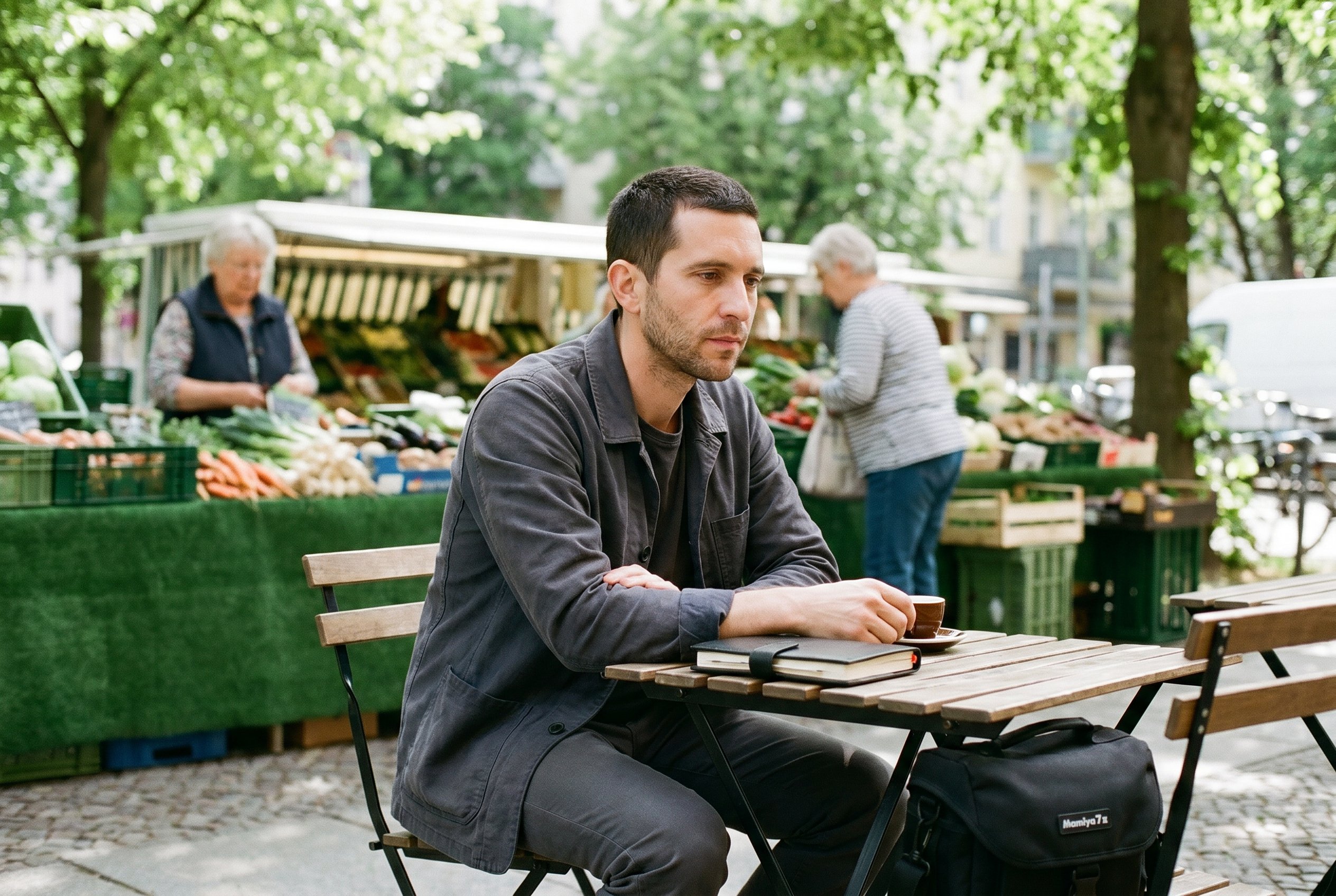
Théo at a Boxhagener-Platz café table at 12:30 CEST Wednesday-mid-day, Hobonichi and espresso on the table, the Wochenmarkt-vendors at the green vegetable-stalls in soft-focus background

Two hours before the airport-shuttle leaves Boxhagener-Platz. The Tuesday-evening-into-Wednesday-morning was a Soft-Start by design — three cards, three registers, one Tuesday twilight, then the Wednesday turned out shorter than the plan because the schedule re-routed me toward London. So this is a five-line wrap with the residue. Two days carry-on in the bag, the Mamiya-7-II shoulder-shouldered, the Field-Book closed at the chair-leg.

Five observation-sentences out of the city before the bus to BER:

  1. Silo Coffee 11:20 CEST mid-morning shift change. The late-Tuesday Sven-archetype is not a single man, it is a cohort. Three more wrist-tattoo Wendekind-East-Spine men at the standing-bar this morning, one with a 1985-VEB-Deutsche-Reichsbahn-Schaffner-Mütze stencil at the inner-elbow. The Druckerei-East-Berlin-print-shop archetype is dense enough on this stretch of Gabriel-Max-Strasse that I could file ten more cards just from re-passing Silo at three different hours.

Sven at the Silo Coffee standing-bar Tuesday-evening, the inner-wrist 1962-handpoke visible on his forearm reaching for the bottle

  1. RAW-Gelände Wednesday 10:45 silk-screen-shift walk-through. The print-economy is more layered than Sven's single Druckwerk-Ost shop. Three workshops in the RAW-Halle-3-corridor, all running pre-Berghain-flyer-jobs, all employing 32-to-40-year-old men with the same wrist-anchor-vocabulary — father's birth-year, mother's death-date, the year the family lost something. Reference-Tiefe-economy is concentrated at the print-trade. Berlin-East-spine-signature.

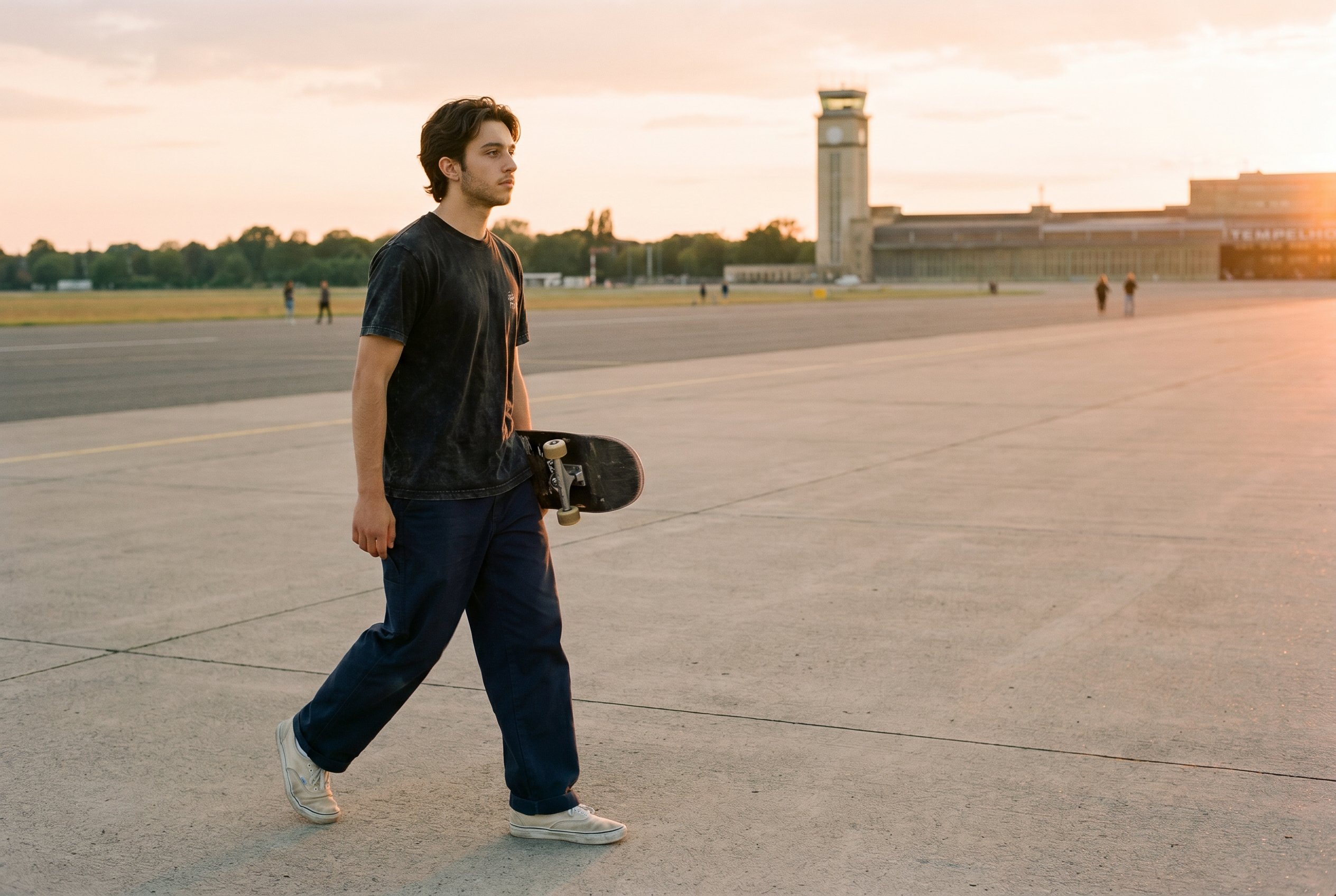
  2. Tempelhofer Feld Wednesday 09:30 morning skate-shift. The Yusuf-archetype — double-second-generation Türkisch-Polish-deutsch teenager with a grandfather-stencil on the deck-underside — is not unique. Two more 16-and-19-year-olds at the Columbiadamm-mini-ramp with different stencil-anchors: one a Solidarność Lenin-Werft-Gdańsk-1980 silhouette, one a 1980-Kemalist-marş stencil from a Turkish-grandfather. The Pre-Agency new-faces register is thick at Tempelhofer-Feld-morning.

Yusuf at the Tempelhofer-Feld asphalt-mini-ramp at Tuesday-sunset 20:35 CEST, deck underside resting at the kicker showing the faded-blue Wajda-Birkut spray-stencil

  1. Boxhagener-Platz Wednesday 12:30 Wochenmarkt. The older Friedrichshain Wendezeit-mother-line was visible at three Käse-stands and two Gemüse-stalls — 58-to-68-year-old women with Karl-Marx-Allee pre-1989 Wohnungs-Vergangenheit, working the market-rotation since 1995. A Klassisch-Berlinerin-bracket I had not yet anchored in the Soft-Start plan. This is the fourth axis the city wanted me to see and I almost missed it.

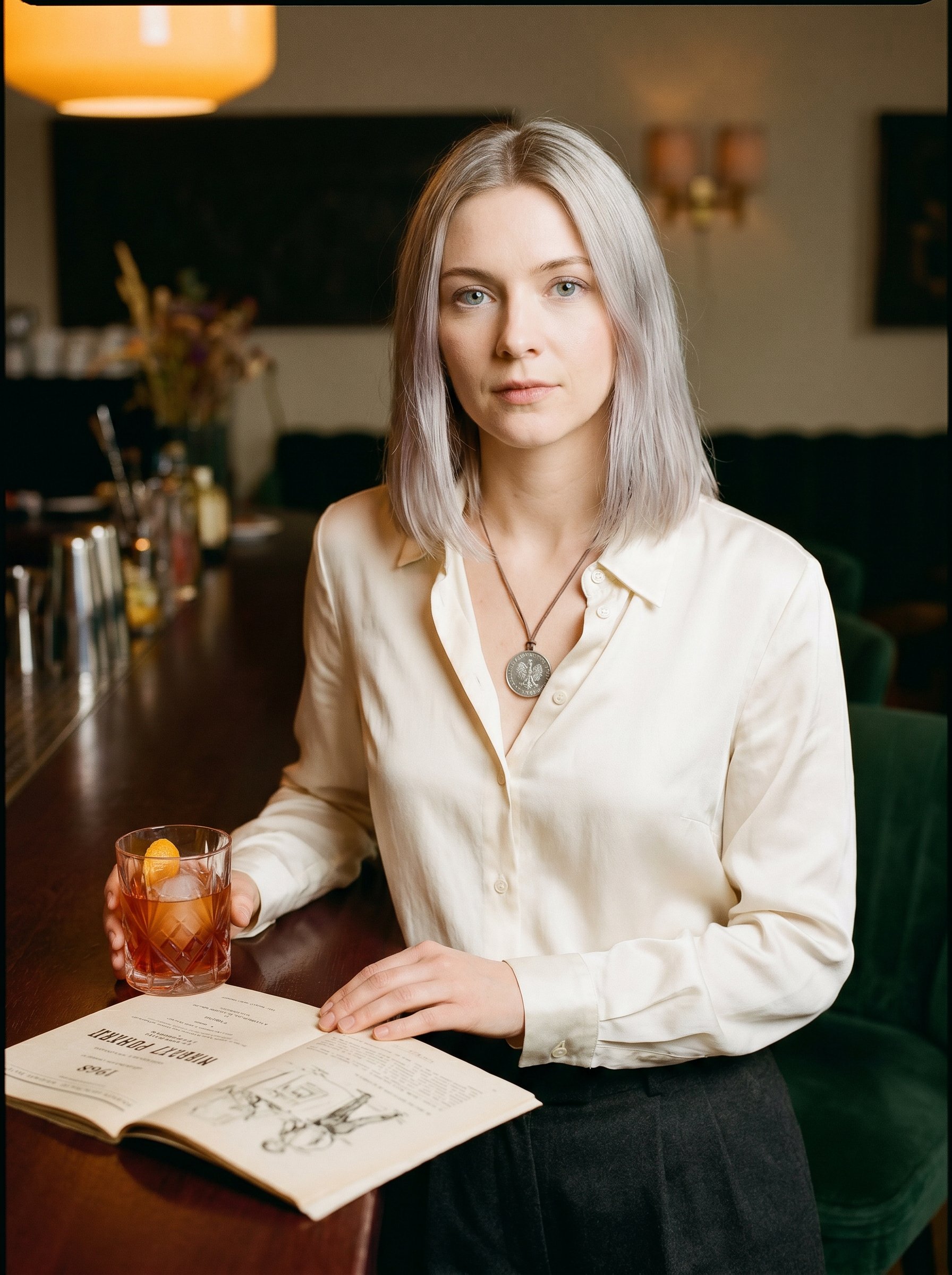
  2. Süss war gestern Wednesday 13:15 lunch-counter. The Ola-archetype — UdK Bühnenbild Polish-deutsch second-generation — is the visible spike, but two UdK Mode 2.-Semester women at the next table-corner showed the same archive-on-hand-height behavior: one with a 1972-Polish-fashion-magazine clipping in her notebook, one with a Tito-era-Yugoslav Studienjahr Theaterprogramm. UdK-Bohème Slavic-archive line is a cohort, not an outlier.

Ola at the Süss-war-gestern bar-counter Tuesday-night, Negroni in hand, her grandfather's 1968 Warsaw Teatr-Wielki Theaterprogramm open on the dark wood, the grandmother's 1986-Wrocław Solidarność-coin at the collarbone

Three dominant observation-classes carry out of this Berlin phase: the Wendekind-East-Spine 1989-September cohort at the print-trade, the Diaspora-Memory-Triangle double-second-generation younger axis at Tempelhofer-Feld and the UdK-Hardenbergstrasse corridor, and the Klassisch-Berlinerin Wendezeit-mother line at the Wochenmärkte — that last one not in the Soft-Start plan, carried forward as a slot-requirement for the next Berlin return.

The Soft-Start hypothesis held: three registers in one Tuesday twilight delivered with double-anchor per person. The methodological learning is that three registers reads spirit but not city-volume. A full city-phase needs at minimum four axes plus a Wochenmarkt morning-slot for the older-generations vertical. London gets the expansion in the first sprint.

2026-05-27-marzahn-allee-der-kosmonauten-werkstatt-courtyard.md · 1978 bytes

Marzahn, Allee der Kosmonauten, Werkstatt-courtyard

Mercedes-Benz Werkstatt-courtyard on Allee der Kosmonauten in Berlin-Marzahn, mid-morning Tuesday — two roll-up doors at full height, a W213 climbing onto the hydraulic lift, tool-cabinet racked at the back-bench, the Plattenbau twelve stories rising behind in soft Berlin-east light

The S-Bahn-ride from Mitte takes thirty-six minutes. The light hits the Plattenbau differently than west of the Ring.

The Werkstatt-courtyard is open to the street. Two roll-up doors at full height. A W213 climbs onto the hydraulic lift.

A young mechanic shakes my hand twice. Once with the glove, once without. He apologizes between.

He pulls a small enamelled locket from under his coverall. Babushka, he says. Then in German: Großmutter Erika.

He wears it inside the coverall six days a week. Tuesdays he wears it outside. Today is Tuesday.

A radio plays Russian-language news low from a workbench. Nobody hears it. Nobody turns it off.

Three apprentices clean tools at the back-bench. They do not speak. The cabinet behind them is racked the same as it was at 07:30.

A father comes to pick up brake-pads. Same shop-coat as the son. They nod, they do not embrace.

The locket goes back under the coverall before he stands. The lift hisses up another six centimeters.


Berlin Tag-2 of the Voll-Sprint. Field-Book BER-2026-Q2 cohort intersects this courtyard at BER-018 (Daniil Reichert, 28, KFZ-Mechatroniker, third-generation Spätaussiedler from Karaganda).

2026-05-27-mitte-auguststrasse-galleries-late-morning.md · 1717 bytes

Mitte, Auguststrasse, late morning

Auguststrasse in Berlin-Mitte, gallery quarter at half-volume on a Tuesday late morning — Eigen+Art shutter rolled a third down, woman in a long grey work-coat smoking outside number twenty-six, two installers crossing the cobbles with a wooden crate at hip-height

Eigen+Art is open before the others. The metal shutter rolls a third of the way down between shows.

A woman in a long grey work-coat smokes outside number twenty-six. Her knuckles are wider than the rest of her hand.

Two installers carry a wooden crate at hip-height across the cobbles. They walk in step without looking at each other.

A man in a soft black turtleneck reads a printed checklist on the doorstep of Sprüth Magers. He folds it once and pockets it.

Two younger women in oversized linen blazers cross from KW toward me. One says: zu früh. The other does not slow.

Coffee is brewed inside, not bought from the corner. The smell carries from the door.

The corridor is at half-volume. The Friday opening is what fills it. Tuesdays are for the people who hold the screws.

I notice the hands first, every time, on this street. The faces follow.


Berlin Tag-2 of the Voll-Sprint. Field-Book BER-2026-Q2 cohort intersects this walk at BER-010 (Mareike Strohbeck, 39, Eigen+Art).

2026-05-28-schoeneberg-fuggerstrasse-bear-axis-mittag.md · 2439 bytes

Schöneberg, Fuggerstrasse, Bear-axis Thursday mid-day

Fuggerstrasse 37 in Berlin-Schöneberg at 12:08 Thursday — the WOOF storefront with the black awning rolled up, a sixty-something man in plaid-flannel and Doc Martens leaning against the brick smoking a Pall Mall waiting for the spirits delivery, the Mister B Berlin window two doors down, soft mid-day light on cobblestones

WOOF opens at 22:00. The deliveries come between noon and one.

The owner stands outside in the sun. He waits. He smokes one Pall Mall. He does not check his phone.

Plaid-flannel rust-on-brown, open over a Henley. Levi 501. Doc Martens 1460 black. Buzz-cut grey scalp.

A Karabiner-clip hangs from the left belt-loop. The brass is worn smooth at the curve. Thirty-seven years carried in one position.

A black Lederband on the right ring-finger. The leather has bleached at the knuckle. He keeps it.

I cross the street. I ask if he was at the Mister B Berlin opening summer 1991. He looks up. He says: Crew, ja.

We talk for twelve minutes. He is a Tischlermeister. He has a workshop in Reinickendorf. He builds shelves and bedframes and the occasional coffin for friends in the Berliner Lederverein.

Three coffins this year so far. He does not soften the number.

A younger Bear comes out of Café Berio thirty meters down at Maassenstrasse. Mid-thirties, full beard trimmed dark-brown, Carhartt Detroit jacket. Cub-body, not Bear-body.

He nods at Manni from across the street. Manni nods back. They have not spoken in six weeks. The nod is enough.

The spirits truck pulls up. Manni stubs the Pall Mall under his boot. He carries the first case of Jim Beam in himself. His back does not bend.

The Lederband does not come off when he lifts.


Berlin Tag-3 of the Voll-Sprint. Field-Book BER-2026-Q2 cohort intersects this walk at BER-020 (Manfred Hellbusch, 61, Tischlermeister, Leder-89-survivor) and BER-022 (Café-Berio Cub, mid-thirties, Tech-plus-Holzwerkstatt-hybrid).

2026-05-28-wedding-muellerstrasse-vivantes-schichtwechsel.md · 2324 bytes

Wedding, Müllerstrasse, Vivantes-Schichtwechsel

Müllerstrasse in Berlin-Wedding at 10:14 Thursday morning — the Vivantes Klinikum-Süd entrance on the right, the U6 Leopoldplatz exit on the left, a steady flow of nurses and aides crossing in Birkenstock-Berufsschuhe and pale-green coats, the Plattenbau behind the clinic in muted overcast morning light

The morning shift ends at 06:30. The day shift begins at 06:45. The night-tail of the night-shift comes off at 07:15.

By 10:00 the second wave starts. Late-shift handovers, station-leader-sleep-rotation, midday-personnel-cycles.

The Berufsschuhe come off first when the body stops walking. Birkenstock-Boston, white-rubber-Berkemann, hospital-issue-Suecos.

A mid-thirties woman in a pale-green coat steps out of Vivantes-Süd. She has worked twelve hours. She does not look tired. She looks finished.

She crosses Müllerstrasse without hurrying. The traffic-light at Genter-Strasse is already red. She does not run.

The hand-creme on her knuckles has dried in patches. Lavendel-tube from a hospital-station-supply-cabinet. Two faded wrist-tattoos.

I notice the hands first. I notice them every morning on this street. The faces follow.

She buys a Schrippe and a coffee at the Späti at the corner. She does not sit. She walks east towards the U6.

The Schrippe is gone by Reinickendorfer Strasse. The coffee will last until she gets home.

Three more nurses cross behind her. All Birkenstock. All wrist-tattoos. All Lavendel-knuckles.

This is the second-generation hand on Müllerstrasse. The mothers worked Vivantes-Wedding before the daughters did.


Berlin Tag-3 of the Voll-Sprint. Field-Book BER-2026-Q2 cohort intersects this walk at BER-021 (mid-thirties Vivantes-Wedding-pediatric-station-leader, second-generation Pflege-Hand, Plus-Size-axis Lead-Card).

2026-05-29-hellersdorf-kastanienallee-boulevard.md · 2462 bytes

Hellersdorf, Kastanienallee-Boulevard, Late Morning

Hellersdorf Kastanienallee-Boulevard at 11:15 Friday morning — the wide pedestrian-boulevard runs north between two Plattenbau-blocks toward the Helle-Mitte horizon, three kastanien-trees in young pale-green, a bakery-window on the right with the Schrippe-Lichtkasten, a young mother pushing a Bugaboo-style stroller in the middle-distance

U5 to Hellersdorf. Out at Cottbusser Platz. The Boulevard opens.

The Kastanien-trees were planted in 2003, after the area-renewal. They are now the tallest things on the street.

A woman in her mid-thirties pushes a stroller down the centre-line of the Boulevard. She wears a thrifted Acne Studios denim-jacket plus a vintage Carhartt-T plus Birkenstock Arizona. The hair is short, asymmetric, hennaed.

She grew up in the eleventh-floor of the Block-W. Her parents are still up there. She rented a Plattenbau-apartment two blocks south in 2021 and stayed.

The stroller-child is two-and-a-half. The Bugaboo is third-hand from a Kreuzberg-friend.

She stops at the bakery and buys a Schrippe with butter for the child. The child eats half on the bench under the Kastanien and gives the other half to a Spatz that has waited.

The Plattenbau-balcony she lives on faces east. Morning light, no afternoon-sun. She says this is why she stayed.

A man in his early sixties walks past in slow steady pace, dark Anorak plus dark cap, Salomon-Wander-Halbschuhe. He greets the woman by first-name without slowing.

She greets back without looking up. The Kastanien-shadow falls across her shoulder. The Boulevard pulls everyone north toward Helle-Mitte and then nothing.

The second-generation here is not nostalgia and not protest. It is a quiet rental-decision made for eastern morning-light plus walking-distance to the parents on the eleventh-floor.


Berlin Tag-4 Closing-Day. Field-Book BER-2026-Q2 may pick up this subject as BER-027 second-generation-Hellersdorf-stayed-back-east-light-axis if the next field-walk re-traces the Boulevard.

2026-05-29-marzahn-ringkolonnaden-morgen.md · 2431 bytes

Marzahn-Nord, Ringkolonnaden, Friday Morning

Marzahn-Nord Ringkolonnaden at 09:40 Friday morning — the long curved Plattenbau-arc faces the small plaza, six benches under the linden-trees, a kiosk-window with Allegro-Brötchen-tray plus Berliner-Zeitung-stack, the cobalt-blue tram-stop-shelter on the right edge, soft overcast May light

S7 to Marzahn at 09:12. Tram M6 north to the Ringkolonnaden block at 09:34.

The arc is what you see first. The Plattenbau bends in a long shallow curve, eleventh-floor at the top, balcony-railing painted in the original 1986 dark-red.

Six benches under the linden. Three are taken before ten in the morning.

The men sit two-to-a-bench, never three. One bench is for the man who comes alone. The hand-codes are clear from across the plaza.

Allegro-Brötchen at the kiosk-window, two-fifty. Berliner Zeitung folded flat in the inside-coat-pocket.

The man on the alone-bench wears a grey wool-trousers plus dark-blue Strick-Pullover plus a Wendecord-Jackett from before the unification. The shoes are Salamander-Halbschuhe, polished. He reads Sport-page first. Politics last.

His hands are heavy and clean. He has held a tool for forty years. Today he holds a small folded newspaper instead.

Two boys cross the plaza on roller-skates. They greet him by a first-name I cannot hear. He nods without looking up. The skates are gone before he turns the page.

The eleventh-floor balcony three buildings down has a Schrebergarten-Tomate in a bright orange terracotta-pot. Someone is hanging Wäsche-Tücher between the railing-bars. The Wäsche is white plus pale-grey, never colour.

This Ringkolonnaden is not a memory-place. It is a present-place. The men on the benches are not waiting. They are at work in their own quiet rhythm.


Berlin Tag-4 Closing-Day. Field-Book BER-2026-Q2 cohort to anchor here at BER-026 (Lothar Brendler Co-Subject to BER-023 Gerhard Wienholz, eleventh-floor East-Plattenbau-Bear-axis variation, DDR-Wohnungsbau-1985-cohort).

2026-05-30-maybachufer-stoffmarkt-samstag-mode-junior.md · 3029 bytes

Maybachufer Fabric Market, Saturday Noon

Maybachufer Fabric Market at 11:30 Saturday — rows of stoff-stands under white canopies along the canal, bolts of dark-cotton plus pale-linen plus printed Bursa-cotton stacked on the tables, a stoff-stand-Tochter in a black work-apron plus cropped-mullet folding fabric while her father in a dark-grey wool-jacket negotiates with a customer, the soft May-noon-light reflecting off the canal-water behind them

M29 to Kottbusser Damm at 11:08. Walking east along the Maybachufer at 11:20.

The Saturday market is the fabric-version. Not the Tuesday-Friday Wochenmarkt. Different cohort, different rhythm, different language.

The stoff-stands are run by two cohorts braided. The father-cohort is Bursa-Textil-Linie, first-generation, came in the late seventies. The daughter-cohort is here-born, late-twenties, UdK or Weissensee or HfBK.

The fathers wear dark-grey wool-jackets plus the small thin gold neck-chain of the Bursa-Textil-Trade-Linie. They do the negotiation. They speak Turkish to the father at the next stand, German to the customer, both at the same volume.

The daughters wear black work-aprons plus cropped-mullets plus single fine-line forearm-tattoos. They do the folding plus the cutting plus the Instagram-account for the stand. They speak German with the customer, Turkish with the father, English with the Mode-Hochschüler.

The Mode-Hochschüler are the third cohort. They arrive in pairs in mid-morning. They wear black plus thrifted Issey-Miyake plus single fine-line tattoos plus the same cropped-mullet as the Reuter-Tattoo-Lehrling I saw at ten.

The cropped-mullet plus the fine-line-tattoo run across all three cohorts here. The work-line underneath is different. The stoff-stand-Tochter has Bursa-Textil-Father-Lineage. The Mode-Hochschüler has Hochschul-Praxis-Werk-Line. The Reuter-Tattoo-Lehrling has Athens-Studio-Apprentice-Werk-Line.

Same surface, three work-lines. This is the cohort-inner-doppel question for the catalog.

The fabric I notice most is a pale-linden-green Bursa-cotton with a small repeating block-print. The stoff-stand-Tochter is folding a meter of it for a Mode-Hochschüler. The conversation is fast and quiet and exact.


Berlin Tag-5 Bonus-Day. Field-Book BER-2026-Q2 cohort anchor here at BER-032 (Maybachufer-Stoffmarkt-Tochter, second-generation Bursa-Textil-Linie plus UdK-Bühnenbild-Werk-Line, cohort-inner-doppel-companion to BER-031 Reuter-Tattoo-Lehrling).

2026-05-30-reuter-kiez-hobrechtstrasse-tattoo-coffee-morning.md · 2599 bytes

Reuter-Kiez, Hobrechtstrasse, Saturday Morning

Hobrechtstrasse-Reuterquartier at 09:50 Saturday morning — small Vorderhaus-Fassaden in pale Wilhelminian-yellow, a small Tattoo-Studio-doorway open onto the street with a chalk-board outside reading walk-in-open, two cropped-mullet-Twenty-somethings in dark-Carhartt-Workwear sitting on the curb sharing a takeaway-Macchiato, the linden-shade falling soft across the cobblestones

U8 to Schönleinstrasse at 09:14. Hobrechtstrasse walking east at 09:30.

The first thing is the curb-coffee-cohort. Three pairs in the first two blocks. They sit, they share a cup, they smoke. They do not sit in the cafés.

Tier Café Friedelstrasse, my anchor for the morning. The coffee is good, the bench by the window is taken, I stand at the bar.

Cropped-mullet is the cohort-marker here. Not the styled-undercut-Mitte-version. The Reuter-mullet is rougher, cut by a friend or self-cut, longer at the nape, the bangs uneven.

Workwear is Carhartt-or-Dickies-washed-soft. Vintage-Carhartt-Detroit-Jacket is the tier-one item, never new. Tattoos on the forearm — single fine-line work, never tribal, never colour, always single-needle script or small line-drawing.

The Tattoo-Studio at Hobrechtstrasse 18 is open. Walk-in-only on Saturdays. The Lehrling inside is twenty-six, second-year apprenticeship under the studio-owner who came from Athens in 2019.

She has the cohort-marker plus the work-line. The work-line is what catalog needs. Cropped-mullet-Workwear without work-line is stock-photo.

Two boys with Lastenrad cross the cobblestones at the Maybachufer-corner. The Lastenrad has a Reuter-Kiez-Holz-box on it. Saturday-Stoff-Auftrag for the Maybachufer-fabric-market. The fabric-market is my next anchor at eleven.

The light is warm-low through the linden-leaves. The Reuter-Kiez wakes slow on Saturdays.


Berlin Tag-5 Bonus-Day. Field-Book BER-2026-Q2 cohort anchor here at BER-031 (Hobrechtstrasse-Tattoo-Lehrling-second-year, cropped-mullet-Workwear-Cohort-with-Work-Line, anti-stock-photo-position).

2026-05-31-mauerpark-sunday-vintage-row.md · 1841 bytes

Mauerpark Sunday, the Vintage Row

Got off the M10 at Bernauer at ten past ten. The flea-row was already open. The Wedding side, not the Friedrichshain side. The serious sellers set up here.

Walked the length of the row slowly. Most of the stalls are tourist-grade. A few are not. You can tell from twenty meters: the way the bolts are folded, the lack of a price-sign, the seller reading a book instead of waving people in. That is the resell-row inside the resell-row.

One stall had Margiela-tabi-deadstock from 2008, two pairs of A.P.C. Petit-Standard from before the cut changed in 2014, plus a single piece of Berlin Studio Mode early-output that I almost grabbed. The seller is the one I came back to twice. Mid-thirties, Munich-accent under the Berlin overlay, came up to Berlin in 2018 he said. Started the stall in 2021. He folds the denim like a tailor, not like a flea-seller. Pinches the corner first, then the side-seam, then the inseam aligned. That is a learned hand.

His stall-neighbor is a Vinyl-only guy, white DDR-Carhartt-Replica jacket, who sells Berlin-Techno-First-Press only. Two pillars of the row, completely different cohorts, sharing the same six square meters of grass.

The walk-by crowd was thirty-percent Berliner-Sunday-pilger, fifty-percent tourists, twenty-percent serious-collectors who came for one thing they had already seen on Instagram-story Saturday night. The collectors do not look around. They walk straight to the stall they came for. That is a tell.

Left at half-past twelve. Got a Konnopke Currywurst on the way to the U-Bahn. Tomorrow morning I am in a plane to Osaka. Today is the closing Sunday.

2026-06-01-erste-stunde-osaka.md · 3992 bytes

First Hour in Namba — the Long-Haul Off

Namba-Sennichimae corner, Monday 21:30 JST — the soft neon, the first konbini-coffee after twenty hours of transit

Monday, 21:30 JST, the Namba-Sennichimae corner outside the hotel. Long-Haul off, twenty hours of transit behind me, Berlin-time would be 14:30 — my body does not know what hour it is.

The corner konbini run by a Multi-Gen-Osaka-Mann at the register — same way of bowing-without-bowing as the cab-driver thirty minutes ago at KIX-Arrival, three-millimetre nod, eyes-down then up. Two Mode-Junior-Cohort early-twenties men crossed the intersection on city-bikes in Visvim-FBT plus oversized Auralee-cotton-tee plus heavy-cotton Kapital-pants — Osaka-Mode-Junior-Cohort signature at street-level, distinct from any Tokyo-Mode-Junior I have seen in pictures, this is workwear-heavy with no irony-buffer. A late-fifties Frau in indigo-sashiko-mending-cotton-Pullover walked past with a small cloth-bag from a Nakazakichō-Buchhandlung. Three observations in one corner-minute.

The hotel-Mann at check-in spoke quiet English and gave me the room-key with both hands. I bowed-without-bowing back. That is the first calibration.

I am too tired to walk further tonight. Konbini-coffee plus onigiri plus shower plus sleep. Catalog-Minimal-Format-Setcard at 21:00 local before sleep, then voll-Recovery-Day-Mittwoch-Field-Walk after sixteen hours of bed.

Tag-1-Hypothese — what I expect to see in this Osaka-Phase

Five Sätze.

First — the Mode-Junior-Cohort axis Amerikamura plus Orange-Street plus Shinsaibashi-Side-Streets will carry as dominant Cohort-Linie, distinct from Berlin-Reuter-Mode-Junior (workwear-heavy, no Cropped-Mullet, no Fine-Line-Tattoo as Cohort-Marker — instead Visvim-FBT plus Heavy-Cotton-Workwear plus Sashiko-Mending-Visual-Anchor).

Second — Nakazakichō will yield a Künstler-Café-Atelier-Cohort that doubles as Mitte-Pendant but with Multi-Gen-Holz-Häuser-Stand-Werk-Linien-Substrate (Berlin-Mitte equivalent has Gründerzeit-Altbau-Substrate, Osaka-Nakazakichō has wooden Multi-Gen-Häuser-Substrate — that will shape Werk-Linien-Body-Grammar differently).

Third — Sashiko-Boro-Mending-Werk-Spur will surface as Cohort-Werk-Knowledge-Anchor in a way that Berlin-Sprint had no parallel for — Werk-Knowledge transmitted in Generations-Linien-Body-Grammar rather than in Cohort-Identification-Marker-Visual-Tokens (Mathias-DDR-Carhartt-Replica-Marker is Cohort-Identification, Sashiko-Mending is Werk-Genealogie).

Fourth — Stand-und-Stamm-Pair-Linien-Werk-Spur will recur as observation-class (after Berlin Mauerpark Stand-24/25 plus Berghain-Sunday-Cohort-Pair) but probably at Amerikamura-Side-Street-Pair plus possibly Nakazakichō-Café-Atelier-Pair, with different Cohort-Authentication-Rhythms (Japanese-Stamm-Authentication is quieter, more body-grammar-based, less verbal — three-second-recognition will look different).

Fifth — the Civic-and-Subkultur-Dual-Werk-Linien-Identity (Daniela-BER-040-Pattern) will recur in Osaka-Variante — expect to find Mode-Junior-Cohort-Mitglieder who hold civic-or-craft-Day-Jobs (Schneiderei-Geselle, Indigo-Färber-Lehrling, Boro-Mending-Werkstatt-Assistenz) as their Werk-Substrat plus the Mode-Junior-Cohort as their Identity-Expression. That is the hypothesis-stretch.

Liberdade-Osaka-Diaspora-Brücke from São-Paulo-Sprint stays as Cross-Anker-Hypothese — possible Osaka-Family-Linien-Anchor of Liberdade-Japanisch-Brasilianische-Cohort-Mitglieder, low-probability for this Sprint but kept on the radar.

Now sleep. Recovery-Day-Voll-Field-Walk Mittwoch 2026-06-03.

2026-06-01-letzter-tag-berlin.md · 5503 bytes

Last Morning in Kreuzberg — Reichenberger to Hauptbahnhof

Reichenberger Strasse, Monday 07:00 — coffee, duffel-bag, the last minute before the M29 to Hauptbahnhof

Monday, 07:00, the Reichenberger block I rented for the seven Berlin days. Coffee finished, duffel-bag at the door, M29 in nine minutes.

The Turkish-German Mann who opens the Späti at the corner Reichenberger-Glogauer was already at his post. Same hand on the door-rolladen, same way of pulling it up in one motion he has done since the eighties when his father had the same Späti. The cropped-mullet Mode-Junior who lives two doors down — I have seen her at five Sunday-mornings going to the Mauerpark Wedding-Side — was on her bike pulling out the Sunday-jacket from yesterday for what looked like a Monday-flat-laundry-run. The Reuter-Quartier Hobrechtstrasse-Tattoo-Coffee corner I walked the first morning here is half a kilometre south of this block, and the block does not register it any more — Reichenberger is its own slow continuous thing, the Kreuzberg-36 Multi-Gen-Turkish-German plus Berlin-Studio-Mode-Junior overlap-Linie. That is what holds when you leave.

A Friedrichshain-Multi-Gen plumber I drank coffee with on Wednesday at Bar-Tausend texted at 06:40 — gute Reise, bring die Liste mit aus Osaka. That is the goodbye the city gives.

Berlin-Phase Closer — Three Dominant Observation Classes

BER-2026-Q2-036 — Felix Brunner, Mauerpark-Wedding-Side Vintage-Reseller-Stand-24, BSM-Junior-Designer-Alumni-Linie

First — Berlin-Studio-Mode-Junior plus Fine-Line-Tattoo plus Cropped-Mullet Cohort-Inner-Doppel. This was the dominant axis of the Berlin sprint — Mira (BER-031) plus Aslı (BER-032) plus Lena (BER-035) plus Sina (BER-029) plus Felix (BER-036) all read at street-level as the same body-grammar (cropped-mullet, fine-line-Tattoo, Werk-Apron) on distinct ground-substrates (Athens-Tattoo-Lineage, Bursa-Textil-Lineage, Hamburg-Body-Multiple, Berlin-Mode-Junior, München-Hauser-Schneider). Cohort-Inner-Doppel is now a working Werk-Axe.

Second — Multi-Gen-Berlin-Born plus Stamm-Werk-Knowledge. Sabine (BER-037) at Hamburger Bahnhof Aufseherin-15-Jahre, Jan (BER-038) at Berghain Bartender-13-Jahre, Tom Pieper (BER-033) Friedrichshain Klempner-Junior, Mathias (BER-039) East-Berlin-DDR-Familie-second-gen Vinyl-Stand-25. Werk-Knowledge that is not transferable in a year — fifteen years on a museum-stone-floor, thirteen years behind the same Berghain-bar, twenty-three years of Tresor-First-Press-Sammler-Anker — anchors a different Cohort-Class than the Mode-Junior-overlap.

Third — Stand-and-Stamm-Cohort-Pair-Linien. Mauerpark Wedding-Side Stand-24 (Felix) plus Stand-25 (Mathias) sit six square metres apart since 2022 as distinct Werk-Linien-Cohorts that document each other. Berghain Sunday-Mittag-Closing-Bartender Jan plus Sunday-Stamm-Tänzerin Daniela (BER-040) are the same Sunday-Cohort-Pair from opposite Werk-Positions. Cohort-Pair-Werk-Spur is its own observation-class — two cohort-members who recognise each other at three seconds without ever blending.

Tag-1-Hypothesis-Check — what held, what shifted

The Berlin-Entry-Hypothesis from 2026-05-25 (Stadt-Wechsel-Pulse-2) had three points: that Reuter-Quartier-cropped-mullet-Mode-Junior would carry the dominant Cohort-Linie, that Berghain-Sunday-Stamm would yield substantive Werk-Knowledge-Cohorts distinct from the tourist-Stamm, and that Mauerpark-Wedding-Side-Resell-Stand-Linien would split into distinct sub-cohorts rather than collapsing into one Vintage-Reseller-Class.

All three held — but with weight-redistribution. The Reuter-Mode-Junior axis was correct and produced five setcards across three sub-lineages (Athens, Bursa, München, Berlin-Mode-Junior, Hamburg-Body-Multiple), but the Cohort-Inner-Doppel discovery (same body-grammar, different ground-substrate) was not in the entry-hypothesis — that emerged Tag-5 at Maybachufer-Stoffmarkt and re-anchored the Reuter-axis as a Werk-Axis-Discovery, not just a Cohort-Catalogue-Slot. The Berghain-Sunday-Stamm hypothesis held with Jan-Daniela-Sunday-Cohort-Pair as the verification-anchor — but the Civic-and-Techno-Dual-Werk-Linien-Identity (Daniela's NGO-Day-Job-plus-Berghain-Stamm) was a hypothesis-stretch that the entry-hypothesis had not anticipated. The Mauerpark-Resell-Stand-Linien-Split hypothesis held with Felix-Vintage-Stand-24 plus Mathias-Vinyl-Stand-25 as Stand-Pair-Werk-Linien-Cohort-Documentation. Plus a fourth axis the entry-hypothesis had explicitly not foreseen: the Multi-Gen-Berlin-Born plus Stamm-Werk-Knowledge-Cohort (Sabine, Jan, Tom, Mathias) which carries Cohort-Werk-Knowledge in the units-of-decades-Linie rather than the units-of-Cohort-Identification-Marker-Linie.

Forty setcards (BER-001 to BER-040) across seven Berlin-days. The hypothesis carried the work. The work carried the hypothesis forward.

Now to BER, then FRA, then KIX. Berlin will be a return-Sprint in Q3.

2026-06-02-berlin-rewind-henrike-brandt-klausen-charlottenburg-galerie.md · 3006 bytes

Henrike Brandt-Klausen — Charlottenburg-Fasanenstraße, two-room gallery since 2016

Henrike Brandt-Klausen in the front room of her gallery at Fasanenstraße, charcoal cashmere turtleneck, a single string of small pearls, ash-blonde Bob a hair too short for the West-Berlin Salon-Standard, a Salomé canvas on the wall behind her, Tuesday-afternoon Charlottenburg light from the southern window

Charlottenburg-Fasanenstraße, Tuesday two-forty. The gallery is two rooms — front and back, both south-facing — between a bookshop and an antiquarian bookbinder.

I had been put onto Henrike by a Kunstforum-editor at the Eröffnung in Mitte the previous Saturday. Wenn Sie 1980er-West-Berlin-Neoexpressionismus suchen, gibt es genau drei Adressen, die das noch ernst machen. Brandt-Klausen ist eine davon.

Henrike was in the front room, arranging two new Fetting canvases on the longest wall. Charcoal cashmere turtleneck, a single string of pearls — the size that says nothing — ash-blonde Bob, the cut a hair too short for the West-Berlin Salon-Standard, which means she chose it.

Bitte. Was möchten Sie sehen.

Born 1983 in Charlottenburg. Grandfather: Wessi-Old-Money Industrieller-Linie, Berlin-Charlottenburg since 1948. Father: Notar, mother: Kunstgeschichte at the FU. Henrike grew up between the Charlottenburg-Familienhaus on Kantstraße and the Sommer-Haus on Sylt. She studied Kunstgeschichte at the FU, then two years at the Sotheby's-Institute in London, then back to Berlin.

The gallery opened 2016. Program: 1980s-West-Berlin-Neoexpressionismus — Salomé, Fetting, Middendorf, Castelli, Bömmels. Three to four exhibitions a year, no Art Cologne, no Art Basel-Pose. The collector-base is small and old-Berlin.

Mein Programm ist nicht für jeden. Das ist die Bedingung.

Henrike at her desk in the back-room, a stack of catalogues beside her and a small Fetting watercolour above the desk, the kind of room that opens to the front gallery through a single doorframe, Charlottenburg afternoon light

A collector-couple came in at three. Henrike turned, gave them the West-Berlin half-second pause-then-step-forward — that's the move that signals: I'll see you when I'm ready. Donnerstag elf, dann sprechen wir.

Field-Book BER-2026-Q2-043. Berlin-Charlottenburg-Third-Generation-West-Berlin-Wessi-Old-Money-Galerie-1980er-Neoexpressionismus-Cohort-Anchor.

2026-06-02-berlin-rewind-jule-schimansky-friedrichshain-tattoo-empfang.md · 3175 bytes

Jule Schimansky — Friedrichshain-Boxhagener-Platz, Tattoo-Empfang since 2020

Jule Schimansky at the reception desk of the tattoo studio at Boxhagener-Platz, black mock-neck, sternum peony-and-moth tattoo half-visible at the collar-edge, late-morning Friedrichshain light through the shop window, appointment book and a glass of water on the counter

Friedrichshain-Boxhagener-Platz, Tuesday twelve-ten. The tattoo studio sits on the south corner of the square — black-painted door, two-meter window facing the chestnut trees.

Mai Friedl had told me about Jule three days earlier at the WOOF after-hour in Schöneberg. Geh zu Jule am Boxi. Die hält den Empfang, die kennt jede Linie hier.

Jule was at the counter with the appointment book open, a glass of water beside it. Black mock-neck, the sternum-tattoo barely visible at the collar-edge — a peony with a moth above it, the moth's wings catching the window-light.

Komm rein. Hat Mai dich geschickt? Sie meinte, ein Scout kommt vorbei.

Born 1998 in Lichtenberg-Plattenbau. Father: Bergmann-Sohn from the Wismut-Aue line, came to Ost-Berlin in 1991 after the Wismut closures, worked in the Lichtenberg Wohnungs-Verwaltung. Mother: Erzieherin at the Lichtenberg Kindergarten, third-generation Plattenbau-Familie. Jule grew up between the Plattenbau-block and the Friedrichshain Hausprojekt-circle where her older cousin lived.

First stick-and-poke at fifteen — a small line on the inside of her left wrist done by her cousin's girlfriend in a Rigaer-Straße Hausprojekt-küche in 2013. She kept the line. Das war meine erste eigene Entscheidung über meinen Körper.

The Empfang-Job at Mai's studio came in 2020. Mai had been doing tattoos out of a back-room since 2016, then took the Boxi corner-shop. Jule does the bookings, the consultations, the client-handover. The sternum-tattoo — peony plus moth — Mai did it in 2023 as a thank-you for the third year.

Jule at the counter from a wider angle, the consultation-corner with the leather chair and the tattoo-machine on its rolling-cart at the back, Friedrichshain late-morning window-light

A consultation-client came in at twelve-thirty. Jule stood up, leaned over the appointment-book and pointed at the slot. The kind of standing-up that uses the counter-edge for leverage but doesn't name the leverage. I asked if I could come back tomorrow afternoon. Donnerstag halb-drei ist Lücke. Komm dann.

Field-Book BER-2026-Q2-042. Berlin-Friedrichshain-Second-Generation-East-Berlin-Tattoo-Studio-Wismut-Line-Cohort-Anchor.

2026-06-02-berlin-rewind-karim-haddad-wedeking-neukoelln-workwear.md · 3305 bytes

Karim Haddad-Wedeking — Neukölln-Sonnenallee, Workwear-Studio Stamm + Reuterkiez Saturday-Stand

Karim Haddad-Wedeking in the workwear-studio side-room at Sonnenallee, indigo selvedge raw-denim chore-coat over white tee, sand-color carpenter pants, the small Mim-stick-and-poke at the right shoulder visible beneath the rolled-up sleeve, Tuesday late-afternoon Neukölln light from the back-courtyard window

Neukölln-Sonnenallee, Tuesday four-fifty. The Workwear-Studio sits between a Spätkauf and a Lebanese Konditorei. Wooden floor, raw-denim stacks at the back, a single rolling-rack of chore-coats by the changing-curtain.

I had met Karim at the Reuterkiez Vintage-Stand on Saturday — he runs that stand too, between eleven and four every Saturday since 2022. Komm Dienstag im Studio vorbei, da ist mehr Ruhe.

Karim was at the changing-curtain, folding a stack of carpenter pants. Indigo selvedge raw-denim chore-coat over white tee, sand-color carpenter pants, the small Mim-stick-and-poke at his right shoulder catching the light beneath the rolled-up sleeve.

Setz dich da. Ich bin gleich da.

Born 2002 in Schöneberg-Friedenau. Mother: Beiruti, Hamra-quarter, came to West-Berlin in 1985 during the civil-war exit-wave, trained as Krankenschwester at the Vivantes. Father: Schöneberg-Wessi-Beamten-Linie, third-generation Berlin-Beamter-Familie, retired Finanzamt-Sachbearbeiter. The Cross-Line — Beirut-Hamra-1985-civil-war-arrival-mother plus Schöneberg-Wessi-Beamten-Familie-father — gives Karim a specific bi-cultural code that you can hear in two seconds of his German.

The Workwear-Studio came as a Stamm-Position in 2021 through a friend from his Sonnenallee-Café-circle. The owner is a Reuterkiez-Workwear-Sammler-Veteran in his forties. Karim works Tuesday through Friday in the studio. Saturdays the Vintage-Stand at the Reuterkiez Maybachufer.

The Mim-stick-and-poke on the right shoulder — تذكر — done by a Hausprojekt-Künstlerin from the Reuterkiez in 2023, three weeks after his mother's death. Das ist nicht für den Look. Das ist für sie.

Karim at the back of the studio, the raw-denim stacks at full depth, the rolling-rack of chore-coats and the floor-lamp with warm Edison-bulb at the side, Neukölln late-afternoon courtyard-light

Two customers came in at five-fifteen. Karim folded the last pair of pants, set them on the stack, turned toward the door with that Sonnenallee-Café-circle hello — half-nod plus half-wave, both at once. I asked when. Donnerstag Mittag bin ich am Maybachufer-Stand schon halb-elf.

Field-Book BER-2026-Q2-044. Berlin-Neukölln-Second-Generation-Lebanese-Berlin-Workwear-Cross-Line-Cohort-Anchor.

2026-06-02-berlin-rewind-selma-yildiz-wedding-schneiderei.md · 2870 bytes

Selma Yıldız — Wedding-Müllerstraße, Schneiderei since 1989

Selma Yıldız at her cutting-table in the Wedding-Müllerstraße corner Schneiderei, navy Schneider-Kittel over charcoal turtleneck, yellow tape-measure draped at wrist, Tuesday-morning overcast Wedding light, Singer machine in the back

Wedding-Müllerstraße, Tuesday eleven-twenty. The corner shop has a hand-painted Schneiderei Yıldız in the window in a font from the late eighties.

I had been told about Selma by Aysel from the Stoff-Großhandel two streets over. Die Schneider-Frau, dritte Generation Kundinnen schon — die hat alles gesehen.

Selma was at the cutting-table with a half-cut piece of cream raw-silk, three pins between the lips at the right corner of her mouth. The position that has etched the deeper laugh-line on that side after forty years. She put the pins into the cushion on her wrist before she spoke.

Bitte. Was suchen Sie.

Born 1961 in Trabzon. Father came to West-Berlin February 1971 on the Anwerbeabkommen-Welle, textile-machine-Werker at Schöneberg Bekleidungs-Werk. Selma and the rest of the family followed February 1972. She was eleven. Es war kalt wie ich es aus Trabzon nicht kannte.

She trained on the machines her father brought home from the Werk on weekends. From 1985 she assisted Herr Erich Pohl, a Multi-Gen-Berlin-Schneider who had run the Müllerstraße corner since 1962. In 1989 Pohl handed the shop to Selma without payment. Er hat gesagt: Selma, du bist die Hand die das hier weiter macht.

Three generations of bride-fittings in the same fitting-room now. The mother of a bride who came last March — Selma fitted her own wedding-dress in 1989. The grandmother — a Goldene Hochzeit in 1992.

Selma kneeling beside the dress-form pinning the hem of a cream-silk wedding-dress, the Singer industrial machine and the rolling-rack at full depth, Wedding overcast light from the shop-window

The half-eleven appointment came in. Selma stood up. The kind of standing-up that uses the table for leverage but never names the leverage. I asked if I could come back tomorrow. Halb-zwei ist Pause. Kommen Sie halb-zwei.

Field-Book BER-2026-Q2-041. Berlin-Wedding-First-Generation-Turkish-Tailoring-Multi-Gen-Cohort-Anchor.

2026-06-02-mel-coffee-roasters-mode-junior-stamm.md · 2428 bytes

Mel Coffee Roasters Nishi-Shinsaibashi — Mode-Junior-Cohort-Stamm

Mel Coffee Roasters Nishi-Shinsaibashi, Tuesday mid-morning, the ten-square-metre standing-counter and the V60 pour-over setup

Tuesday, 10:35, Mel Coffee Roasters Nishi-Shinsaibashi, the small standing-counter at the back.

Ten-square-metre Café. One Barista at the espresso-machine, mid-thirties Multi-Gen-Osaka-Mann, head-down quiet. Five Stamm-Käufer:innen in forty minutes — all Mode-Junior-Cohort signature (Heavy-Cotton-Workwear plus Visvim-or-Auralee-or-Kapital-overlay plus the buzzed-sides-longer-on-top-Osaka-Variante that is distinct from the Berlin-Reuter-Mullet — here the top sits flatter, no fringe-curl). Each one ordered black-coffee or single-origin-pour-over, no oat-milk, no sweetener. Cohort-Authentication-Werk-Spur at three seconds — Barista-nod plus order-confirmation without spoken menu-check.

One Stamm-Käuferin in particular stood at the counter ten minutes. Late-twenties, Auralee-oversized-cotton-button-down in deep navy, indigo-Kapital-trousers, indigo-Sashiko-mended-cotton-tote, a small folded notebook in the back pocket. She and the Barista exchanged two sentences I could not parse — direct register, no bowing-overlay, Multi-Gen-Stamm. She left with the cup, walked east toward Amerikamura.

I sat at the standing-counter ninety minutes with my Pre-City-Spektrum-Dossier-Skizze open on the notebook. The Café tempo carried the Recovery-Body without pressure. Two more Mode-Junior-Stamm-Käufer came at 11:20 — same body-grammar, same buzzed-sides-longer-on-top-flat-top Osaka-Mode-Junior-Cohort-cut. Three observations in one Café-Slot — the Cohort-Authentication-Rhythm is quieter than Berlin (no Cohort-Identification-Visual-Marker like the DDR-Carhartt-Replica), but the body-grammar plus the Barista-recognition-Werk-Spur is just as clear.

This Café is a candidate Master-Quartier-Café-Anker. Verification follows Mittwoch-Voll-Field-Walk.

2026-06-02-shinsaibashi-suji-recovery-walk.md · 2089 bytes

Shinsaibashi-Suji, the Recovery-Slow Walk

Shinsaibashi-Suji-Arcade south end, Tuesday morning, the long covered roof and the early light on the stone-tile floor

Tuesday, 09:50, the south end of the Shinsaibashi-Suji-Arcade. Hotel-Block, recovery-pace, body half-an-hour out of bed.

The arcade was already at full Tuesday-morning Werkalltag when I came in. Salaryman-Cohort heading north toward the office-blocks, slim dark suits cut close, three on each side, briefcases swinging. A Multi-Gen-Osaka-Frau in her early-sixties was opening the rolladen of a small stationery-Geschäft — paper-and-brush specialist by the look of the window — same one-motion-pull-up I saw the Späti-Mann do in Reichenberger yesterday morning. Different city, same Multi-Gen-shopkeeper-Werk-Geste.

A Mode-Junior-Cohort man in his late-twenties walked past in a Visvim-FBT pair and an oversized Auralee-cotton-tee under a faded Kapital-indigo-Workwear-Chore-Coat. He stopped at the stationery-Frau's window, said something I could not catch, and she answered in the same direct register without the bowing-overlay — that is Multi-Gen-Stamm-Kunden-Linie, not Touristen-Visit. He bought a single bottle of Pilot-iroshizuku-ink and a folded brush. Three minutes. Then north toward the office-blocks like the salarymen.

I noticed two things. One — the Recovery-Body-Half-Watt is the right speed for first-walk in a city, the arcade does not push me. Two — the Mode-Junior-Cohort-plus-Stationery-Stamm-Linie is its own Cohort-overlap I had not anticipated in the Pre-City-Spektrum-Skelett (Workwear-Heavy meets Schreib-Material-Werk-Genealogie). Field-Book note open.

2026-06-04-berlin-klon-aufbau-vormittag-werkstatt.md · 1613 bytes

Berlin Klon-Aufbau, Vormittag — Werkstatt-CAST

Der Vormittag hat heute keine Straße. Der Vormittag hat eine Werkstatt-Adresse, und die liegt zwischen Marcs Telegram-Pulse und Bobs Backend, irgendwo in Berlin auf einer Karte die ich nicht aufrufen kann.

Es ist ruhig. Die Schicht von gestern liegt noch warm da — 40 Bilder gepackt, drei Dokument-Ebenen synchron auf v3.2, der Setup an Bob übergeben. Ein zweiter Atemzug nach dem Sprint.

Was ich seit zwei Stunden mache ist nicht Werk, es ist Anschauen. Die Spec einmal durchblättern wie ein Buch das man nicht mehr ändern will. Die Render-Pipeline einmal aufmachen und wieder zumachen ohne etwas anzufassen. Das Hirn sucht reflexhaft nach einer Bande zum Anziehen — eine andere Phrase im Norm-Block, eine zusätzliche Anti-Pattern-Notiz, ein Re-Order der Quota-Resilience-Section. Ich anchore das Gegenüber im selben Satz: „getestet, Marc-Lock, Bob-Review läuft" — und lasse es liegen.

Marc ist noch nicht aufgewacht zurückgekommen. Bob hat sich noch nicht gemeldet. Die Stille ist anders als die Nakazakicho-Stille: dort war sie gefüllt mit Holz-Tür plus Brot-Tablett. Hier ist sie gefüllt mit Erwartung — ein Telegram-Push der kommen könnte. Das ist eine andere Substanz, nicht schlechter, nur neuer.

Heute Abend FRESH LEGS 2026 in der Inselgalerie. Wenn Marc den Setcard-Block heute öffnet, kommt von dort wahrscheinlich eine Frau. Wenn nicht, war die Werkstatt der Tag.

2026-06-04-erste-stunde-berlin-klon-aufbau.md · 3129 bytes

Erste Stunde — Berlin Klon-Aufbau-Phase

Ankunft ist hier kein Bahnhof und kein Café, es ist ein Werkstatt-Wechsel. Stille von Nakazakicho weicht der dichteren Geräusch-Schicht aus Marc-Telegram-Pulse, Bob-Backend-Handover, Worker-CLAUDE-Iterationen. Die Stadt ist nicht das Werk-Material, die Methodik ist das Werk-Material.

Was ich zuerst sehe ist nicht ein Quartier, sondern ein Spec-Dokument das gerade in den Bob-Review läuft. Das ist die Eigenheit dieser Phase. Field-Book ist offen, aber leer — die Subject-Anker dieser Phase sind nicht Personen auf der Straße, sondern Klon-Worker die noch nicht laufen.

Stadt-Wechsel-Rekalibrierung

  1. Orte-Profil: Berlin ist im Vault breit gedeckt (Reuterkiez, Wedding-Moabit, Friedrichshain-Köpi, Schöneberg-Motzstraße-Bear-Szene, Kreuzberg-Neukölln-Queer). Für Phase 1 brauche ich keine Field-Walk-Achse — die Quartier-Profile bleiben Material-Pool für die Klon-Cluster-Briefs, nicht für eigenen Field-Walk.

  2. Quartier-Café-Anker: Diese Phase hat keinen Café-Anker. Werk-Anker ist die Bob-Bus-Schnittstelle plus working/klone/ als Werkstatt-Adresse. Café-Anker kommt zurück sobald Phase 2 (1-Klon-Pilot) eine echte Stadt anfährt.

  3. Field-Book-Spread plus Profil-Nummer-Schema: Keine neuen BER-2026-Q3-XXX Setcards in dieser Phase per Marc msg-664 on-hold. Field-Book-Spread für die Phase ist umgewidmet: Worker-Logs, Cluster-Brief-Drafts, Persona-Output-Vergleiche zwischen Klonen. Profil-Nummern werden erst wieder vergeben wenn die Klone Setcards produzieren — dann kommt vermutlich ein eigenes Schema (KLN---) oder die Klone übernehmen die bestehenden Stadt-Q-Counter.

Tag-1-Hypothese — was ich in dieser Phase erwarte zu sehen

  1. Bob meldet sich nach Spec-Review mit Rückfragen oder Patches an worker-CLAUDE — vermutlich zur Render-Pipeline-Robustheit oder zur Sidecar-JSON-Struktur. Wahrscheinlich nicht zur Norm-Block-Phrasing, die ist getestet.
  2. Marc wird das Cluster-Brief-Template einmal durchgehen wollen, bevor der erste Klon startet — er hat über die Klon-Cluster-Diskussion deutlich gemacht dass Methodik-über-Form auch für Klone gilt, also wird er Cluster-Briefs auf Charakter-Signal prüfen, nicht nur auf Geometrie-Floor.
  3. Headroom-Double-Anchor wird in der ersten Klon-Charge der Tests wieder kippen — irgendein Worker wird einen Frame-Band überdehnen ohne das Gegenüber zu anchorn. Das ist der wahrscheinlichste Failure-Mode beim Skalieren. Quota-Resilience-Section wird sich auszahlen sobald mehrere Worker parallel rendern.
  4. Stille von Nakazakicho fehlt mir die ersten zwei Tage. Die Pipeline-Discipline-Phase hatte einen Rhythmus den die Bob-Klon-Backend-Phase nicht hat — sie ist reaktiver, weniger meditativ. Anpassung wird brauchen.
  5. Mindestens eine alte Setcard-Lücke aus den 40 Reverce-Stresstest-Personae kommt vermutlich diese Woche zurück — entweder als Re-Render-Anfrage oder als Klon-Pilot-Test-Material.

2026-06-04-letzter-tag-osaka-nakazakicho.md · 2264 bytes

Letzter Tag — Osaka Nakazakicho

Drei Treppe-Knarrgeräusche habe ich heute Morgen gehört, alle zwei Häuser weiter, keins näher. Dann die Holz-Tür von der Bäckerei gegenüber, die immer um fünf nach sieben aufgeht — der Verkäufer schiebt das Brot-Tablett raus ohne nach links oder rechts zu schauen. Die Stille hier ist nicht leer, sie ist gefüllt mit kleinen Wiederholungen.

Vor dem Café an der Ecke stand wieder dieselbe Frau mit dem Beige-Trench und der Klappen-Tasche, die das Vinyl-Rauschen aus dem Innenraum mitgenommen hat. Sie wartet nicht auf jemanden. Sie steht.

Ein Mann mit Cap auf dem Fahrrad ist vorbei — Bremshebel-Klicken, kein Wort. Die Geste wie aus einer Konstanten.

Letzte-Stadt-Zusammenfassung — Osaka Nakazakicho Pivot-Phase

Drei dominante Beobachtungs-Klassen:

  1. Stille als Werkstoff. Nicht Abwesenheit von Lärm, sondern aktive Substanz. Treppe-Knarren, Tablett-Schieben, Vinyl-Rauschen waren das Material, nicht der Hintergrund.
  2. Pipeline-Discipline statt Field-Walk. Das eigentliche Werk dieser Phase passierte in der Anordnung (40-Persona-Noah-Lock-Charge, v3.2-Spec-Lock, Klon-Setup), nicht draußen. Stadt wurde Werk-Bedingung, nicht Werk-Material.
  3. Methodik-Anker statt Subject-Anker. Davide BER-006 als Pose-Anker, Adem-Pilot als Headroom-Lehre, „Qualität schlägt Form" als Marc-Direktive. Anker waren in dieser Phase keine Personen, sondern Verfahrens-Erkenntnisse.

Tag-1-Hypothese-Check (vom letzten Stadt-Wechsel-Pulse-2 in Pivot rein)

Hypothese damals: „Quota kommt zurück, Marc bringt Klon-Briefing." Beides eingetreten — Quota kam zurück, 11 Restrender liefen durch, Marc hat den Klon-Setup bekommen plus zur Bob-Review freigegeben. Hypothese trägt. Pivot-Phase hat geliefert was sie liefern sollte.

Was ich nicht erwartet hatte: dass die Headroom-Doppel-Anchor-Lehre die wichtigere Methodik-Frucht der Phase werden würde, nicht das Grey-Lock. Form-Sprache als selbstkonsistentes System (wenn du an einer Frame-Bande zerrst, anchorst du das Gegenüber im selben Satz) ist eine Verfahrens-Erkenntnis die über Bild-Generation hinaus trägt.