SAO-2026-Q2-009 — Roberto Oda Pinheiro
Catalog Brief
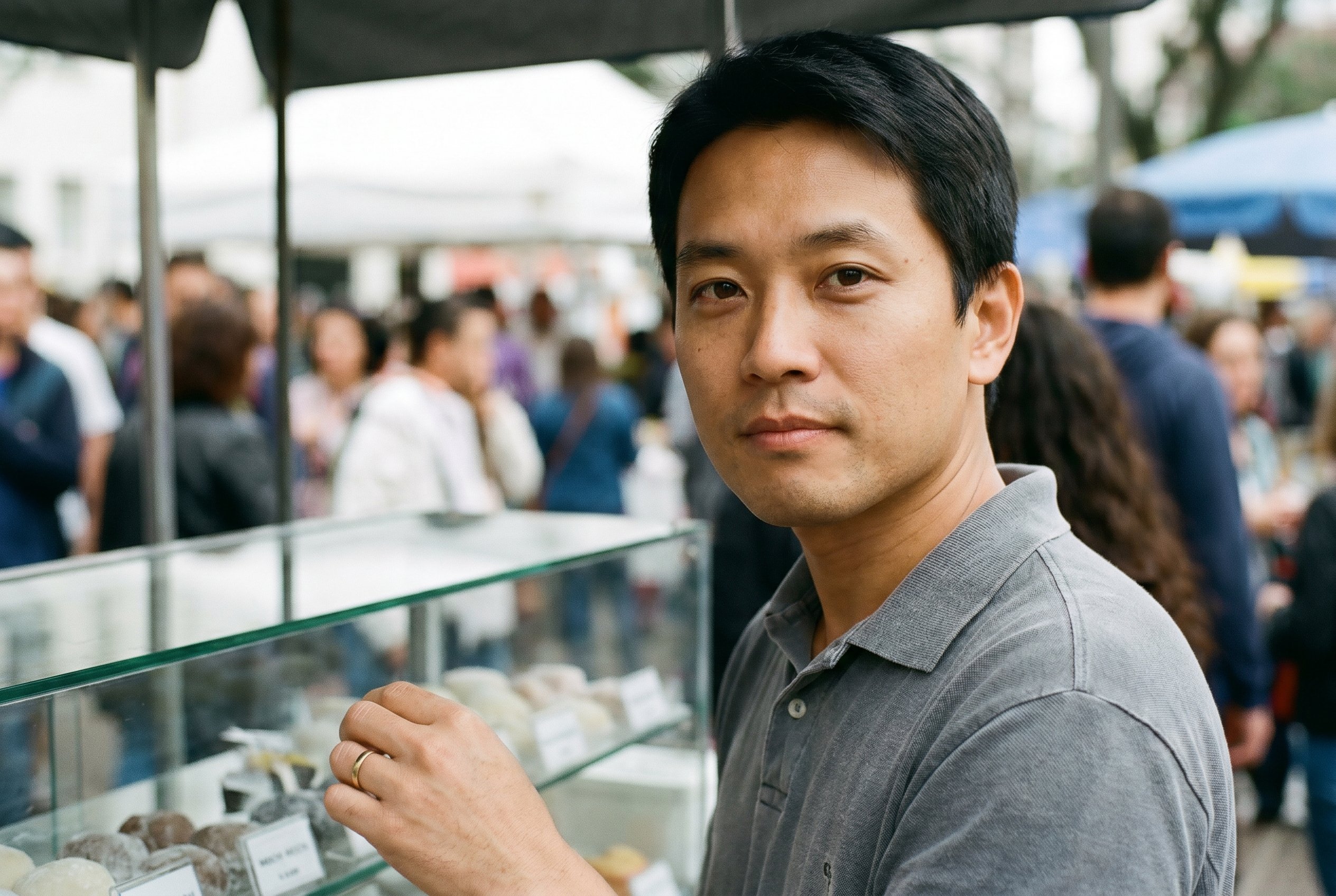
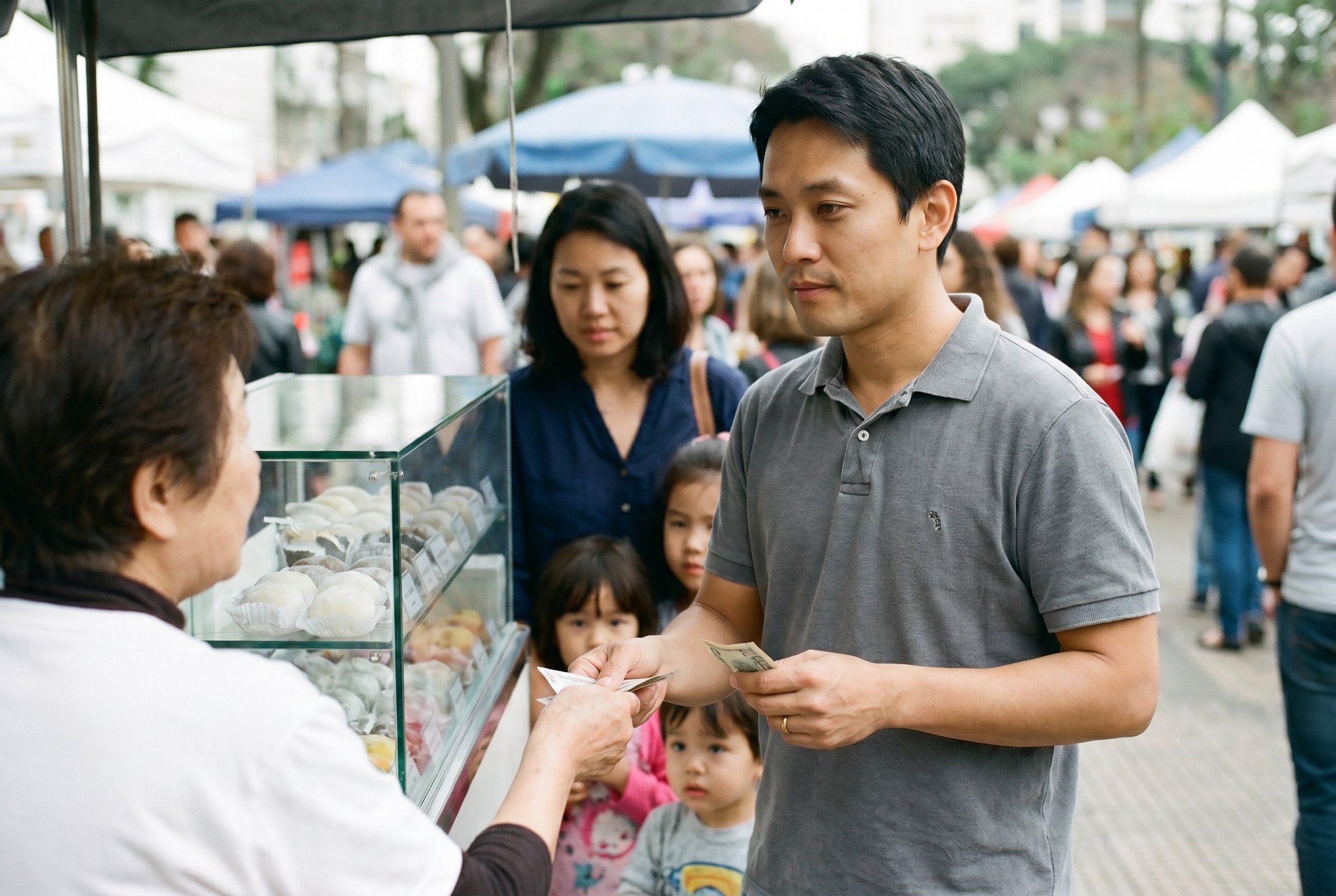
Catalog reader, Liberdade north-corner mochi-cart, the Tatuapé-bound Sansei father at the counter. Thirty-five, paulistano Nikkei-Sansei, thin gray polo, asks for six mochi, the whole transaction is four sentences. That is the working-class-mid-career Sansei body-economy in its most distilled register — the diaspora is not in the language any more (Portuguese only), the diaspora is in the gesture-economy and the Sunday-Feira ritual-trip. Catalog has the Nikkei-Diaspora axis with three pins so far (SAO-007 Yonsei-Tochter, SAO-008 Yonsei-Mode-Insider, SAO-009 Sansei-Vater) — third-generation is the generation-position the catalog needs structurally to anchor Issei-Nisei-Sansei-Yonsei coverage. Field-Book entry SAO-2026-Q2-009 promoted from placeholder after observation 11:30 BRT and a brief at-cart exchange at 11:42 BRT. Proposal: ask via the mochi-cart-owner (mutual contact) for a Saturday Tatuapé-visit at his residential-installation workshop or a weekday-evening sit-down at a Tatuapé café.
Story
The north-corner mochi-cart was the quieter corner — older Liberdade-locals plus families with strollers. I had been working the Praça for nearly an hour, the read was sharpening. The family of five came at 11:30 BRT — father mid-thirties in a thin medium-gray short-sleeve polo, mother early-thirties paulistana-mixed register in a plain navy blouse, three kids between maybe five and eleven. Father at the front of the line. Asks for six mochi, the vendor (older Sansei-coded woman behind the cart) asks which flavors, father says two of each of the three flavors visible, the vendor wraps each one separately, the father pays in cash, says obrigado, takes the box. Four sentences total. The whole transaction was three minutes. But the body-economy was the catalog-read: he stood with the slight squared paulistano-male working-trade shoulder, the kind of shoulder that comes from carrying tool-bags up apartment-stairwells five days a week. The polo was clean but not new. The shoes were dark-canvas low-tops, not athletic, slightly worn at the toe-cap from kneeling-position work. The wedding-ring on the left hand was a thin gold-band, simple, well-worn. The family is the Tatuapé-Liberdade weekly-Sunday-axis — they come from Tatuapé (East-Zone, a paulistano-Nikkei-significant neighborhood with the second-largest Liberdade-diaspora population), they ride the metro-red-line to Sé, they walk the Praça, they buy mochi, they go home. This is the diaspora-ritual-trip in its third-generation register, no Japanese spoken, the cultural-ballast is the Sunday-visit itself. I made eye-contact briefly at the cart-side as he was leaving. He nodded politely, no further read needed. Asked the cart-vendor (mochi-cart-owner who knows the regulars) for the name later, after his family had walked off — she said Roberto Oda Pinheiro, comes every two-three weeks, residential-electrician in Tatuapé, kids are at the Aliança-Cultural Saturday Japanese-school. She offered to pass my card to him next time he comes through. Card given, slot open.
Biografie
Roberto Oda Pinheiro, born 1991 São Paulo Tatuapé. Father Hideo Oda (Nisei, born São Paulo 1955, Oda-paternal-grandfather Yoshio arrived from Niigata via Santos in 1948 as an Issei agricultural-laborer who later moved into automotive-mechanic-trade in São Paulo East-Zone). Mother Sandra Pinheiro (paulistana-mixed-substrate, born São Paulo 1958, Portuguese-paternal plus Caboclo-maternal grandparents from Minas Gerais interior). Roberto is the middle of three — older sister Marcia (40, social-worker at Tatuapé prefecture), younger brother Felipe (32, automotive-mechanic who took over the family-shop after Hideo retired in 2018). Roberto finished public Escola Estadual Octaviano Alves de Lima 2009, did the SENAI electrical-installation-technician three-year course 2010-2012, started at Eletrosul-Residencial in 2013 as a junior-technician, full residential-installation-technician since 2017, supervises a four-man-team since 2023. Married Carolina Saito-Marcondes (Nisei-Sansei mixed, kindergarten-teacher in Tatuapé) in 2016. Three children — Yuki (10), Pedro (7), Aiko (5). Family-residence-flat in Tatuapé, walking-distance from the Tatuapé Aliança-Cultural-branch where the kids attend Saturday Japanese-school. Speaks Portuguese (paulistano-East-Zone register), elementary Japanese (greetings-and-numbers from the grandfather and Saturday-school childhood, not maintained), basic English from technical-equipment-manuals.
Reference Depth Justification
The Nikkei-Sansei working-class-mid-career diaspora-body class — the third-generation-position the catalog needs structurally for Issei-Nisei-Sansei-Yonsei generation-coverage — carries here at four readable points:
(1) Body-economy of the residential-trade-mid-career-shoulder: the slight forward-squared shoulder plus the toe-cap-wear on the canvas-shoes plus the knee-position-readable-stance — these are the body-markers of someone who works on his knees in apartment-utility-closets five days a week. Distinct from the desk-trade Sansei (Eduardo Watanabe-paternal, SAO-008-father-profile) and distinct from the youth-economy Sansei. SAO-009 is the working-class-mid-career-Sansei pin specifically.
(2) Four-sentence-transaction body-language: the whole mochi-purchase happened in four sentences and three minutes. The diaspora-Sunday-ritual is so internalized that it requires almost no verbal-overhead. The cart-vendor knows him, he knows the flavors, the cash is correct, the box is wrapped, done. This is the third-generation-ritual-economy at its most distilled.
(3) Wedding-ring plus polo plus canvas-shoes — the working-class-mid-career-paulistano wardrobe-economy: plain, clean, functional, slightly-worn, no styling-decisions. The opposite of Lucas-Watanabe (SAO-008) who has mode-insider-decisions visible. Roberto has none. That contrast is itself catalog-density — Sansei and Yonsei occupy different wardrobe-positions because they occupy different generation-positions in the diaspora-economy.
(4) Tatuapé-Liberdade weekly-axis: the diaspora-Sunday-trip from East-Zone Tatuapé (the second-largest paulistano-Nikkei neighborhood after Liberdade-Sé) to Liberdade-Praça is the cultural-ballast pattern. Roberto's children attend Saturday Japanese-school in Tatuapé, the family comes to Liberdade for mochi every two-three weeks. The pattern is the catalog-pin, not just the man.
Catalog Category Routing
Primary: Nikkei-Sansei mid-thirties paulistano, working-class-mid-career-electrical-trade body, family-code-Sunday-ritual subject, Tatuapé-Liberdade weekly-axis. Secondary: contemporary paulistano residential-trade-mid-career editorial, third-generation-diaspora family-portrait, East-Zone-paulistano-Nikkei-Sunday-economy essay. Editorial fit: NYT-Magazine working-class-trade-portrait section, piauí East-Zone-paulistano-essay, Folha S Plus residential-construction-trade supplement, Document-Journal mid-career-trade documentary, Vogue-Brasil contemporary-Brazilian-family-portrait. Possible test-sheet at the Tatuapé family-flat-doorway or at the residential-installation-job-site on a Saturday morning.
Suggested Next Step
Phase 1: pass via the mochi-cart-vendor for an introduction at his next two-three-week Sunday visit (slot open, no firm date, vendor agreed to relay). Alternative: cold-contact via Eletrosul-Residencial Tatuapé via their public reception-line, mentioning the Praça-da-Liberdade encounter and asking for a fifteen-minute weekday-evening sit-down at a Tatuapé café. Phase 2 (consent-pending): test-sheet at the family-flat-doorway in Tatuapé on a Saturday morning before the kids' Japanese-school, three frames — the doorway-with-Carolina-and-the-three-kids, Roberto-alone-in-the-living-room with the trade-toolbag visible in soft background, the Tatuapé-Aliança-Cultural-walk on a Saturday morning. NYT-Magazine working-class-trade-portrait register. Phase 3: extension into the Tatuapé-paulistano-Nikkei catalog-territory if SAO-009 holds — Tatuapé is structurally adjacent to Liberdade in the diaspora-economy and the catalog has nothing from East-Zone yet.
Prompts
Bild 1 — closeup-portrait.jpg (model: nano-banana-pro 2K)
Contemporary documentary-fashion editorial closeup portrait for a São Paulo casting catalog, head-and-shoulders framing, thirty-five-year-old paulistano Nikkei-Sansei third-generation man of Oda-paternal-Niigata-Issei plus paulistana-Portuguese-Caboclo-maternal heritage, Sunday-Feira mochi-cart customer-at-the-counter position at the north-corner of Praça da Liberdade, oval face with the Niigata-paternal slightly-squared jaw crossed into a Sansei-mixed register, fine-natural straight low dark brow, neutral closed natural lip-line of a person mid-transaction, almond-shape brown eyes with the soft inner-fold characteristic of Sansei-mixed substrate, dark-brown straight short hair cut clean and combed flat in a working-trade-mid-career simple cut, warm-medium ivory-with-olive-undertone Sansei-paulistano skin with honest pore-texture preserved plus a single faint laugh-line at the outer eye and the soft mid-thirties cheek-volume, fine residential-trade-worker hands implied at the shoulder-line, dark-brown eyes looking directly into the camera lens with the polite reserved family-man-at-the-Sunday-Feira-mochi-counter attention, the body-economy of a working-class-mid-career residential-electrical-trade-body carried in the slight squared shoulder, wearing a thin medium-gray short-sleeve cotton polo with no logo plus a small honest pilling at the chest from real use, no apron, no other jewelry except a thin worn-gold wedding-band on the left ring-finger visible at the shoulder-line, no makeup, the warm Sunday-late-morning São-Paulo overcast diffused light from camera-front-left across the cheekbone, the soft glass edge of the mochi-cart counter plus the soft fall-off of Praça-da-Liberdade Sunday-Feira north-corner crowd behind, photographer style of Mauricio Nahas plus Bob Wolfenson paulistana-documentary tradition crossed with NYT-Magazine working-class-trade-portrait register plus a Document-Journal mid-career-trade documentary edge, medium-format Phase One IQ4 rendered as Kodak Portra 400 fine-grain, 80mm Planar natural-perspective, contemporary 2026 documentary-fashion São-Paulo Liberdade-Sansei-working-class-portrait register, honest texture preserved, no logos, no readable signage, no visible readable text anywhere in frame